

First-Year Seminar
Through FYS, you’ll develop a sense of community, lift borders, and maintain, deepen and expand a feeling of belonging to the university and global community. You’ll realize that you can make a difference — a difference that begins with you.
Every Fall, All First-Time Shenandoah Students Register For One Of The Many Going Global Offerings.
Fall 2026 Classes: Please click the course title below for descriptions and class videos.
Fall 2026 course requests are open May 11 – June 29, 2026.
Faculty: Pam Ghanem
In this class, we will dive into the rich and diverse culinary traditions of the Middle East, exploring the history, ingredients, and techniques that make this cuisine so unique and beloved worldwide. The students will gain a deeper understanding of the cultural significance behind each dish. We can cover a wide range of topics, including the influence of geography and climate on Middle Eastern cuisine, the role of food in social gatherings and celebrations, and the cultural significance of specific ingredients and spices. We can also explore the various regional cuisines within the Middle East, such as Lebanese, Moroccan, Turkish, and Persian, to name just a few. By the end of the semester, students will not only have expanded their culinary skills but also gained a deeper appreciation for the cultural diversity and traditions of the Middle East. This class will provide a unique opportunity to explore a fascinating aspect of culture while enjoying delicious food along the way.
Faculty: Amy Sine and Samantha Nicholson
Friendology: Connection in a Global World explores the role of friendship, belonging, and community in the first-year college experience. Through reflection, discussion, and interactive experiences, students will explore how relationships impact their sense of identity, their ability to bounce back from challenges, and their success in college and beyond. Students will engage with diverse perspectives on friendship across cultures, explore the ethical responsibilities inherent in relationships, and consider how building meaningful connections contributes to inclusive communities and global citizenship.
Faculty: Mannie Brown
For the past 100 years, we’ve seen fashion trends go through substantial changes as a result of the culture of the particular time period said fashion trends fall within. Additionally, these adjustments in expression have allowed us to examine gender expression and how fashion has influenced our understanding of the concept of Gender. This course seeks to answer the following questions: How has fashion influenced the understanding of both gender identity and expression from the 1920s to now? What are some similarities and differences of the United States and Global fashion influences?
Faculty: Bryan Pearce-Gonzales
This course will take a deep dive into one of the most popular forms of storytelling – the ghost story. Students will analyze some of the unifying elements and tropes of ghost stories, such as motherhood, the mentally/criminally ill, and “evil” as perceived in Christianity, among others. Guest presenters will be invited to class, either in person or via Zoom, to recount their experiences with otherworldly, supernatural and spectral figures like La Llorona, the Bunnyman, the Mothman, and the demons known on the US/Mexico border as lechuzas. We will watch films, documentaries, and read excerpts from The Routledge Introduction to the American Ghost Story to frame our approach to these folk tales and legends.
Faculty: Amy Sarch and Mrinalini Choudhary
What does your coffee say about you? From espresso in an Italian café to a pumpkin spice latte on Instagram, coffee is more than just a drink—it’s a powerful symbol of culture, identity, and meaning. This course explores the history and semiotics of coffee, examining how advertising, globalization, gender, and class have shaped coffee culture in the United States. Through media analysis, coffee tastings, and international coffee making demonstrations, students will uncover how coffee connects communities and constructs identity. Whether you’re a casual coffee drinker or a devoted aficionado, this engaging seminar will change the way you see your daily brew.
Faculty: DeLyn Celec & Sarah Celec
Stuck in an awkward silence after a friend walks away? Unsure how to connect with someone who seems nothing like you? Whether in the classroom or at a networking event, the ability to build authentic connections is a skill you can learn. Drawing from theater, activism, music, and community service, this course transforms social anxiety into social agency. Join us to learn how to bridge differences, embrace the awkward, and turn “small talk” into meaningful connection.
Faculty: Karri L. Moser
“Make everybody see, in order to fight the powers that be” – Fight the Power, Public Enemy
This course will dive into acts of radical creativity that ignited change, challenged the status quo, and were forms of resistance by the oppressed. We will explore the role of creative expression in bringing awareness to social injustice, government oppression, and as acts of defiance against erasure and inequality. Students will explore how their own beliefs may have been shaped by acts of radical creativity, and how those acts may inspire social change or political shifts. We will also discuss the consequences of radical creative expression globally and historically, and if those consequences were worth the price.
Faculty: Jess Clawson
Ever wonder why a show like The Bachelor prevails on American television, a reality television show where the winner receives a rose and a marriage proposal? How is gender, sexual orientation, and American culture constructed and constrained in such a snapshot of “reality”? This course asks you to closely examine how you experience gender and sexuality in your everyday life and then challenges you to broaden that experience to exploring how cultures outside the U.S. construct gender identity and sexual orientation. Why are only some kinds of sex legitimated and institutionalized as the proper form of sexuality? Why are only some partnerships considered legitimate or normal? This course provides a framework for addressing questions such as these; together we will look globally to find answers, question those answers, and question our own perceptions of what is “normal.”
Faculty: Karen Abraham and Meghan Davitt
This seminar will examine the major health problems affecting women globally and explore the underlying sociocultural factors that prevent women and girls from accessing quality health services. Gender-based health disparities are evident throughout the world but are particularly prevalent in resource-poor countries. Some of the factors we will explore include: poverty, power relationships between men and women, access to education and employment, potential for physical, sexual, and emotional violence, and an emphasis on reproductive health.
Faculty: Marco Pflanzen
What does it mean to be Indigenous? How do we make sense of our relationship to the history of the land surrounding us and everyone who has lived, loved, and taken care of it? How does how we understand our roots affect our understanding of those who are Native to the areas we live in, visit, or explore? From the lush rainforests of South America to the vast expanses of the Arctic, this course invites you to explore the rich history of traditions, languages, and worldviews that define Indigenous communities across the globe. Join us as we celebrate the resilience, creativity, and wisdom of Indigenous cultures, and discover how they continue to shape our shared humanity in profound ways.
Faculty: Jennifer Coleman
This course is an interdisciplinary exploration of public monuments, specifically statues, as forms of cultural memory and social expression. We will examine the history, purpose, and impact of statues, moving from initial conception and creation to modern debates around removal and recontextualization. Students will develop a critical framework for analyzing how societies choose to honor individuals and events, what values are represented in these choices, and what happens when those values change. The course culminates in a final project where students will design a conceptual public monument, grappling with the real-world complexities of public recognition.
Faculty: Yolanda Gibson
In Communicating in a Global Society, students will learn how to communicate with individuals from diverse cultural backgrounds and various settings. Students will examine their own cultural identity as well as cultures around the globe as it pertains to values, beliefs, language, media, and traditions. Utilizing various aspects of intercultural communication theory, students will address how these cultural indicators manifest through communication and how societies use communication in different ways.
Faculty: Abi Gomez
*Travel Course
This course explores how different forms of public art are influenced by culture, as extensions of individual and community voice. How does voice transcend language and culture? How does voice appear visually? Can someone have a voice without uttering a word? Where and how does public art exist? Can public art create community? Through readings, discussions, and experiential art projects, students will examine these questions, while engaging with artists, culture bearers, and students at a university abroad. A fall break trip to Mexico City, Mexico will highlight the power of public art and how it generates powerful individual and community voice, through the cultural lens of Día de Muertos. (Additional fee for this course to cover the travel experiences, valid passport required).
Faculty: Sherie Sam
This course will explore the phenomenon of serial killings through a gendered lens, examining patterns, motivations, and societal influences across different cultures. Students will analyze case studies of male and female serial killers, comparing psychological profiles, crime methodologies, and media portrayals. The course will also investigate global variations in serial homicide rates, legal responses, and cultural perceptions of gendered violence. We would employ movies, web-series, docuseries from across the world to critically examine the phenomenon of serial killing.
Faculty: Mayra Ruiz-Mcpherson
This course explores how media shapes the way we see the world. From social media posts and memes to news stories and global campaigns, students will learn how images, language, and storytelling influence what people believe and how they respond to events. Through real-world examples from different countries, students will examine how the same issue can be presented in very different ways depending on who is telling the story. The course will also introduce students to how misinformation spreads and how to recognize it. By the end of the course, students will create a final project comparing how one global issue is presented across different media sources.
Faculty: Chase Neukam
In this FYS course, we will examine the global impact of gaming ranging from international esports and tabletop communities to the cutting edge of mixed reality. This structure is a ‘gameified’ experience where you choose your own path to success through an Achievement-based grading system. Students will develop professional communication and critical thinking skills using industry tools like Discord through a global lens.
Faculty: Devon Taylor
This course provides a comprehensive introduction to the rapidly evolving field of artificial intelligence through a blend of technical practice and critical analysis. Students will engage in hands-on exploration of multimodal AI systems, gaining direct experience with tools for generating and manipulating text, image, audio, video, and voice. Beyond technical proficiency, the curriculum examines the broader implications of AI integration into global systems. Weekly discussions will address the ethical, environmental, and geopolitical dimensions of these technologies, including their influence on the future of work, modern conflict, and societal structures. Students will finish the course with both a practical toolkit for navigating AI platforms and a foundational understanding of the complex challenges posed by an automated world.
Faculty: Younus Mirza
A study of the various marriage and sexual practices in Islamic history beginning with pre-Islamic Arabia and ending with the modern Muslim world. We examine how Muslims understood sex, arranged sexual relationships, and structured marriage contracts. Special attention is paid to how Muslim women were placed within sexual relationships and how they navigated different cultural and religious rules to their advantage. Attention is also paid to modern attempts to reform Islamic law in an effort to seek greater gender equality.
Faculty: Fritz Polite
This FYS course focuses on developing and understanding individual traits and principles of global leadership/awareness. Students will engage in a variety of exercises that will explore global topics such as economics, politics, technology, cultures, and the dimensions of global leadership. They will explore the concepts of globalization and the need for educating themselves to be able to effectively operate in a truly global economy.
Faculty: Tracy Fitzsimmons and Bethany Galipeau-Konate
How did colonial taverns in Philadelphia shape debate during the American Revolution? Why have bread and other staple foods so often played a central role in political unrest around the world? This course examines food not simply as sustenance, but as a powerful social and political force. We explore how shared meals helped form the public sphere in 18th-century Philadelphia, how community kitchens such as the Ollas Comunes operated during periods of instability in Latin America, and how shifts in food prices have influenced political movements globally, including the Arab Spring. From the National School Lunch Program to Ghana’s School Feeding Programme and the Sudanese bread protests, we consider how governments and communities use food to shape policy and mobilize civic action. Yes, we will share meals as we learn. We will also study public markets such as Reading Terminal Market and the Kumasi Central Market as vital civic spaces. A brief class trip to Philadelphia will bring these themes to life.
Faculty: Clint Keller
What is evil? Is there such a thing? Where does it come from? What does it look like? These are the hard questions we will discuss in this course. We will study the concept of evil from different cultural, historical, and philosophical perspectives. Through literature and philosophy, students will explore how different sources understand the concept of evil, examine how these perspectives can shape a person’s worldview, and deepen their understanding of their own beliefs.
Faculty: Jonathan Noyales
The past is a powerful force. For centuries, governments and groups have tried to control and shape how history is understood. This class, through discussions of historical landscapes (including site visits in the area during class sessions), film, literature, and government policy, will examine history’s influence, how it is written and remembered, and how it is often misused in politics, the media, and everyday life to promote a specific agenda.
Faculty: Lisa Wood
It has been said that horror fiction allows for the exploration of social contexts. In essence, it acts like a mirror through which society can see itself. This course will encourage students to explore concepts such as gender bias, racial disparity, and ageism through horror subgenres, tropes, and imagery. Students will analyze written and visual works to identify societal concerns, dive deeper to uncover constructs related to the frameworks presented, and discover connections to their own perspectives. By the end of the course, students will understand how to use the craft of storytelling to impart broader views.
Faculty: Jennifer Flitton Adams
The class will address the issue of liking art but not the artist. Do we support art we love if its creator behaves in socially problematic ways? Examples include JK Rowling, Woody Allen, Richard Wagner, Michael Jackson, Pablo Picasso, and more. On a deeper level, who gets to decide if an artist is a “bad person”? Does the art stand alone, beyond the actions of its creator? Is there a moral obligation to boycott the art of artists you fundamentally disagree with? Should these artists be studied in higher education? Does cultural context play a role in determining what art or artist is problematic? The class will make use of Monsters: A Fan’s Dilemma (Claire Dederer).
Faculty: Adela Borrallo-Solis
Why do some people get rewarded for speaking two languages while others are encouraged to be monolingual? This course aims to explore the connection between language, inequality and identity. It will analyze how the Latinx identity model has been constructed in the US so that we can challenge inequity by learning how our identity will be an asset professionally. In other words, the course will also attempt to level the professional plain field and give those who are bicultural; and/or those who speak or want to speak Spanish; and/or those who are interested in other cultures the knowledge and skills to be professionally successful thanks to their language and cultural understanding. Once the course is completed, students will have all the resources necessary to find, apply and interview for a professional position and use their language and cultural baggage as professional advantages. Note: while this course will use Latinx as the model to be explored, it is not restricted to Latinx students. Anybody interested in the topic is welcome to join.
Faculty: Rebecca Gibson
How do you use YOUR voice? Let’s explore what it means to speak up for those things you care most about. We will investigate, discuss and reflect on global social justice issues and then, beginning with voting in the upcoming midterm elections, we will experience the many ways people today use their voices…comedy, film, music and every kind of art, social media, volunteering and even protests. Finally, we will practice making the connections between issues we care about and ways to advocate them in the community and in the world. Videos, readings and real-world experiences will give us opportunities for dialogue, reflection, group projects and other ways to increase our capacity for using our voices to make our world better!
Faculty: Isaac Blue and DeShon Foxx
Basketball is more than a sport—it is a global phenomenon that connects cultures, economies, and identities across continents. This course explores the rise of basketball as an international phenomenon, focusing on how the National Basketball Association and other leagues have expanded beyond the United States to shape and be shaped by global audiences. Particular focus will be placed upon how basketball (and sports in general) is perceived in other cultures. Through the careers of iconic athletes such as Michael Jordan, Kobe Bryant, and LeBron James, students will examine how basketball became a worldwide cultural force. To this end, we will analyze the growing importance of international players in professional leagues, the NBA’s outreach in regions such as Europe, Africa, and Asia, and the role of global events like the Olympics in spreading the game.
Shenandoah University’s Going Global Initiative Is A Series Of Building Blocks That Begin With Our Going Global First-Year Seminar.
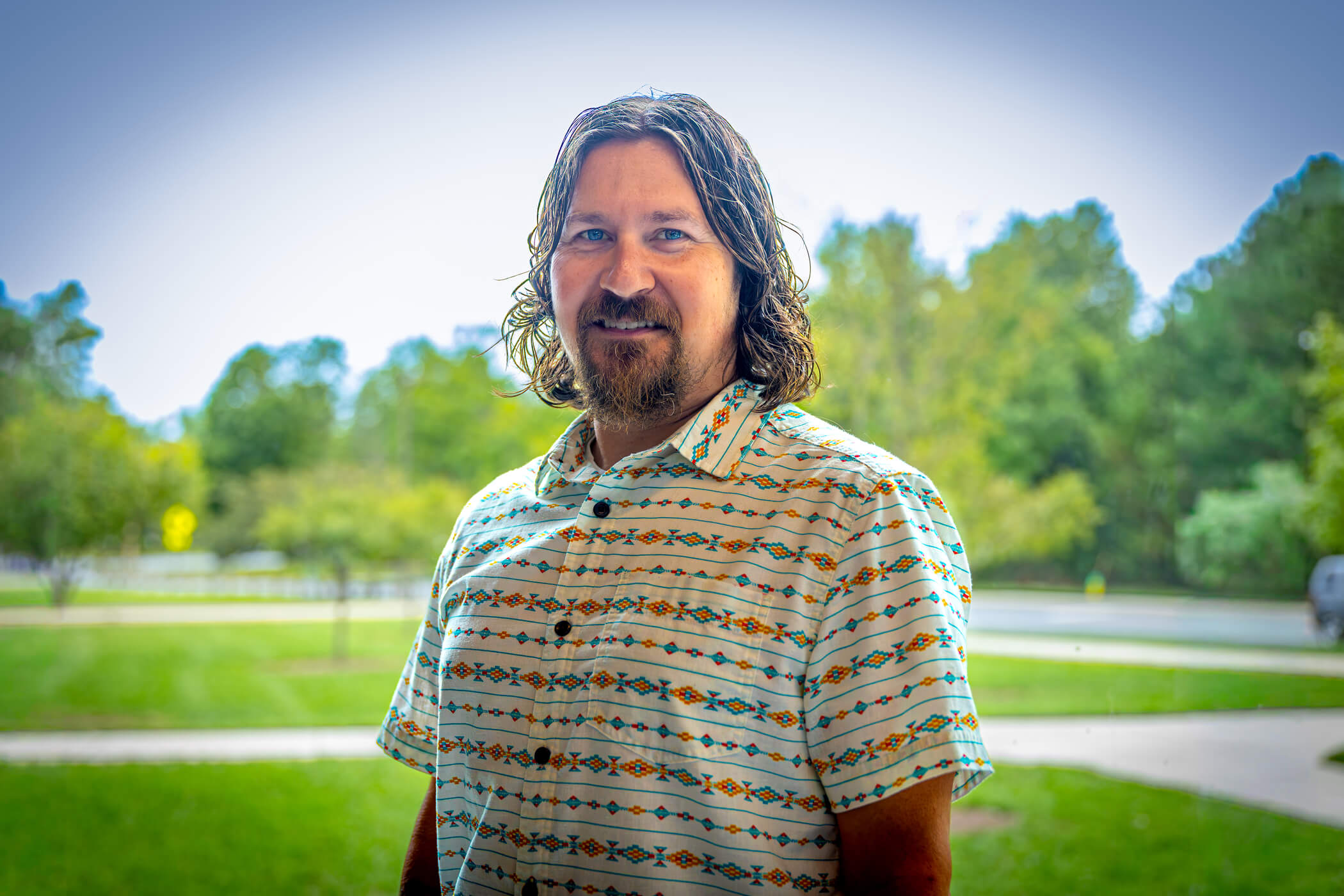
Meet the Director of First-Year Seminar
Bryan Pearce-Gonzales
540-542-6202 | fys@su.edu | Henkel Hall 217
I look forward to meeting all of you!
Please feel free to call me, e-mail me, or stop by my office.
FYS brought me to not only friends but a family! My class encouraged me to find the most important parts of curriculum, the city of Winchester and most importantly myself! It brought a sense of purpose that encouraged me to evaluate and establish my most important values in a way that supported my most true self.
Camryn Roberts ’23
Public Health, BS
Business Administration in Healthcare Management, BBA
My FYS class created so many opportunities to make new connections and learn from my fellow peers. Starting a new chapter in life can be a little intimidating but through the support of my fellow FYS peers and mentor, Shenandoah quickly began to feel like home.
Rachel Taylor ’24
Psychology, BS EA-OT
When I first got to Shenandoah, it was my FYS class that really made me feel at home. My professor, my classmates, and the class itself was a warm welcome and I still utilize intercultural skills from that class every day! I’m forever thankful to my FYS family, because that class has shaped who I am as a student, an artist, and a leader.
Maya Bhatnagar ’22
Theatre Design and Production- Stage Management, BFA
Spanish, BA