A Head Start on Early Intervention
Shenandoah OT Student Earning Certification From GEORGE Program, Which Uses Interdisciplinary Learning to Benefit Services Provided to Young Children
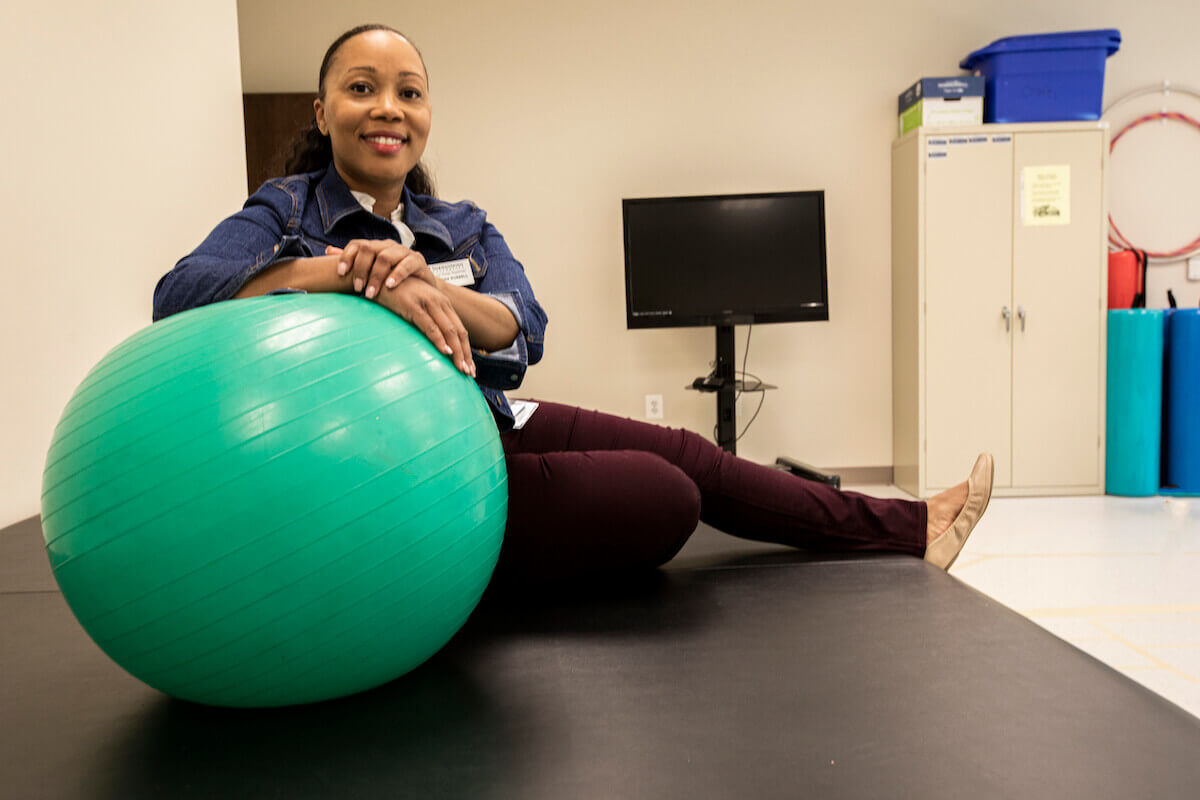
When Shenandoah University occupational therapy student La’Shandra “Elle” Russell ’19 graduates from the OT program in December, she will have earned not only a Master of Science in Occupational Therapy, but also a Georgetown University Certificate in Early Intervention, courtesy of the Graduate Education of Related Service Providers at Georgetown University (GEORGE) program.
GEORGE is an interdisciplinary program for students in their final year of an entry-level professional program such as physical therapy, occupational therapy, speech language pathology, special education and early childhood education. Program participants receive tuition to attend the online certificate program as well as a stipend, and they agree to a service obligation to work in an early intervention capacity for two years following their program completion.
The Georgetown University Center for Child and Human Development, The George Washington University Health Professions Programs and the Catholic University Early Childhood Education Program are the central organizations within GEORGE, which was created to educate the next generation of early childhood providers.
Ready to help young children and mothers
“Post-graduation, I plan to work as an early interventionist, serving infants and toddlers ages 0-3 and their families within the context of their natural environments (home, early childhood education centers and/or other community settings as identified by the family),” Russell said. “I also plan to partner with other allied health professionals to establish a community-based Neonatal Intensive Care Unit follow-up clinic that will focus on the assessment and developmental needs of children who are considered to be ‘at risk’ for developmental delays, as well as a maternal health program with an occupation-based focus on maternal mental health needs during the perinatal period to include up to one-year postpartum.”
Russell, who is based at Shenandoah University’s Scholar Plaza, Loudoun, site, recently received a first-place award for her “Wellness Needs of Early Childhood Personnel” poster presented at the University Center for Excellence in Developmental Disabilities (UCEDD) Conference. Russell said that Georgetown’s Center for Child and Human Development is 1 of 67 centers that have the UCEDD designation as part of the Association of University Centers on Disabilities.
Research designed to assist providers
During her OT program’s Level I fieldwork experiences in a community-based mental health clinic and local school system, she developed an interest in the health and wellness needs of service providers, and their impact on the service delivery process. “Due to feelings of stress, burnout and high turnover within early childhood practices, programs like GEORGE have been developed to address the growing shortage of early intervention service providers,” she said. “Therefore, it is my hope that the results of my research will be used by administrators and policy makers to develop workplace wellness programs that support the health and well-being of early childhood service providers in order to continue to the work and mission of early childhood programs such as Part C of IDEA, through which services are aimed at improving the developmental and health outcomes of children with childhood disorders and developmental disabilities.”
Two supportive programs
Russell learned about the GEORGE program through an email shared with Shenandoah’s OT department and found it appealing, since she had an interest in early intervention work. “While I was uncertain of how I was going to manage two full-time programs, both programs provided the support that I needed to meet the educational requirements that sometimes overlapped with regards to scheduling in-person commitments,” she said. “The support was imperative in helping me feel successful, particularly during those times when it all seemed overwhelming. Through this process, I learned how to better manage my time and resources, which helped to contribute to a more balanced and improved social-emotional health and well-being. Also, the incentives of paid tuition and monthly stipend were an encouragement to remain focused and committed to the end goal.”
A flexible program makes all the difference
Flexibility drew Russell to Shenandoah’s OT program. “When deciding to transition out of the workforce to return to school, I was seeking a program that would provide me with the most optimum school-life balance, where I could manage the demands of a full-time program with my new role of being a stay-at-home mom. With 80% of the content being delivered online, and 20% being delivered through the one-day-a-week, in-person classes, SU was the most obvious and undoubtedly the best choice for me. So much so, it was the only OT program that I applied to. I was also drawn by the opportunity to engage with and provide occupation-based services to children and adults with disabilities, and to the local organizations that support them, through the program’s Community Applications class. This opportunity occurs within the first six to eight weeks of the program and is designed to help familiarize students with the OT process and how it can be applied at the individual, organizational and population levels.”
Shenandoah’s health professions programs, which include OT, value interdisciplinary learning, which is also at the heart of GEORGE and is valuable to Russell, who also serves as the Shenandoah OT program’s student representative and student delegate to both the Virginia Occupational Therapy Association and the American Occupational Therapy Association. “Working in interdisciplinary teams increases accountability and provides practitioners with the opportunity to truly deliver holistic and evidence-based, client-centered care,” she said.
A future with GEORGE
As Russell is at the end of her GEORGE experience, two additional Shenandoah students in a different discipline are about to start theirs. Dominique Norris and Sarah Strong, both in Shenandoah’s Doctor of Physical Therapy Class of 2020, have been accepted into the GEORGE program.