Book by Stepniak on Reimagining Classical Music Performance Training in the U.S. Published by Routledge/CMS
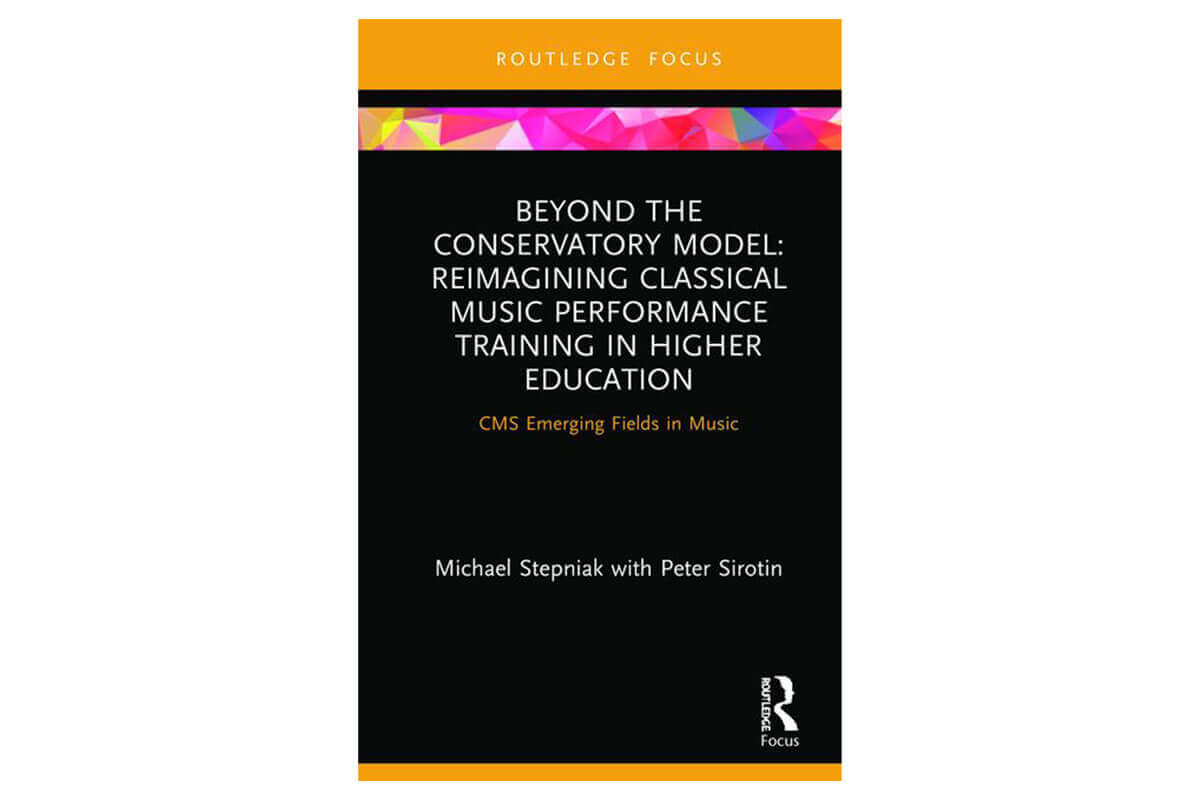
“Beyond the Conservatory Model: Reimagining Classical Music Performance Training in Higher Education” by Dean of Shenandoah Conservatory Michael Stepniak, Ed.D., with music colleague Peter Sirotin, was published on Thursday, Sept. 19, by the leading higher education music organization College Music Society (CMS) and leading scholarly publisher Routledge.
Beyond providing a new level of insight into the changed career and audience marketplace that classical music students face upon graduation, the book advances a national-level discussion to radically reimagine the very model of music performance training within American higher education. It also challenges leading higher education music societies (including National Association of Schools of Music and CMS) to take courageous action and newly support the development of faculty leaders from diverse backgrounds who are more skilled in and oriented towards overseeing change.
It is available for purchase through Routledge and Amazon.
The publication follows the popular success of of Dr. Stepniak’s article “Beyond Beauty, Brilliance, and Expression: On Reimagining Jazz and Classical Music Performance Training and Reconnecting with the General Public.” That essay became the most-read article in College Music Symposium’s recent history.
Book Summary
Amid enormous changes in higher education, audience and music listener preferences, and the relevant career marketplace, music faculty are increasingly aware of the need to reimagine classical music performance training for current and future students. But how can faculty and administrators, under urgent pressure to act, be certain that their changes are effective, strategic, and beneficial for students and institutions?
In this provocative yet measured book, Michael Stepniak and Peter Sirotin address these questions with perspectives rooted in extensive experience as musicians, educators, and arts leaders. Building on a multidimensional analysis of core issues and drawing upon interviews with leaders from across the performing arts and higher education music fields, Stepniak and Sirotin scrutinize arguments for and against radical change, illuminating areas of unavoidable challenge as well as areas of possibility and hope. An essential read for education leaders contemplating how classical music can continue to thrive within American higher education.
Michael Stepniak is dean and professor of music at Shenandoah Conservatory of Shenandoah University. A leading arts educator and critically acclaimed concert artist and chamber musician, he holds graduate degrees in performance (Peabody Institute), musicology (Northwestern University) and education (Harvard University).
Peter Sirotin currently serves as the concertmaster of the Harrisburg Symphony Orchestra, director of Market Square Concerts and Artist-in-Residence at Messiah College in Pennsylvania. Sirotin is a former member of the Moscow Soloists and an award-winning graduate of Moscow’s Central Music School and Peabody Conservatory.