To Wear or Not Wear Gloves During COVID-19 Vaccination?
Vaccinators Discuss Why Gloves Aren’t Mandatory
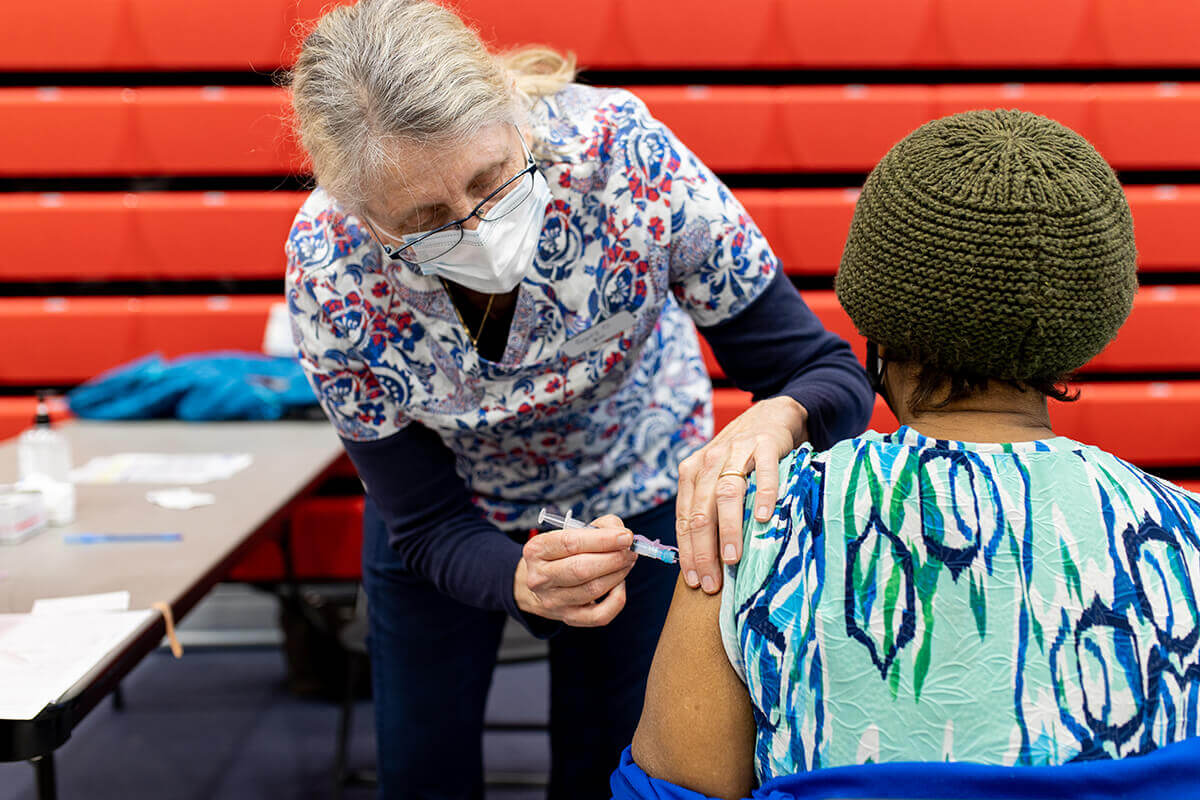
With more people getting vaccinated against COVID-19, questions begin to arise over the vaccination process. One that gets asked frequently is why vaccinators don’t wear gloves.
The Centers for Disease Control and Prevention (CDC) has guidelines recommending the use of gloves when a provider is anticipating direct contact with blood, bodily fluids, or other potentially infectious materials. The guidelines, along with those of the Occupational Safety and Health Administration, are focused on keeping the vaccinator safe from a patient’s potential bloodborne pathogens.
Because the COVID-19 vaccinations are an intramuscular injection into the lateral deltoid muscle, there is a lower risk of injecting into an artery, vein or nerve. Although the provider is piercing the skin and the needle does penetrate down to the muscular layer, there remains a low risk for bleeding and for the vaccinator to come into contact with bloodborne pathogens.
However, wearing gloves is required if the vaccinator has open wounds.
Associate Professor of Physician Assistant Studies Erika Francis, MSPAS, PA-C, said the “gloves-versus-no-gloves” issue is open to interpretation, but it is always OK for providers to wear more personal protective equipment than is required.
I choose to wear gloves while performing injections because I am not comfortable with the occasional patient who has a few drops of blood and using just gauze to absorb the blood. I also have atopic dermatitis, or eczema, which means my skin is sometimes cracking and breaking down, especially in the winter. The skin on my hands is in worse shape with frequent hand washing or antibacterial gel use.”
Erika Francis, MSPAS, PA-C | Associate Professor of Physician Assistant Studies and a volunteer in the local vaccination effort
Vaccinators say that if they follow hand hygiene, the act of vaccinating is low risk for disease transmission.
Regardless of gloves or no gloves, proper hand hygiene is always a part of the protocol, so vaccinators are constantly washing their hands and/or using regular hand sanitizer in between patients, even as much as two to three times. This is the best action to take in order to keep both patients and vaccinators safe at all times.”
Iain Pritchard, Pharm.D, BCACP | Shenandoah Assistant Professor of Pharmacy Practice and a volunteer in the local vaccination effort
Before, During, and After Vaccination
A vaccinator should first ensure they have the correct patient by confirming the patient’s identity, typically done by using their name and date of birth. The vaccinator should introduce themselves and provide their credentials. They should ask questions of the patient related to any contraindications to the medication being administered. Vaccinators should explain what they are going to do and allow the patient an opportunity to ask questions.
Then they will bring their needed supplies close, wash their hands (or use antibacterial gel), don their gloves (if they wish), sterilize the site for an injection with an alcohol prep pad on the patient’s skin, uncap the needle, and insert it into the patient’s deltoid muscle.
The vaccinator then depresses the plunger on the syringe, removes the needle, places it into the needle container, and provides a bandage. Then they dispose of the trash, document the procedure, remove their gloves (if they are wearing them) and wash their hands again. After the patient has moved on with their personal belongings, vaccinators should wipe down the area and surfaces, including any writing utensil used.
Because gloves are personal protective equipment for the healthcare provider and are a layer of protection for the vaccinator from bloodborne pathogens, wearing them is a decision for each vaccinator to make for themselves. However, if patients remain uncomfortable, they can ask their vaccinator to wear gloves. Gloves are currently on hand at Shenandoah’s mass vaccination site in the James R. Wilkins, Jr. Athletics & Events Center.