Grants Support MoveU! Program at Shenandoah
Financial Assistance Improves Adaptive Sports and Dance Opportunities For People With Mobility Challenges
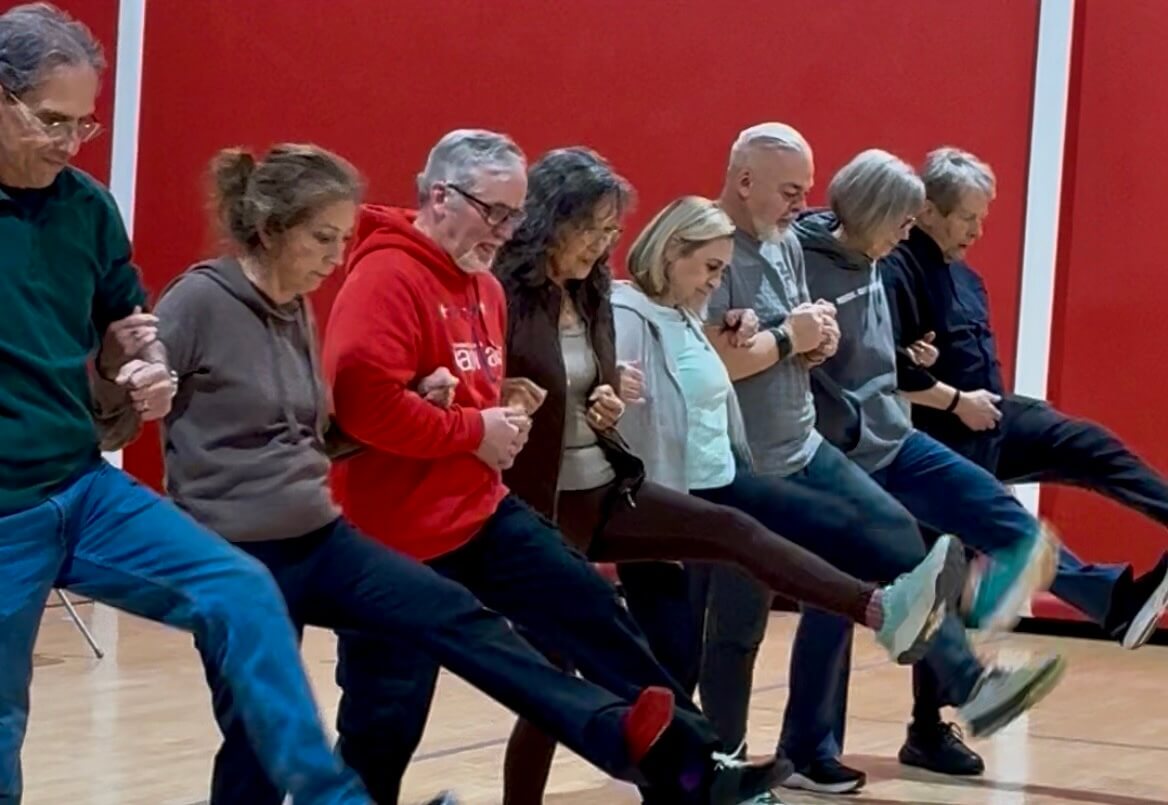
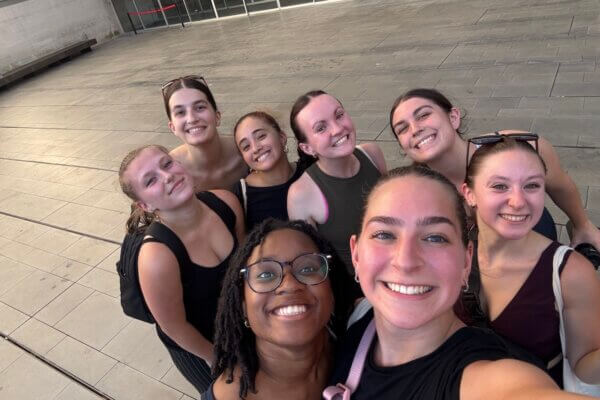
The MoveU! Move to Music adaptive sports and dance program at Shenandoah University recently received $5,500 in grant funding from both the Virginia Chapter of the American Parkinson Disease Association and the Newton B. Shingleton Trust. The total funds ($1,000 from the APDA and $4,500 from the Shingleton Trust) support the free program, which provides the benefits of dance and social connection to people with Parkinson’s Disease and other mobility challenges.
A growing slate of adaptive dance & sports activities
MoveU! programming currently includes adaptive soccer for children ages 5-17 over the course of five or six weeks in the spring and fall; Move to Music, a weekly event for adults of all ages; Learn to Golf, which is a yearly event where people of all ages can learn or relearn to play golf; and an annual wheelchair race for people of any age. The soccer activity is run by students in Shenandoah University’s physical therapy program, while instructors for Move to Music have included Shenandoah dance faculty and students, said Move U! Director Melissa Wolff-Burke, PT, Ed.D., professor emerita of physical therapy.
The grants support every aspect of the Move U! programs because there is no fee for participants. This eliminates the financial barrier for some of the children and adults.”
Move U! Director Melissa Wolff-Burke, PT, Ed.D., professor emerita of physical therapy
Grants are essential to the program, having “provided soccer balls, nets, cones, pinneys and a sport wheelchair that can be used for all that activities,” she added. “The grants provide enough funding so the Move to Music class can be held weekly year-round.”
A tradition that just keeps evolving
Shenandoah has a long history of providing adaptive sports opportunities to its surrounding communities. In 2009, the physical therapy division began a program that, according to its Shingleton grant application, “initially focused on adaptive skiing and snowboarding, serving 80 individuals with chronic movement impairments due to conditions such as cerebral palsy, stroke, brain injury, spinal cord injury, amputation, spina bifida, and other neurologic conditions. Participation was free of charge. The program received national recognition for its innovation in physical therapy clinical education and the application of sport to a wider community from the American Physical Therapy Association at the Educational Leadership Conference in 2019.
“Building on the success of the winter program, the adaptive sports offerings were expanded in 2023, to include pickleball, scuba, and golf, serving 20 teens and adults. Recognizing the need for an adaptive program for youth, soccer was added in 2023, with seven participants in its inaugural year, 14 participants in 2024, and 23 participants in 2025,” the grant application continues. “The adaptive sports program continued to grow with the addition of an adaptive dance program, which was started in 2024, for adults with movement disorders due to neuromuscular conditions such as Parkinson’s disease, stroke, and quadriplegia. The program, now called ‘Move to Music,’ has seen growth and increased participation over the last two years.”
A bright future ahead for program participants
I would love to see more adults with movement disorders and their caregivers participate in the Move to Music program. It is beneficial for socialization and for so many varied movement challenges.”
Move U! Director Melissa Wolff-Burke, PT, Ed.D., professor emerita of physical therapy
“I would love to see the wheelchair race have more participants,” she said. “The course takes place on a paved surface at the Museum of the Shenandoah Valley and PT students are available to assist the wheelchair user. In past races, family members have also assisted the person in the wheelchair, so it is a great family affair,” she said.
She said she would also love to see the adaptive golf program offered more than once a year.
But, that’s not all she wants to see happen.
“Long-term goals for Move U! are to have an adaptive/accessible climbing wall somewhere on the university campus to be utilized by anyone in the university and local community, as well as adaptive boccia and pickleball,” she added.
To learn more about Move U!, please contact Wolff-Burke at mwolff@su.edu.