Shenandoah University PA Students Excel In National Ultrasound Competition Debut
Point-of-care ultrasound (POCUS) was introduced to Shenandoah’s PA curriculum in 2025-26
As an emergency medicine physician assistant, Assistant Professor of Physician Assistant Studies Brian Terzian, MSPAS, PA-C, CAQ-EM, had wanted for quite some time to integrate point-of-care ultrasound (POCUS) into Shenandoah University’s PA curriculum.
POCUS is a bedside diagnostic technology that is rapidly changing the way clinicians practice medicine, essentially giving clinicians “X-ray vision” at the bedside, explained Terzian, who added that it’s particularly helpful in guiding decision-making, streamlining workflow, reducing costs and enhancing the value of physical exams in areas such as emergency medicine, urgent care and critical care.
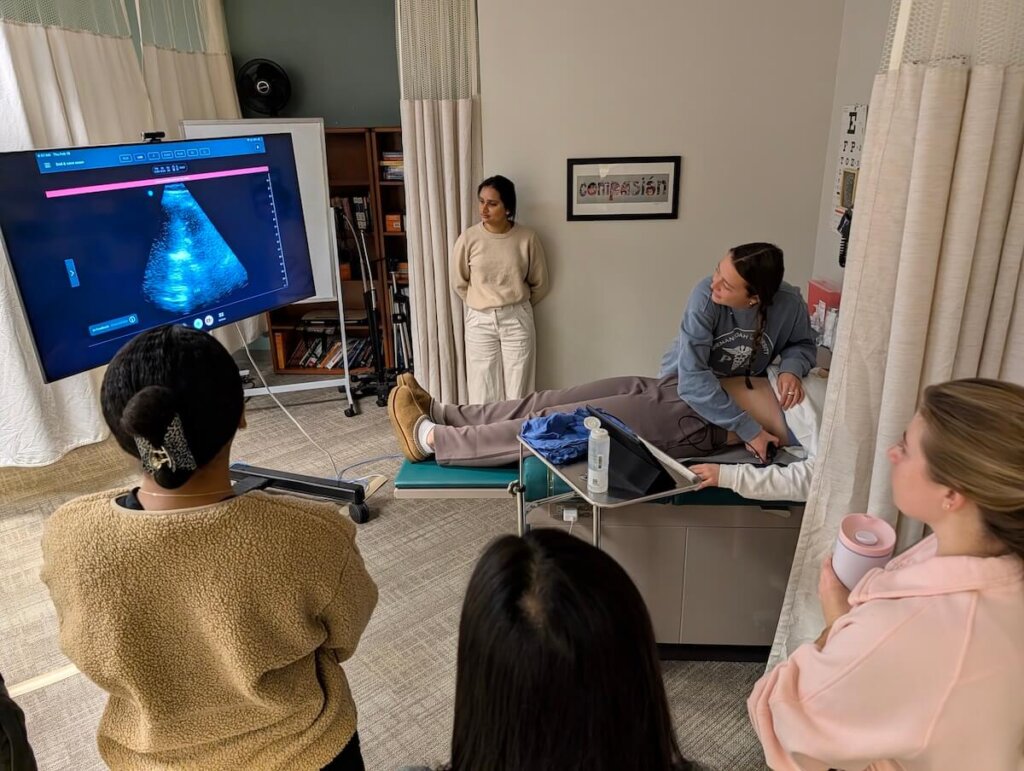
In 2025, Shenandoah’s Division of Physician Assistant Studies acquired a fleet of Butterfly handheld ultrasound devices – compact machines that interface directly with smartphones and tablets, making them nearly as portable and convenient as a stethoscope. The technology introduced an opportunity to teach Shenandoah’s students how to combine their knowledge of clinical medicine and anatomy with diagnostic reasoning skills, augmenting the traditional bedside physical exam.
“One of the hardest parts of learning medicine in a classroom setting is making it feel more than one- or two-dimensional,” said Shenandoah PA student Candy Liang ’27. “Much of learning medicine initially revolves around memorization and grasping difficult concepts. What first drew me toward POCUS was being able to dynamically visualize the heart while studying its anatomy, physiology, and pathology. In real time, I could see cardiac contractions, structures, and learned concepts in motion. POCUS helped me understand not only what happens in the heart, but also why and how pathologies occur, deepening my understanding of medicine.”
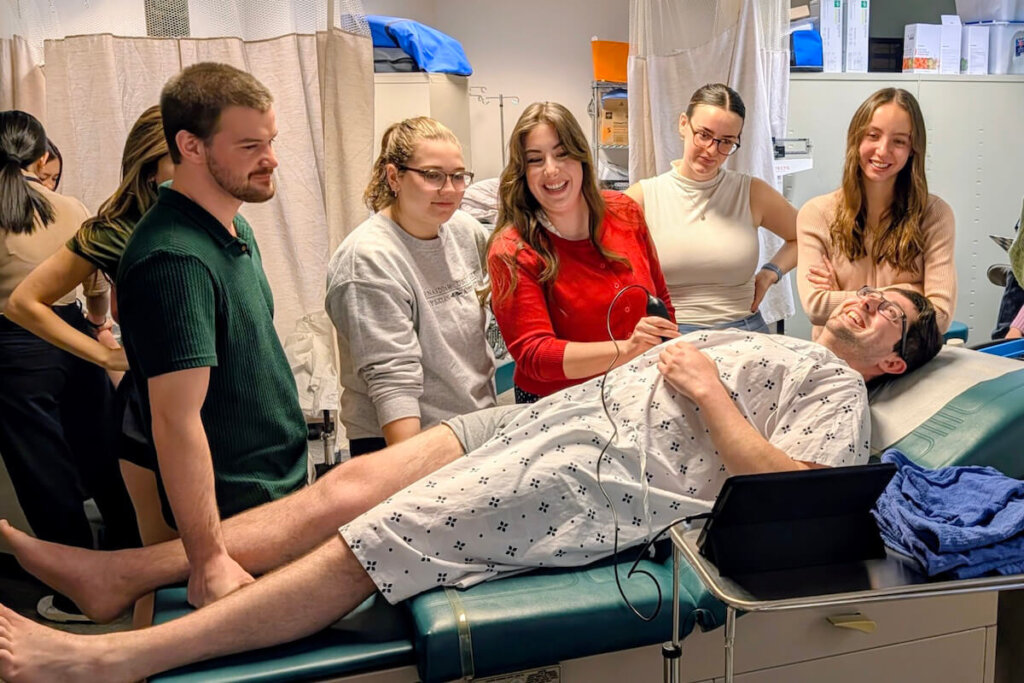
POCUS was incorporated into the classroom with great success during the 2025-26 academic year. In fact, students were so enthusiastic about POCUS that they requested extra time after class to continue practicing and honing their skills with the technology. Keri Harlow ’27, a PA student who had prior experience in ultrasonography, quickly emerged as a POCUS leader in the classroom and helped her classmates master the fundamentals.
When Terzian and his students learned that the American Academy of Physician Associates (AAPA) hosts a POCUS competition known as iScan each year during its annual conference, they decided that Shenandoah needed to field its first-ever POCUS competition team.
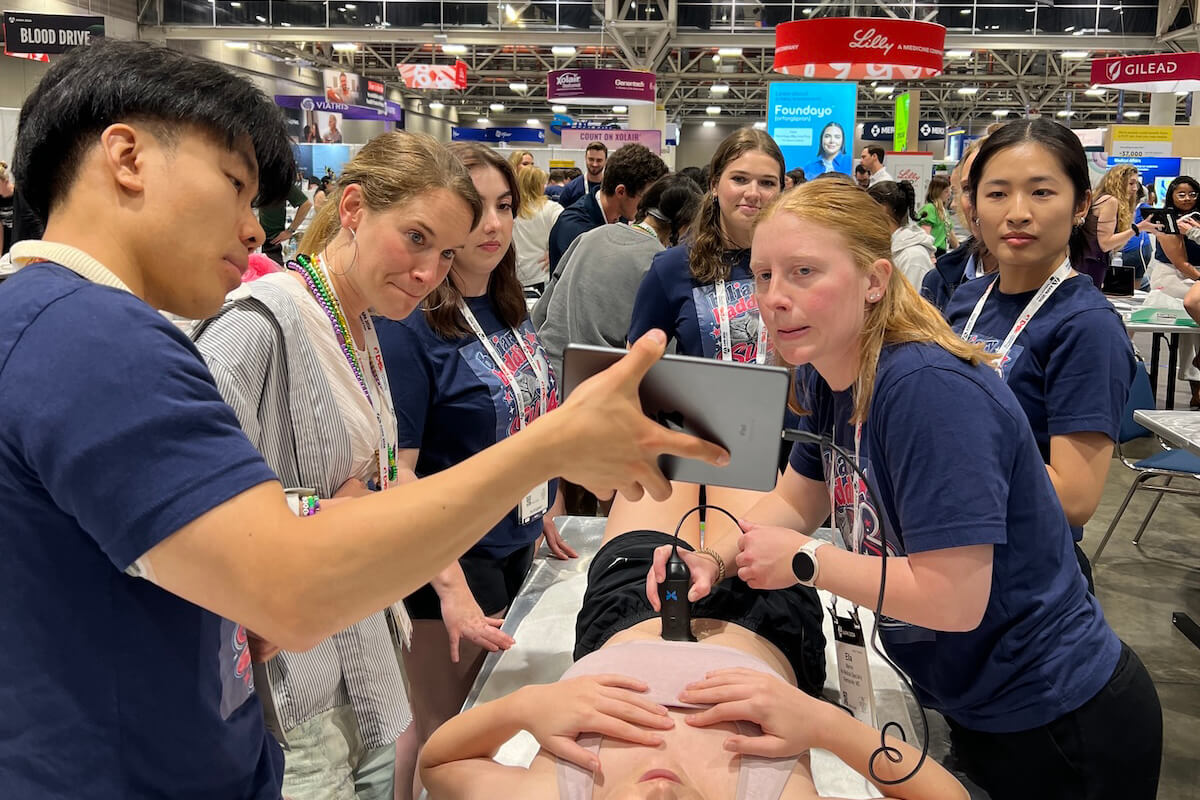
Over the course of several months, five Shenandoah University first-year PA students – Harlow, Liang, Ella Mannix ’27, Madi Hartsell ’27 and Adam Louie ’27 – met outside of class to practice the core ultrasound skills taught in the curriculum while also preparing for more advanced concepts and competencies outlined by iScan organizers. They came up with a team name – “The Biliary Baddies,” a nod to a lecture delivered by one of their favorite guest lecturers – and had custom T-shirts made for the competition, which took place on May 17, in New Orleans.
“This competition seemed like the perfect opportunity to learn about POCUS and gain hands-on experience before my clinical rotations,” said Hartsell. “What I didn’t realize when agreeing to do this was just how much ultrasound knowledge I would gain. Keri’s eagerness rubbed off on all of us very quickly, and her experience and confidence was so beneficial to those of us without previous exposure to ultrasound. We squeezed in team practices during the little free time we had. At home, I found myself watching ultrasound videos, learning techniques, and taking notes so I would be prepared when we met again. After finishing two weeks of finals, we went back to the lab for our final ‘ultrasound marathon’ – two full days of practicing leading up to the competition.”
“The preparation before the big day was daunting,” Louie added, “yet the self-guided practice and combined efforts of all of our brains helped sharpen and hone our skills with ultrasound.”
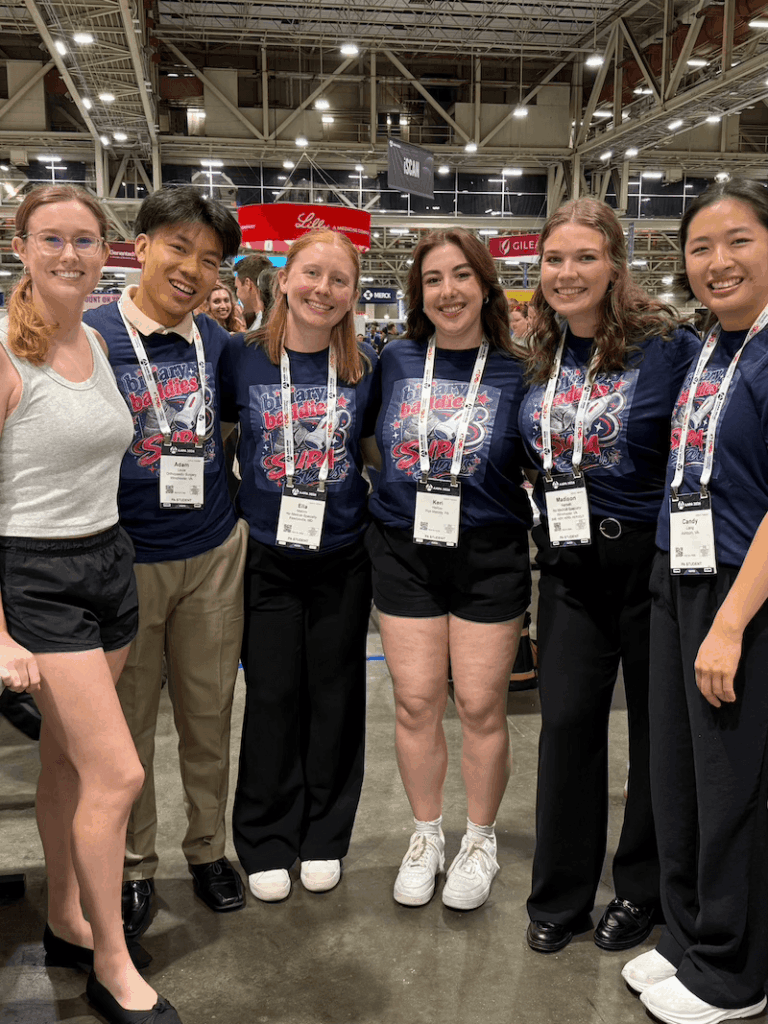
The students’ hard work paid off. In a field of 45 teams, most of them composed of second-year PA students who had already started their clinical rotations, Shenandoah’s “Biliary Baddies” excelled at iScan 2026, finishing among the top 12 teams to advance out of the first round before ultimately ending the competition in a tie for fifth place.
“It was so amazing to see how all of our brains worked together to find landmarks while scanning, identify pathologies and answer clinical questions,” Mannix said. “We conquered even the toughest stations by putting our minds together along with using prior clinical knowledge from several of our previous classes. I have to say the competition was one of the most fun and inspiring events I have ever been a part of. Being surrounded by other students and instructors who share the same passion for ultrasound that we do was very uplifting.”
Harlow, Shenandoah’s team captain, said the atmosphere surrounding iScan – which took place in a large expo hall where 45 PA facilitators from all over the country had gathered to judge and teach the competitors – was “electric.”
“Being surrounded by hundreds of PA students and providers passionate about ultrasound and its expanding role was unlike anything I’ve ever experienced. There was so much excitement, energy, and camaraderie in meeting people from all over the country who shared the same passion I do,” Harlow said. “Ultimately, our success came down to the unwavering support of our faculty and the trust my team had in one another. Advancing into the second round, reserved only for the top teams, was an incredibly emotional moment and one I will never forget. The countless hours spent creating study guides and pathology PowerPoints not only helped contribute to our success in this competition, but also strengthened the foundation I hope to carry into my future as a PA.”