The Bachelor of Science in Conservation Science and Management is a robust, science-based interdisciplinary program that prepares students to critically evaluate natural resource problems and solutions, as well preserve and manage biodiversity. Successful majors will gain the broad knowledge, analytical skills, hands-on field and laboratory experiences necessary to be informed citizens and effective professionals in their fields.
By double majoring in Biology and Conservation Science and Management, I have been exposed to both the biological and environmental side of conserving our natural resources for future generations. Combining both of these degrees has given me a unique background for a career in the natural resource field!
I’ve learned that it is very important to pursue career related experiences or internships, in addition with the background knowledge taught at Shenandoah University. This gave me some real-world experience in the ecological research I was interested in doing, while also allowing me to make connections in my field.
Students majoring in the Conservation Science and Management program will learn a broad range of skills including environmental and ecological problem solving, natural resource management and professional networking. Students will learn to develop and implement conservation plans, conduct natural resource surveys and inventories, manage habitats and work with our local community (campus included) to generate solutions to environmental and natural resource problems. This skillset will help graduates of this program be effective conservation professionals in a wide range of fields including conservation organizations, government agencies, academic or educational professions and private consulting firms.
Students will explain fundamental principles (scientific, philosophical, sociopolitical, economic, historic and technological) that underlie environmental issues in our society.
Students will identify and analyze environmental problems in society and community.
Students will analyze, document, and report research both in writing and orally.
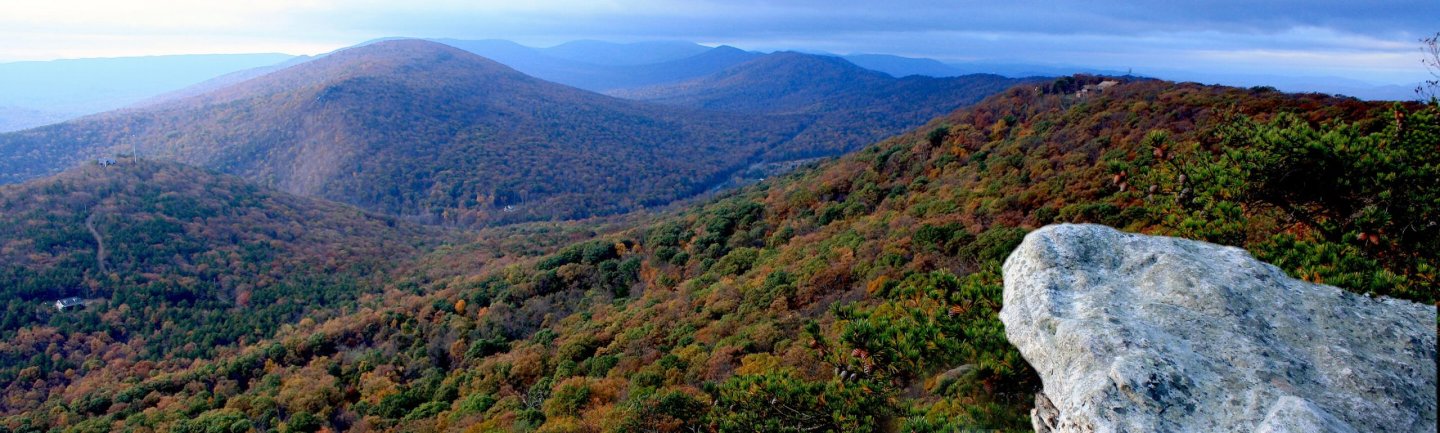
Students and faculty roll up their sleeves and collaborate at Shenandoah’s 195-acre River Campus at Cool Spring Battlefield. This historic property, located along the Shenandoah River in Virginia, was integral to the July 18, 1864, Battle of Cool Spring, and it serves as not only a living laboratory for history and the environmental studies programs, but also a recreational space for students and the general public.
Some students in this program choose to continue their education by earning a graduate degree:
Ecology
Entomology
Forest Science
Wildlife Conservation
Geography, GIS, and Remote Sensing
Curriculum
For a Bachelor of Science in Conservation Science and Management, students need to compete 44 credits of Core Courses and 6 credits of Elective Courses with a C- or above.
BIO 121
General Biology I
BIO 122
General Biology II
BIO 321
Ecology
BIO 325
Animal Behavior
BIO 330
Parasitology
BIO 344
Plant Morphology
BIO 351
Vertebrate Zoology
CHEM 121
General Chemistry I
CHEM 122
General Chemistry II
CHEM 301
Organic Chemistry I
CHEM 302
Organic Chemistry II
CHEM 331
Biochemistry I
CHEM 332
Biochemistry II
ES 101
Introduction to Environmental Studies
ES 105
Field Natural History
ES 290
Environmental Issues Seminar
ES 295
Wildlife Ecology and Habitat Management
ES 300
Geographic Information Systems and Mapping
ES 319
Environmental Policy and Programs
ES 340
Environmental Education
ES 390
Environmental Research Seminar
ES 395
Topics in Environmental Studies
ES 399
Directed Study
ES 401
Environmental Studies Internship
ES 419
Community and Regional Studies
ES 421
Environmental Sampling and Analysis
ES 452
Applied Conservation Ecology
ES 492
Environmental Research Project
GEO 454
Our Eastern Forests: History, Ecology and Change
GEOL 201
Physical Geology
GEOL 450
Stream Assessment and Restoration
MATH 207
Introduction to Statistics
MATH 208
Applied Statistics Concepts and Methods
MCOM 318
Environmental Communication
This program requires a minor/these minors complement this program well:


 Students and faculty roll up their sleeves and collaborate at Shenandoah’s 195-acre River Campus at Cool Spring Battlefield. This historic property, located along the Shenandoah River in Virginia, was integral to the July 18, 1864, Battle of Cool Spring, and it serves as not only a living laboratory for history and the environmental studies programs, but also a recreational space for students and the general public.