Jump Into The Fascinating Microcosm Of An Environment’s Interconnecting Systems — And Whole New Worlds Will Open Up To You.
The Bachelor of Science degree in Environmental Studies combines perspectives from the natural and social sciences with applied experiences in the laboratory, field sites and community settings. The major consists of required courses and projects that provide an interdisciplinary understanding of environmental concepts, issues and methods for resolving problems. Additional courses enable you to develop selected competencies in greater depth as preparation for graduate study and/or a professional career.
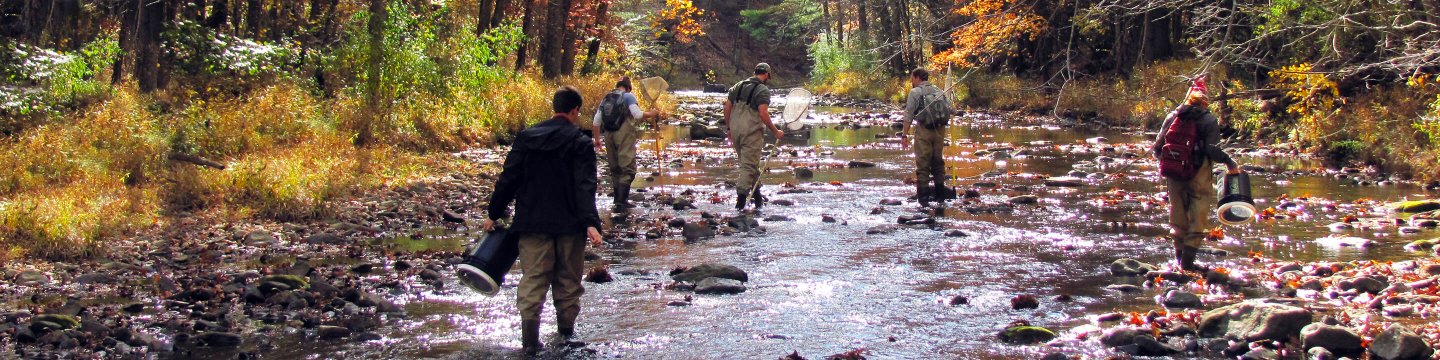
In most of my classes, we’re getting to apply what we’ve learned in real-life, practical applications. I’ve really learned the most about the concept and application of OneHealth, which is that all living beings and their environments are interconnected within a single, unified system. That is a really popular topic within the ES major. As part of the ES major, we spend a lot of time outdoors. I have loved my class adventures and seeing so many beautiful things within nature!
Wyatt Newcome ’26 | Environmental Studies major | Biology and Geography minors
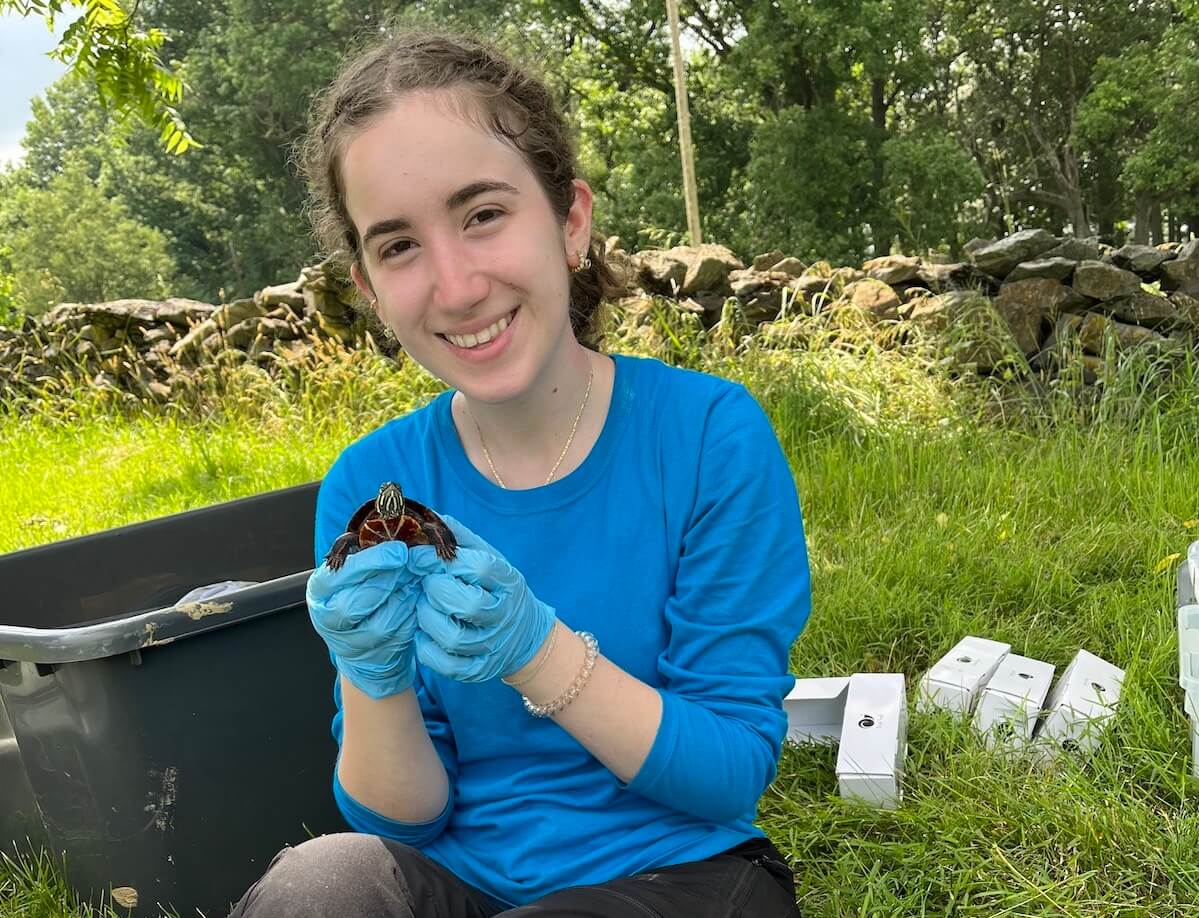
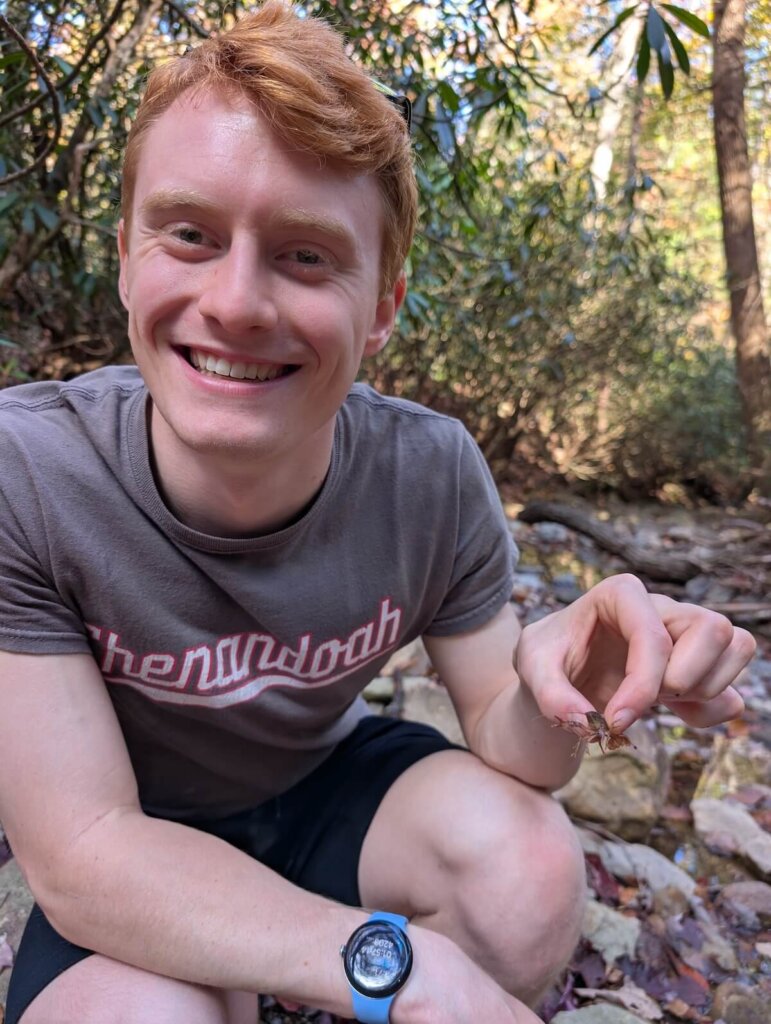
There are so many real-world opportunities, and almost every class you take has field trips into the field/at places relating to our field. The professors do so much for their students to get experience before graduating, and emphasize the interdisciplinary aspect of the field. The coolest experience was to conduct summer research with the help of Dr. Degrassi at Blandy Experimental Farm. We aimed to research and understand the movements of the turtle population. Throughout the regular semesters, I went on many little day trips to different mountains and geological formations, and every class I took taught me the importance of everything in nature, along with the science and beauty behind it!
Josephine Saikali ’23 | Environmental Studies major
With our small size, location in the northern Shenandoah Valley, and academic strength in the College of Arts & Sciences, Shenandoah University provides a challenging, student-centered educational experience.
Students and faculty roll up their sleeves and collaborate at Shenandoah’s 195-acre River Campus at Cool Spring Battlefield. This historic property, located along the Shenandoah River in Virginia, was integral to the July 18, 1864, Battle of Cool Spring, and it serves as not only a living laboratory for history and the environmental studies programs, but also a recreational space for students and the general public.
The Environmental Studies program’s academic and hands-on research has made a difference locally and in the region.
Environmental studies undergraduates present their research at annual conferences of the Virginia Academy of Science.
The City of Winchester, the Lord Fairfax Soil and Water Conservation District and the Princeton Review’s green colleges guide recognized the university’s efforts in environmental stewardship, sustainability and undergraduate education.
The Mason-Dixon Outdoor Writers Association acknowledged students and faculty with its Grassroots Conservation Award in 2013.
Perhaps the accomplishment with the most lasting effect on our community and region is the involvement of our students and faculty with the Abrams Creek Wetlands since 1997.
Shenandoah’s environmental studies undergraduates and faculty investigated the wetlands, presented their findings to citizens and decision-makers, led field trips for children and adults and developed interpretive signs to help people appreciate the property’s significance. These efforts resulted in the dedication of the Abrams Creek Wetlands Preserve in 2003. The site was the City of Winchester’s first formally protected natural area. Each day, rain or shine, dozens of local residents and tourists come to the wetlands for exercise, nature study, family fun and inspiration.”
Woody Bousquet
Located just two miles from main campus on the Winchester-Frederick County line, Abrams Creek Wetlands features rare marsh habitats, home to more than 20 plant species listed on Virginia’s rare plant list.
Shenandoah University’s College of Arts & Sciences is your direct connection to a classic, broad-based education to satisfy both your intellectual curiosity and career goals. With a 10:1 student-faculty ratio, small classes and individualized learning opportunities, we put students at the center of all our decisions and events.
We blend the liberal arts with pre-professional courses and hands-on learning to prepare you for careers in the natural sciences, the social sciences and the humanities. You’ll learn through small, engaging classes and relationships with faculty mentors; hone your skills to solve problems; and learn to use creativity and critical thinking to make informed decisions.
Housed in the College of Arts & Sciences, this interdisciplinary program draws on courses from the natural sciences, the social sciences and the humanities to prepare students as practitioners able to investigate and address complex environmental problems. Research is such a critical component of the curriculum yet many institutions limit research opportunities to a few top academic performers. That’s definitely not the case at Shenandoah.
Environmental Studies Research Projects
At Shenandoah University, you’ll participate in ecological research as well as environmental education and community outreach.
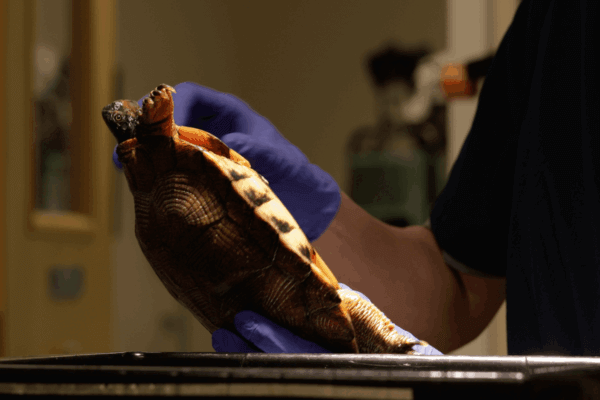
Our Environmental Studies Program has joined a multi-year study of wood turtles (Glyptemys insculpta), a threatened species. Working with the Smithsonian Conservation Biology Institute, our students and faculty survey wood turtle hibernation sites and nesting locations.
A group of eight Shenandoah undergraduates recently conducted a botanical inventory at a local nature preserve established by another group of Shenandoah students in 1998. These students learned environmental techniques used by government agencies and private organizations such as The Nature Conservancy.
A few Shenandoah students are studying northern white cedar (Thuja occidentalis) populations in the Shenandoah Valley. White cedar forests are rare in Virginia and occur primarily on north-facing limestone slopes above creeks and rivers. Students assist with field and laboratory work using standard techniques in forest ecology and dendrochronology (tree-ring analysis).
Required Courses:
Course Name
Credits
ES 101 Intro to Environmental Studies
3
ES 290 Environmental & Sustainability Issues Seminar
2
ES 319 Environmental Policy and Programs
3
ES 390 Environmental and Sustainability Research Seminar
2
ES 419 Community and Regional Studies
4
BIO 121 General Biology I
4
BIO 121 General Biology I
4
BIO 321 Ecology
4
CHEM 105 Chemistry and Society or CHEM 121 General Chemistry I
4
GEO 202 Human Geography
3
GEOL 201 Physical Geology
4
Electives – One skill-oriented course selected from the list below
Course Name
Credit
ES 300 Geographic Information Systems and Mapping
3
ES 340 Environmental Education
4
ES 421 Environmental Sampling and Analysis
4
Or another approved course at the 200-level or above
Two content-oriented courses selected from the list below:
Course Name
Credits
ES 242 Freshwater Ecology and Pollution
4
ES 295 Wildlife Ecology and Habitat Management
3
PSCI 201 American Government
3
PSCI 202 State and Local Government
3
BIO 325 Animal Behavior
4
BIO 344 Plant Morphology
4
BIO 351 Vertebrate Zoology
4
CHEM 122 General Chemistry II
4
CHEM 211 Analytical Chemistry
4
GEO 454 Our Eastern Forests: History, Ecology and Change
3
PH 202 Global Health
3
Total Credits: 46-49
The Career & Professional Development staff helps Shenandoah students search and apply for internships related to their major and career goals. Internships differentiate you as an applicant in your future job searches, provide hands on experience in your field, allow you to sample different career paths for your major, and help you find a specific position that fits your passion before graduation.
I do outreach for the Potomac Riverkeeper Network of (PRKN) within the Shenandoah Valley since they are based out of DC. The organization hosts a variety of river paddles to encourage people to get on the water. As an intern, I help people in sign up for events, maintain waivers, and add pieces onto the official PRKN website.
Madison Upperman ’24 | Environmental Studies and Biology
This highly interdisciplinary field allows for diverse types of research by environmental scientists. Employment opportunities include jobs with governments, conservation organizations and private firms interested in environmental topics.
Hands-on, career-related service-learning experiences provide an additional benefit to the program.
Career and Salary Examples for Environmental Studies:
Project Coordinator: $42,000
Account Manager: $42,500
Environmental Scientist: $40,695
Associate Project Manager: $54,848
Environmental Consultant: $44,000
Environmental Health & Safety (EHS) Manager: $97,436
Program Manager, Non-Profit Organization: $59,000
Career & Professional Development provides a comprehensive range of services and resources to assist Shenandoah students in their career search. Services offered include resume and cover letter building, mock interviews, and professional dining etiquette workshops.
The Honors Program is a multidisciplinary Honors Program for students who are curious, creative, self-motivated, and eager to engage in their education and community.
Not only do Honors Program students partake in honors courses that emphasize collaboration, service, and communication, but they will also have the opportunity to develop aspects of the program based on their own interests and goals. By participating in the Honors Program you will acquire the tools, knowledge and experiences necessary to make meaningful contributions to your community – whether it be globally, locally, or specific to your life’s work. You will have access to unique courses, exciting experiences and a community of peers and faculty who never stop asking questions and striving for excellence.
The Environmental Studies minor provides perspectives from the natural and social sciences with applied experiences in field sites and community settings. The required courses and projects provide a general introduction and overview to understanding environmental concepts and issues and methods for resolving problems.
Course Requirements
ES 101
Introduction to Environmental Studies
3
ES 105
Field Natural History
4
or
BIO 321
Ecology
4
ES 319
Environmental Policy and Programs
3
or
ES 419
Community and Regional Studies
4
Electives chosen from the minor required courses and Environmental Studies major electives.
7-8
Total
17-19
Declaring a Minor
Shenandoah students work with their Academic Advisor to declare a minor. Academic Advisors will continue to work with students to ensure that they fulfill all of the requirements to complete the minor.
Incoming students should not indicate their intended minor on their Shenandoah application. Applications are for intended majors only.
Students interested in this program should also look into these other majors, graduate degrees, minors, and certificates.
All majors within the College of Arts & Sciences require students to complete a minor in the program of their choice at Shenandoah.
Shenandoah University works on rolling admissions and accepts applications throughout the year. Applications are reviewed individually and holistically.
Submit your application, review required admission materials, and find our admissions standards.
Imagine participating in interesting conversations led by engaging professors who’ve already done what you dream of doing. You’ll be in a small class — the average class size is approximately 12 students — with professors who know your name, care about your success and provide advice as you pursue your academic and career goals.
Make studying abroad the highlight of your college experience! Whether you go for a year, a semester, or just a few weeks. You will never forget learning in another culture! The Center for International Programs is here to help you plan your study abroad experience. Start your planning early to ensure the courses you complete abroad count toward your degree and you graduate on time.
The Global Experiential Learning (GEL) Program offers Shenandoah students a short-term, faculty-led, study-abroad experience for academic credit. These short-term, credit-bearing, faculty-led programs are offered winter break, spring break, and during the summer. If a course is not within your major, it might be used as an elective.
Shenandoah University is a member of the International Student Exchange Program (ISEP), a global network of 300 universities. This partnership allows students to study for a full semester or year at other member campuses abroad. By working closely with their academic advisors and the study abroad advisor, students can take classes taught in English abroad while receiving Shenandoah credit.
Shenandoah University also maintains direct partnerships with several universities around the world. These relationships allow students from SU to study abroad as exchange students and students from these universities to study at SU. All partner universities offer courses taught in English.

There are so many real-world opportunities, and almost every class you take has field trips into the field/at places relating to our field. The professors do so much for their students to get experience before graduating, and emphasize the interdisciplinary aspect of the field. The coolest experience was to conduct summer research with the help of Dr. Degrassi at Blandy Experimental Farm. We aimed to research and understand the movements of the turtle population. Throughout the regular semesters, I went on many little day trips to different mountains and geological formations, and every class I took taught me the importance of everything in nature, along with the science and beauty behind it!