18th Century History Comes Alive Through VR
Project Highlights Debates of Constitutional Convention
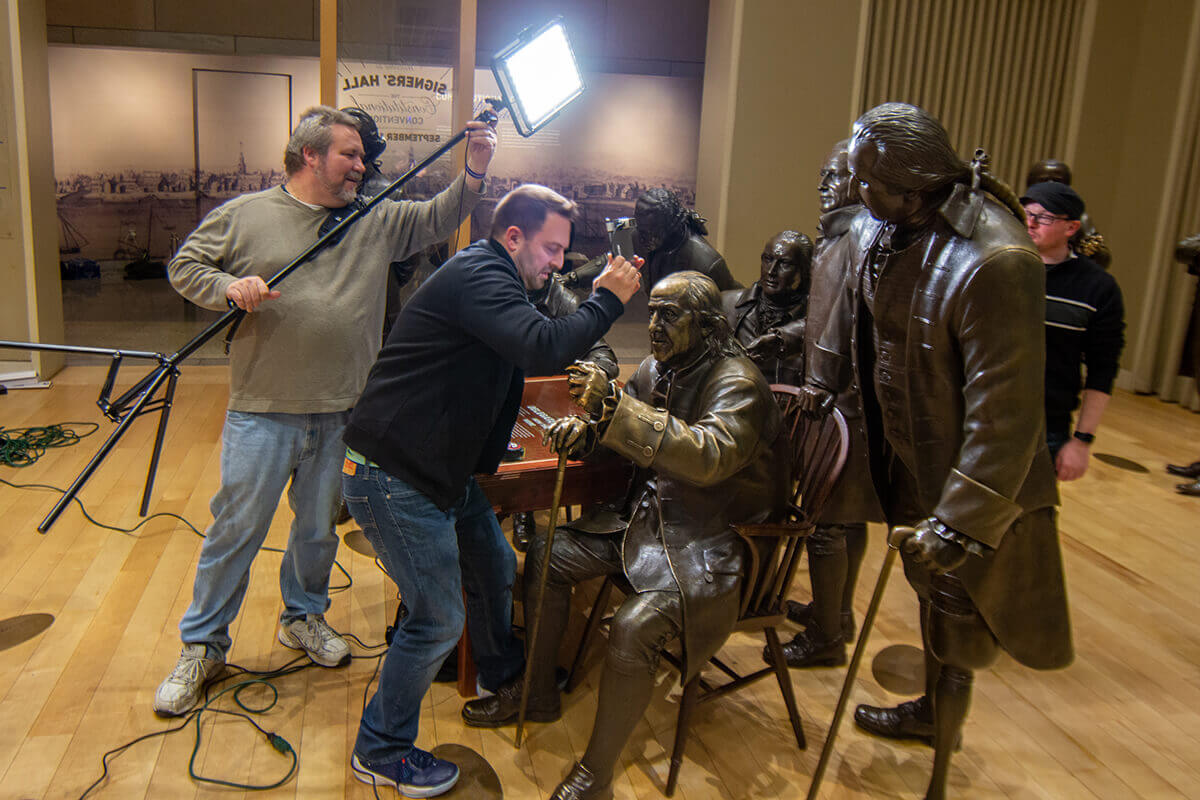
Shenandoah students, professors and the Shenandoah Center for immersive Learning (SCiL) are creating a virtual reality project that will transport participants back in time to the Constitutional Convention in 1787 and the debates that took place there among the Founding Fathers of the United States.
The debates at the Constitutional Convention, held in Independence Hall in Philadelphia, enabled the U.S. to transition from the Articles of Confederation to the United States Constitution. Delegates discussed how America should be governed, and among their discussions were debates over the creation of the Electoral College.
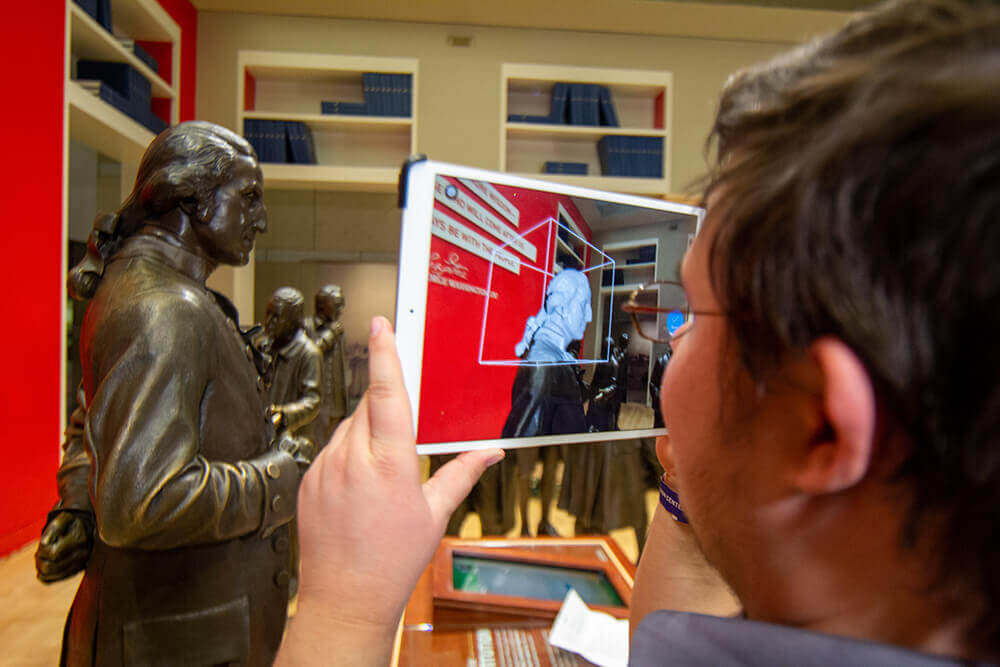 There are three students involved in the project:
- Logan Hagstrom ’21, English major
- Alistair Bingham ’21, Virtual Reality Design major
- Kim Oliveto ’21, History major
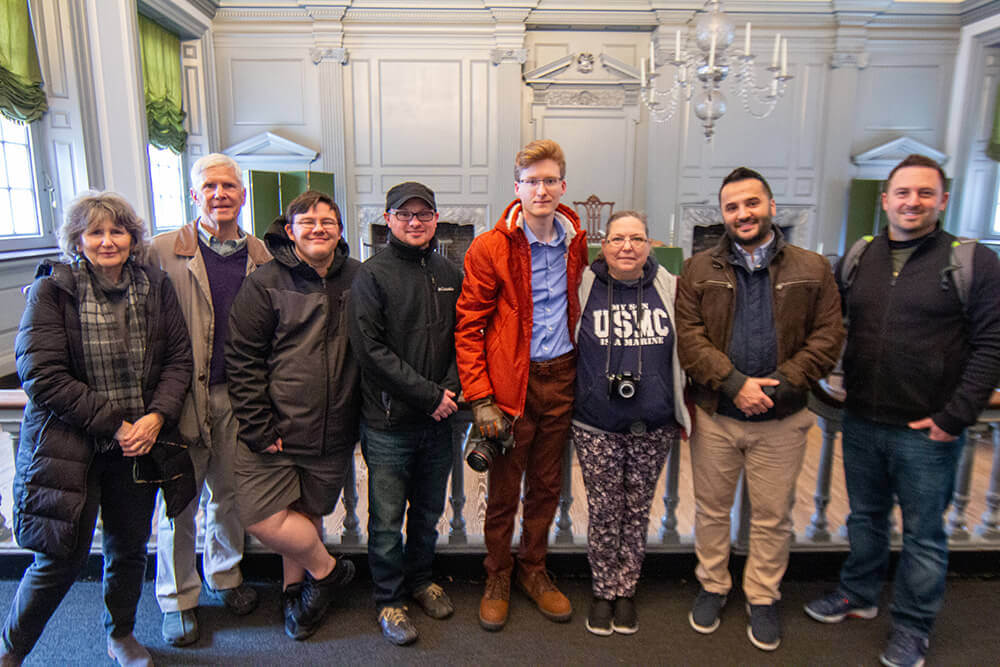
Through the project, these students will construct a virtual Independence Hall. They will also create animated avatars reflecting the appearance, dress, body language, and speech of individual delegates of the time. To achieve this feat, students will use data obtained from visits to Independence Hall and the National Constitution Center, along with photography, 3D scanning technology, and 3D modeling techniques and simulation platforms.
The goal of the project is to use virtual reality to help history come alive. Faculty are hopeful the project will be used in college and high school classrooms and perhaps as part of an educational exhibit for the National Park System.
Through immersive technology, history is no longer something abstract, to be imagined and pictured. Immersive history will be lived and experienced; I’ve watched it happen. This is how you get students to fall in love with history.”
J.J. Ruscella, M.F.A., executive director of SCiL and associate professor of theater
Professors are also hopeful the experience will inspire active citizenship and renewed civil discourse among students.
Debate is so often viewed as an adversarial activity; we forget that it can be our greatest tool for collaboration. This innovative VR project allows participation in history and reminds us that although our self interests may be vastly different, it is always in our collective interest, as a nation and as a planet, to find common ground through the protection and promotion of civil debate.”
Matt Corr, Ph.D., assistant professor of media and communication and a debate coach
The VR Experience: How it Works
Students are currently working on the first part of the project—creating a virtual Independence Hall and avatars—and will finish it over the course of a year. When the project is complete, participants will be able to don VR goggles and engage in a real-time participatory debate over the Electoral College.
This happens in five stages.
 In the first stage, avatars—played by students and actors who represent key delegates at the convention—will present a dramatic reading of the text of the debate on electing the president. Participants can watch through VR to learn more about the discourse at the convention and the principles that led delegates to develop and adopt the Electoral College.
Each participant then has a 10-to-15-minute VR session with the avatar of his or her delegate of choice. The delegate introduces himself and provides information about his personal background, political principles and positions in the debates of the convention. Participants will then read the text of the debate to emulate its style and gain greater familiarity with its substance.
Following this is an improvised performance, where participants articulate the original arguments of the delegates. Lastly, there is a free performance. Maintaining the tenor, temper and objectives of the original debate, participants engage in an open debate about the Electoral College and respond freely to one another.
The debate texts are taken directly from James Madison’s notes for the convention. However, recreated personal monologues between specific delegates and participants can touch upon slavery, popular violence, the Scottish Enlightenment, early American political culture, concepts of virtue, political corruption, natural rights and more.
Learning from the past requires empathy for the people of the past. Immersive technology provides the means and the medium to see and experience the world from their point of view. It’s a very powerful tool for studying history.”
Professor of History Warren Hofstra, Ph.D.