Seminar Developed by Shenandoah Student Focuses on Improving Diversity Among Physician Assistants
Goal Is To Draw People From More Backgrounds Into The Profession, Leading to Better Health Outcomes for All
Lack of diversity is an issue in the physician assistant (PA) profession, according to figures presented by Pangela Dawson, Ph.D., PA-C, director of Morehouse School of Medicine PA Program, at the June 4 Physician Assistant Program Admissions Success Seminar (PA-PASS) held at Shenandoah University’s Health Professions Building in Winchester.
The Importance of Representation
Allie Conroy ’22, a Shenandoah PA Studies student in her clinical year, worked with Shenandoah Distinguished Professor of Physician Assistant Studies Tony Miller, M.Ed., PA-C, to develop the seminar to help a diverse population of pre-PA students become successful applicants to PA school as her Physician Assistant Education Association Student Health Policy Fellowship project. A $2,500 National Commission on Certification of Physician Assistants (NCCPA) Health Foundation PAs STEP Up Grant helped support PA-PASS.
More than 30 pre-PA students turned out for the daylong seminar, which featured not only Dr. Dawson, but also Samora C. Charles, PA-C, MSPAS, MPH, senior director of PAs of Color; Donna Murray, DMSc., MS, PA-C, senior director of admissions for the Centralized Application Service for Physician Assistants/Physician Assistant Education Association; Brian Lee, career education and events coordinator at Shenandoah University; and Karen Bucher, Ph.D., director of student financial services at Shenandoah University.
Conroy said she decided to create the seminar because the profession needs practitioners from more diverse backgrounds. Representation’s “benefits are many, including improved health outcomes.”
Presenters at the seminar were chosen to help pre-PA students see how they can enter the career. For example, they explained that financial aid is available, waivers can be found for application fees, and that people from diverse backgrounds are thriving in the field. Conroy said it was designed so that those in attendance could see people who can say, “I did it. You can do it.”
Making a Difference
If more people from a variety of communities enter the profession, they can then also serve those same communities as a health care provider, Dawson noted. At the moment, though the field is not particularly diverse, in terms of ethnicity. A slide about recently certified PAs (6,667 respondents) in Dawson’s presentation shows that 85.6% are white, 3.1% are Black/African American, 8.5% are Asian, 0.1% are Native Hawaiian/Pacific Islander, 0.2% are American Indian or Alaskan Native; and 2.5% are other.
Dawson told those attending the seminar the numbers are why they’re needed in the profession. “We’ve got some work to do.”
Benefits for Practitioners and Patients
Dawson, Dr. Murray, and Charles noted the profession’s diversity issue likely has several origins. It’s a relatively new profession with its origins at Duke University’s first class that graduated in 1967, so it’s still unknown to many who may want a medical career but see only medical or nursing school as the path to a future in health care.
Murray also has a theory that people from underrepresented populations don’t have the same social capital as others in knowing about the profession – she was unique in connecting with the field as she attended an HBCU (Historically Black college or university) that had a PA program. Pre-PA students who are underrepresented in medicine typically don’t learn of the PA profession until much later in their academic careers than students of other racial and ethnic backgrounds, she said. Both Charles and Dawson said they were focused on becoming MDs before learning about the PA profession from a college friend (Charles) or a relative (Dawson) and discovering that it felt like a better fit for their lives.
Physician assistants, who earn a master’s degree, also enter health care earlier than MDs or Doctors of Osteopathic Medicine, and likely accumulate far less debt in doing so, the trio said. If someone wants to make a difference in medicine earlier than later, also potentially working in an underserved community, “this is one way to do that,” Murray said.
Trained as generalists, PAs also have a great deal of flexibility in how they engage in clinical practice. They can develop expertise in a variety of specialties, have a great return on their educational investment, and have more control over their work-life balance, according to Dawson.
To learn more about Shenandoah University’s Physician Assistant Studies Program, visit su.edu/pa.
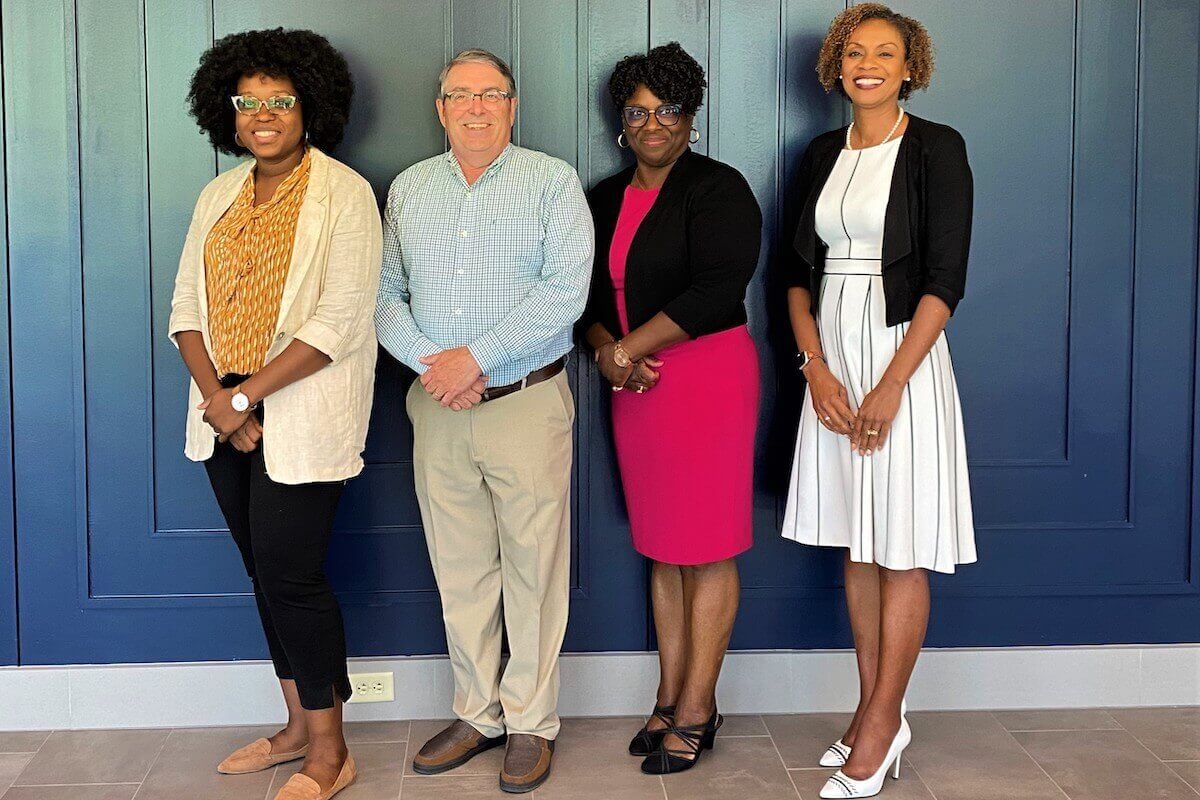
Top image, L-R: Samora C. Charles, PA-C, MSPAS, MPH, senior director of PAs of Color; Shenandoah Distinguished Professor of Physician Assistant Studies Tony Miller, M.Ed., PA-C; Donna Murray, DMSc., MS, PA-C, senior director of admissions for the Centralized Application Service for Physician Assistants/Physician Assistant Education Association; and Pangela Dawson, Ph.D., PA-C, director of Morehouse School of Medicine PA Program.