Mary and Global Education: How My Research Connects with Virtual Exchange
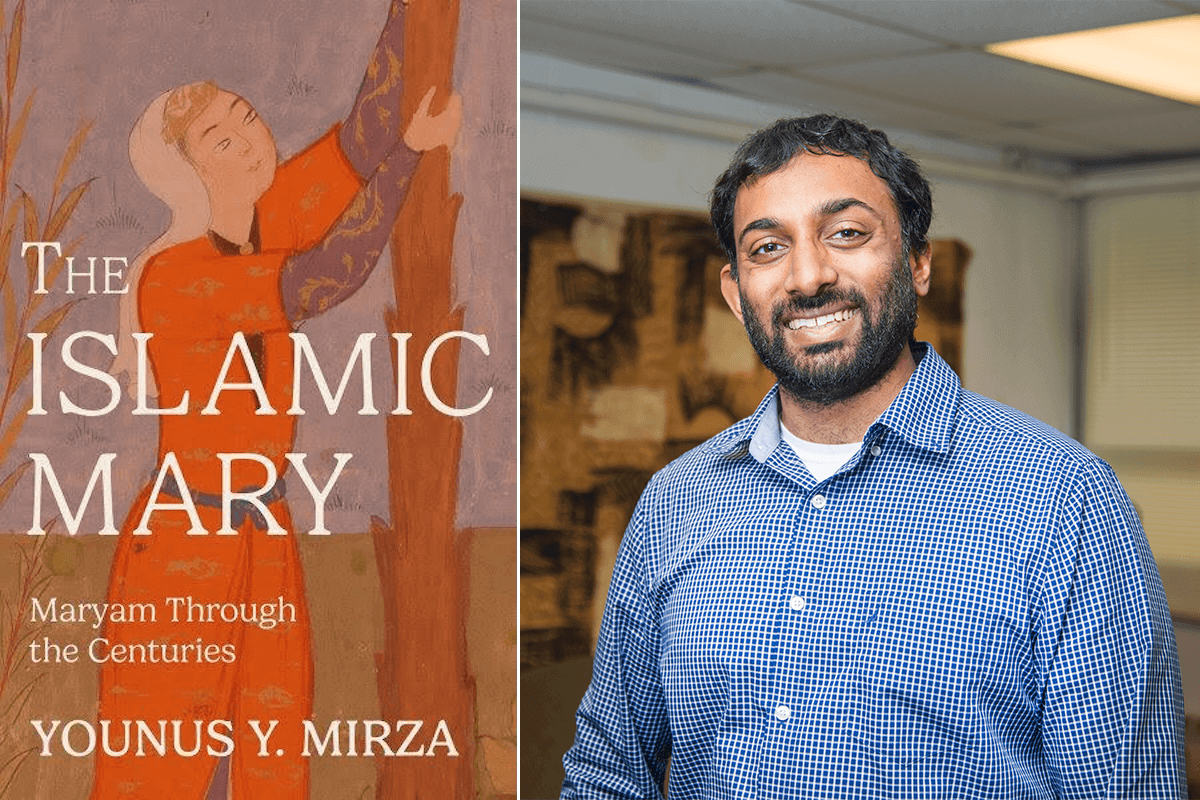
By Younus Mirza, Ph.D.
I belong to the 9/11 generation — a generation that grew up in the ’90s but came of age in the early 2000s and witnessed war, conflict, and religious misunderstanding. I remember being a boy when the Persian Gulf War started and the first images of war were broadcast on cable news. I participated in rallies to end the genocide in Bosnia and helped Bosnian refugees relocate to the United States. I was a student at Georgetown University when 9/11 happened and felt the impact of the event on my life and career.
During this time, a renewed emphasis on the “clash of civilizations” thesis appeared. In 1993, Samuel Huntington famously declared that one of the next threats after the fall of communism would be the “green” threat instead of the communist “red” one. According to Huntington, the next conflicts would be between civilizations with similar histories, cultures, and religions. He believed that “the next world war, if there is one, will be a war between civilizations.” In this new world, Huntington wrote, it will be the “West versus the rest” and Western civilization needed to bond together and quell internal strife to thwart external threats and nemesis. Within this scheme, “Islam” had its own civilization and provided a potential threat to the West alongside the “Confucian” civilization of China. As he famously declared, “Islam had bloody borders” and there was a historic and intrinsic conflict between “Islam and the West.”
But a counter-narrative developed, arguing that a conflict between Islam and the West was not inevitable and that the various civilizations and religions could live in peace and coexistence. This narrative built upon previous intellectual efforts that saw Abraham as a common figure between Judaism, Christianity, and Islam, and could unite the various religious traditions in an age of war and conflict. The great religions shared the idea of monotheism, scripture and ethics and overlapped in terms of values and culture. Some even suggested that the modern conflicts were akin to family feud or sibling rivalry as the different religions returned to the same father Abraham and were part of a larger family.
Whereas the term “Abrahamic” still holds currency, new books have emerged discussing the Islamic Mary or Maryam. These new books build upon the ecumenical spirit of the early discussions on Abraham but highlight a new figure that opens innovative possibilities regarding Christian-Muslim relations, spirituality, and women, and religion. While Abraham represents the classic patriarch with his sons Ishmael and Isaac “fathering” the great religions of Judaism, Christianity, and Islam, Maryam represents a woman, a mother, and a spiritual figure who has inspired millions throughout the centuries.
The emphasis on Maryam also highlights the importance of Christian-Muslim relations in the world today and in the future. According to a Pew Poll, Christians, and Muslims will be roughly the same number by 2050 and make up over half of the world’s population. As the 2007 “A Common Word” letter begins, “Without peace and justice between these two religious communities, there can be no meaningful peace in the world. The future of the world depends on peace between Muslims and Christians.” In other words, international peace is highly dependent on peace between Christians and Muslims and their interaction will have global consequences. The importance of mutual coexistence and interreligious understanding ultimately led me to write the book “The Islamic Mary: Maryam through the Centuries.” The book details how Islam has viewed Maryam throughout time and space and how she has been used as a bridge between different civilizations and faiths.
My research connects with my role as the director of the Barzinji Institute for Global Virtual Learning at Shenandoah University. The mission of the institute is to collaborate with institutions of higher education around the world to explore the similarities and differences in their missions and practices, to understand the challenges that they face and to create solutions in light of the UN Sustainable Development Goals (SDGs). Through the institute, we have promoted Collaborative Online International Learning, or COIL. The pedagogy connects classes from our home institution to those all over the world, and allows professors to develop a shared module where students from each institution work on collaborative projects. The projects are vast and imaginative, ranging from learning about marriage practices in the US and Malaysia to podcasts on climate change between US and UK students.
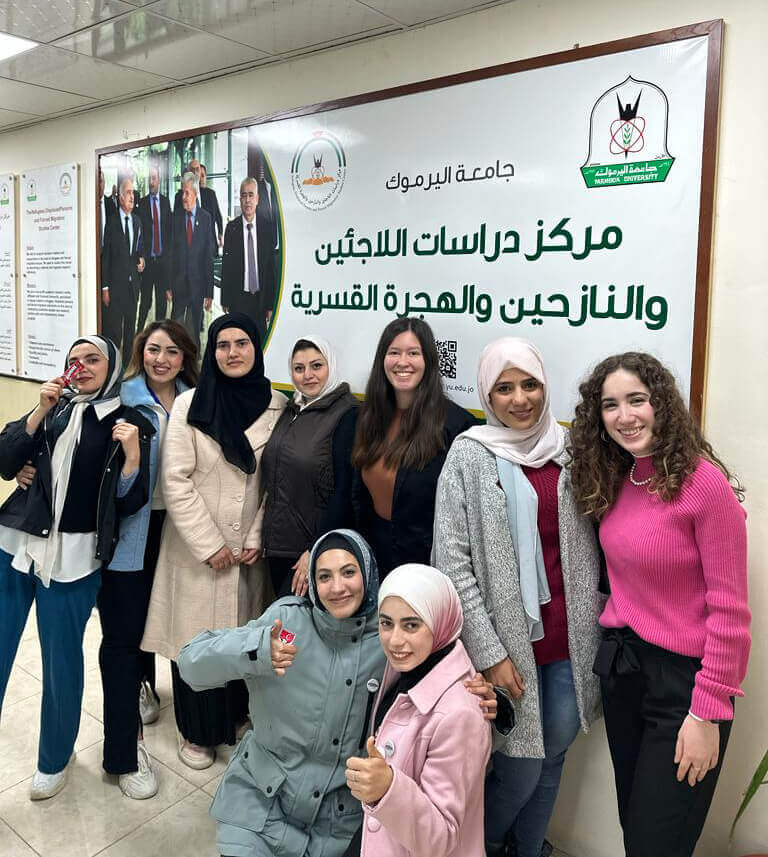
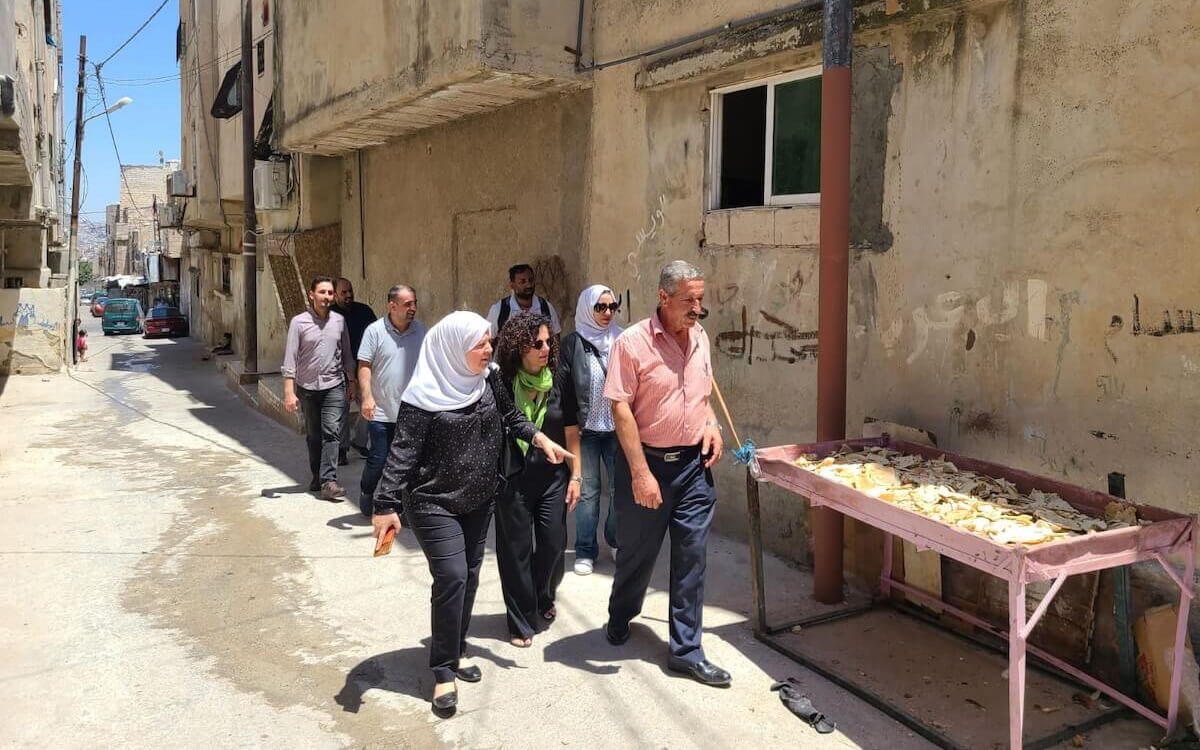
Similar to identifying shared figures, such as Abraham and Mary, the Barzinji Institute develops shared projects with international universities regarding common values and goals. These projects often center around the UN Sustainable Development Goals, which provide a starting point for how to think about and conceptualize joint initiatives. For instance, the institute coordinated a “Zero Hunger Project” with Yarmouk University in Jordan that aimed to address food insecurity in their respective communities. The various delegations conducted surveys on how to best serve their local clientele and shared the findings with one another. They traveled to visit one another and see first-hand the impacted populations. Members of the Jordan team were able to publish a paper, “Assessing Refugee Preferences for SDG 2 (Zero Hunger) Solutions in Irbid Camp and Sakhra Region,” in the internationally recognized journal “Sustainability” and their results have already influenced Jordanian government policy. Rebecca Gibson, Shenandoah’s director of civic engagement and a member of the U.S. “Zero Hunger” team, led the creation of a food pantry on Shenandoah’s campus through the Center for Civic Engagement. The pantry is run by the center’s work-study students. Rebecca notes that “I am so happy that my experience with the Zero Hunger project has opened the doors to a new opportunity for students to serve their own community.”
In conclusion, whether in my research or global exchange work, I am drawn to shared figures and projects across civilizations, regions and continents. The effort is not necessarily to “convert” but rather to share, compare, and exchange how people view a particular issue, challenge, or problem. The global dimension of the project helps enrich the discussion and develop innovative solutions to address worldwide challenges and problems. By collaborating on shared projects with similar goals and missions, different people from around the world can learn from one another and strive towards mutual peace and understanding.
Younus Y. Mirza is the Director of the Barzinji Institute for Global Virtual Learning at Shenandoah University. This blog draws on his new book The Islamic Mary: Maryam Through the Centuries. You can join the Barzinji Institute email listserv here.