New Historical Markers Explore 150 Years Of What It Means To Be A Hornet
The 10 wayside markers, located throughout Shenandoah’s main campus, were dedicated on Oct. 23 to kick off Homecoming weekend
By Natalie Gales ’25
Since Shenandoah University’s founding in 1875, it has been defined by 150 years of excellence, growth and resiliency. Thanks to a generous gift from the James R. Wilkins Charitable Trust and the work of the university’s History Department, led by Jonathan Noyalas ’01, M.A., the Hugh and Virginia McCormick Chair in Civil War History and director of the university’s McCormick Civil War Institute, Shenandoah’s history is now told through 10 historical markers that were recently installed around its main campus in Winchester, Virginia.
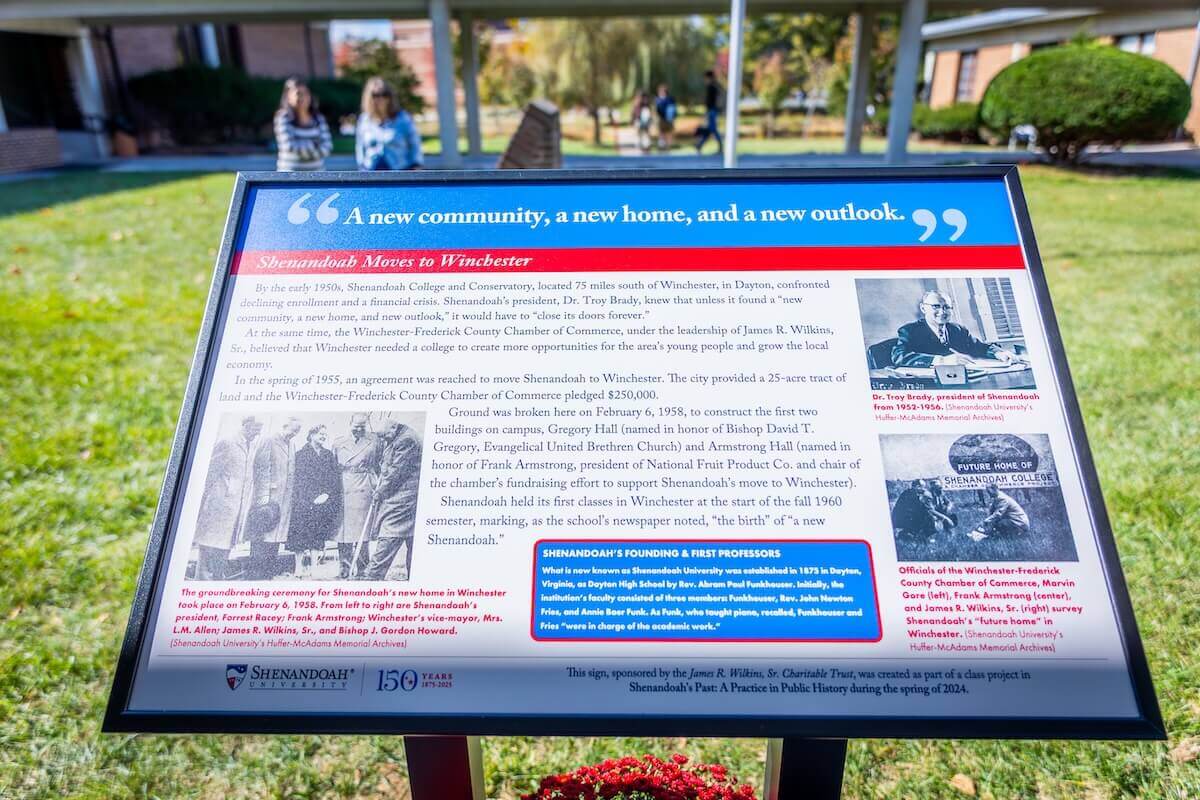
Each wayside marker focuses on a different aspect of the university’s history, ranging from Shenandoah’s establishment in Dayton, Virginia, to present-day developments. Noyalas’ goal for the project was to help students, faculty and staff better understand the university’s core values and what it means to be a Hornet.
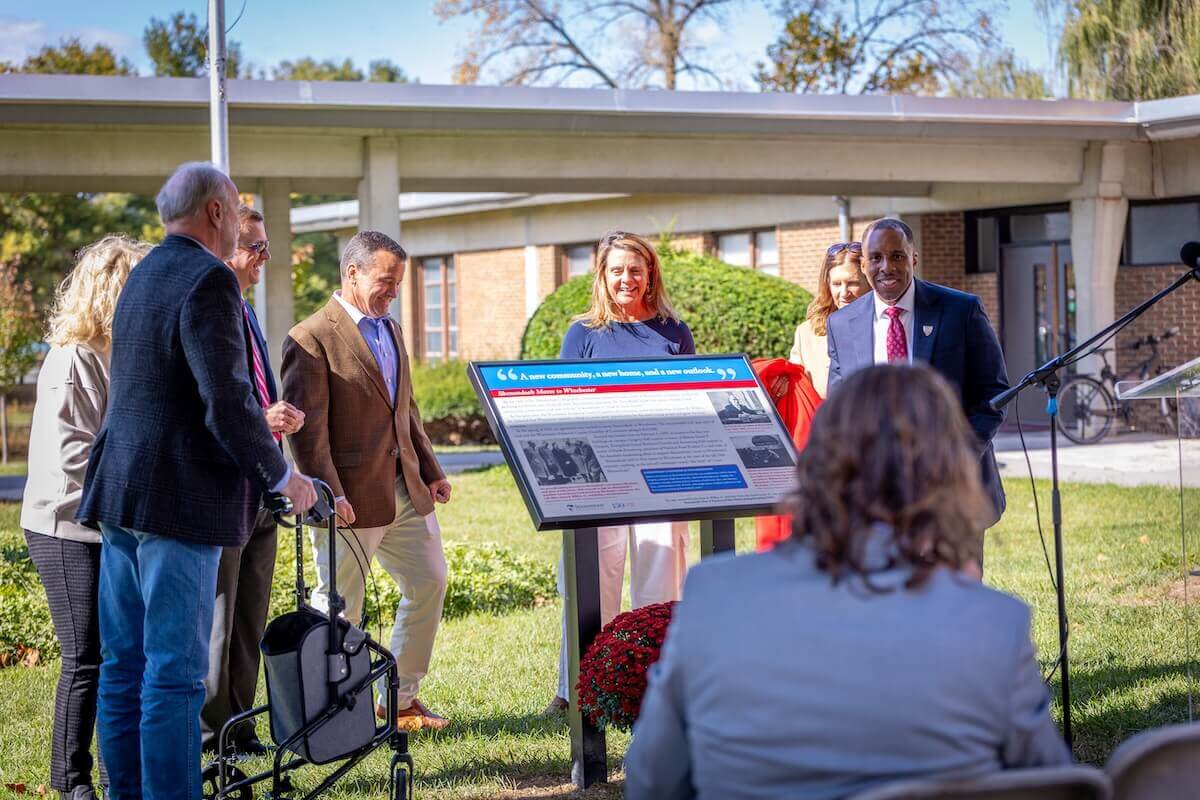
The markers were dedicated during a special ceremony on Thursday, Oct. 23, that kicked off Shenandoah University’s Homecoming celebration. The ceremony, which included remarks from Noyalas, Board of Trustees Chair James Imoh, university President Tracy Fitzsimmons, Ph.D., and trustee James R. “Richie” Wilkins III, took place in the courtyard between Armstrong and Gregory halls, where a marker commemorates Shenandoah’s move from Dayton, Virginia, to Winchester in 1960.
Each of these 10 wayside markers is an invitation to engage, to learn and to reflect. Each of these signs asks us to consider what it means to be part of a historical legacy that stretches back to 1875. Each of these signs challenges us to remember, to honor and to learn from our past. Each of these signs reminds us of the transformative power of education for individuals and the community. I hope that each of these historical wayside markers will not only function as snapshots of moments in Shenandoah’s past, but serve as symbols of memory, historical identity and purpose, signposts pointing Shenandoah forward, ever reminding us of who we are, where we have been, and where we can go for the next 150 years.”
Jonathan Noyalas
One of Noyalas’ favorite signs is posted by the Office of the President, outside of the Wilkins Administration Building. It explores the legacies of notable university presidents, such as Wade S. Miller, for whom Wade Miller Drive is named. He was Shenandoah’s president during World War II. During the war, he was offered a better-paid position at another college, and even still he took a pay cut to remain at SU. To Noyalas, it is this loyalty that sets the university’s leaders apart.
“Shenandoah is unique as an institution because, in moments of crisis, our presidents do things that other presidents don’t,” he said. “There’s such a deep commitment our leaders have had to this institution.”
Meanwhile, the sign outside of the James R. Wilkins, Jr. Athletics & Events Center entrance explores more recent SU history: the university’s commitment to supporting the community during the COVID-19 pandemic. At the time, the WAEC served as a vaccine inoculation site, demonstrating Shenandoah’s commitment to supporting Winchester at large.
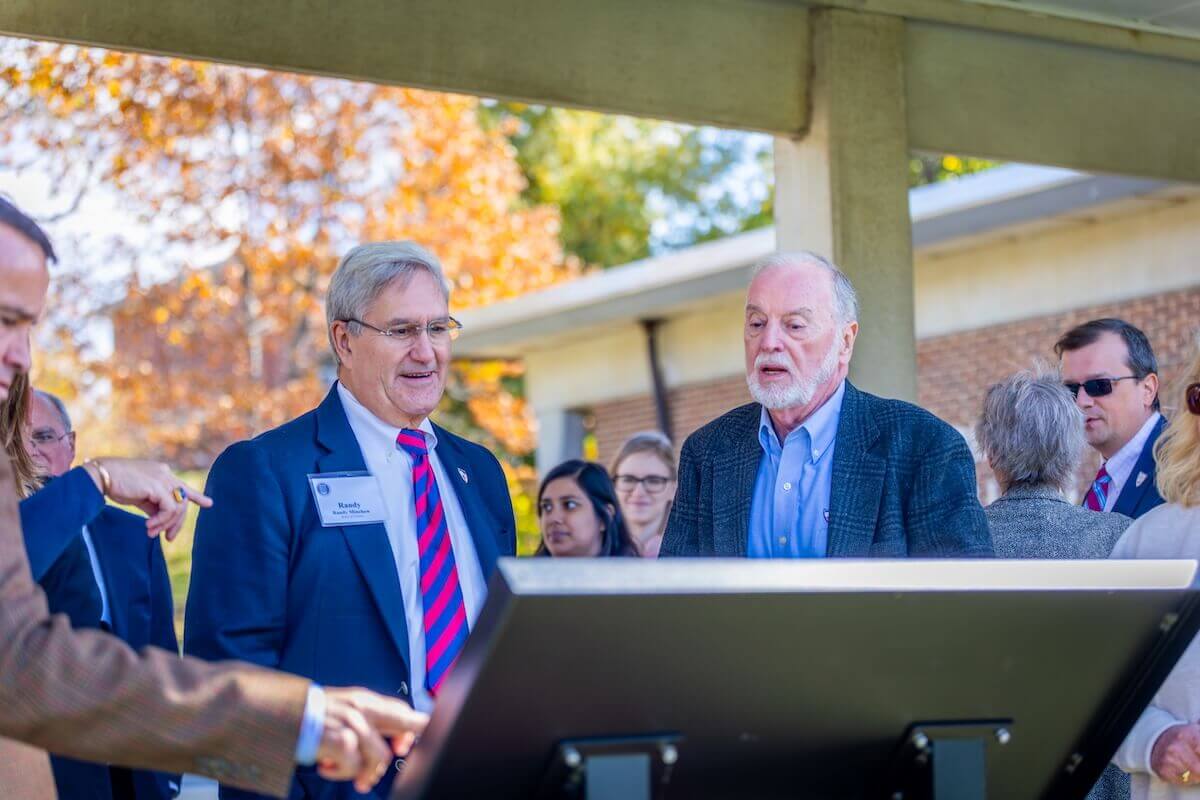
Other signs highlight the “lasting vision” of Shenandoah’s founder, Rev. A.P. Funkhouser; the “entrepreneurial spirit and fearlessness” of former president Jim Davis; the “centrality” of music and the arts at the university; the value of athletics; the bonds among students; and the traditions that have forged a strong sense of community among Shenandoah Hornets in Dayton and Winchester, Noyalas said.
In this way, the historical markers emphasize SU’s core values – leadership, community involvement, connecting with students, and more – as well as what it means, and has always meant, to be a Hornet. “History gives us a sense of who we are,” Noyalas said, in reference to the creation of SU’s culture of excellence.
It was in this spirit of community and connection that the historical markers came to be. Supported by a financial gift from the Wilkins family, Noyalas, along with Professor of History Warren Hofstra, Ph.D., led a group of history students — including Lucy Barahona ’25, Joshua Brooks ’24, Colette Girouard ’24, Jayce Hall ’24, Kyle Johnson ’25, Brennan Komelasky ’25, Liberty Tennyson ’25, and Morgan Vandergrift ’25 — in exploring Shenandoah’s archives. The students’ research, which included poring through thousands of documents, informed the topics chosen for the markers.
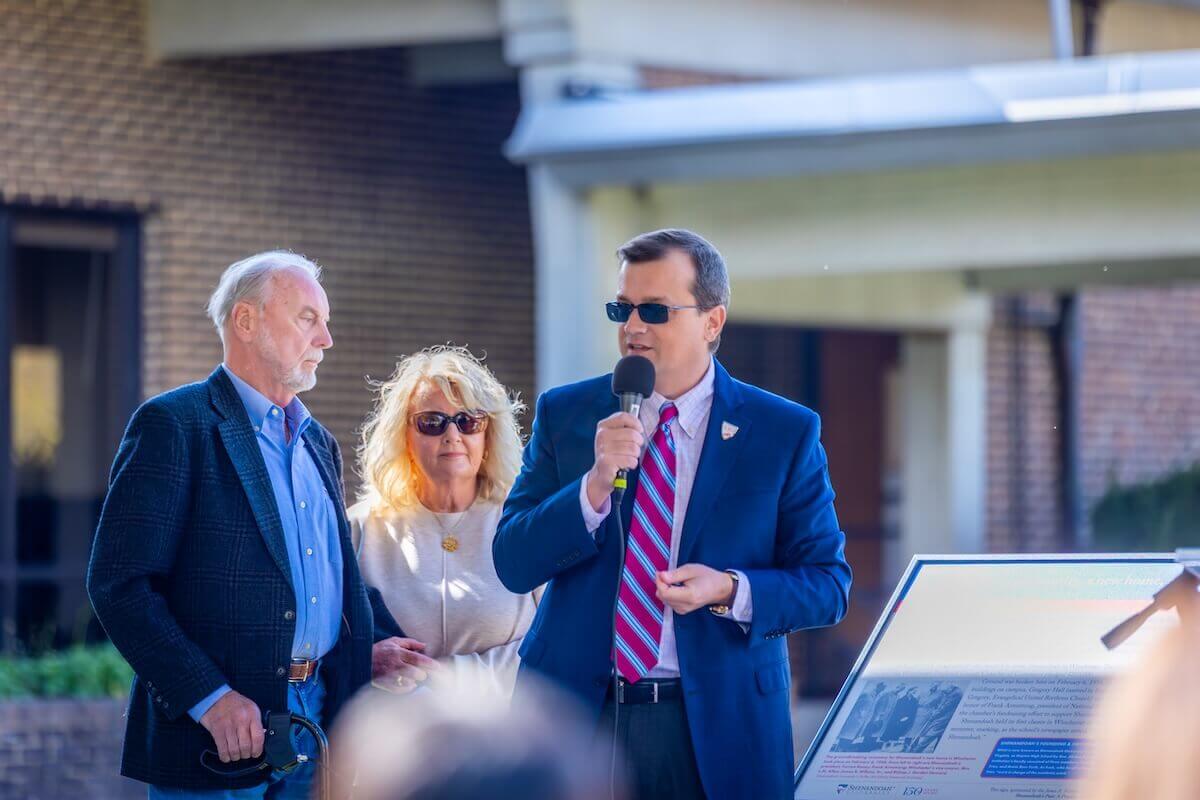
“How often do we get a piece of history put before us that celebrates the legacy of Shenandoah and all those involved, that was really created and built first by students?” Dr. Fitzsimmons said. “When we talk about students being at the center of everything we do, we’re talking about projects like this. So I’m so grateful to all of you who have been supportive of this, that have been involved with it, and most especially to the Wilkins family and the Wilkins Trust.”
Historical marker sites include the courtyard between Armstrong and Gregory halls, Davis Hall, Dayton Kissing Rock, Goodson Chapel-Recital Hall, Pruitt Health & Life Sciences Building, Racey Hall, Ruebush Hall, Wilkins Administration Building and the Wilkins Athletics & Events Center (two).