Artifact of the Quarter | December 2017
Horse’s Curb Chain at Cool Spring
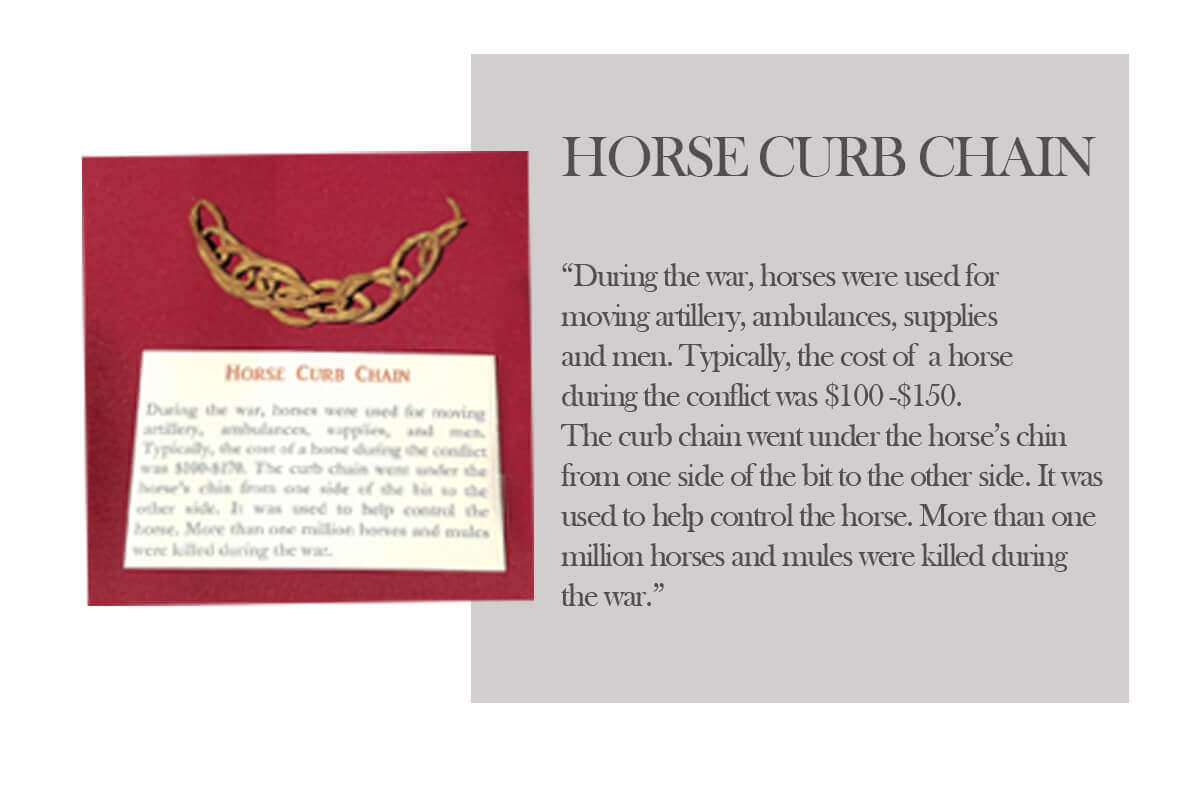
Contributed by Shelby R. Shrader
One of the greatest challenges for Union or Confederate forces during the Civil War was moving massive armies and all of the supplies necessary to keep those commands properly fed and equipped. While locomotives proved useful, armies could not have functioned had it not been for horses. From moving artillery, foodstuffs, ammunition, medical supplies, etc. both armies leaned heavily on horses.
During the Civil War the average cost of a horse was $150. Horses had to meet strict requirement for military use and had to be sturdy so that they could not only carry riders, but also haul heavy loads. Horses’ hooves also had to be in good condition to ensure they could carry their riders or cargo long distances. Additionally, horses could not be skittish, and had to be able to trot and gallop easily. Most horses that saw service during the conflict were between the ages of five and seven years old.
Once accepted for military service, horses usually had a short training period. The curb chain, pictured above from the exhibit housed in the Lodge at the university’s Shenandoah River Campus at the Cool Spring Battlefield, was often used to aid in better controlling a soldier’s steed during battle. The curb chain went under the horse’s chin from one side of the bit, and attached to the other side of the bridle. More than one million horses or mules were killed during the Civil War. The most common cause of death was from exhaustion. Other common causes of death included disease and being killed in combat.
Although oftentimes overlooked, horses played a crucial role throughout the Civil War. Simply put, horses were the engines that kept armies on the move.