Shenandoah University Releases ‘Lewis and Clark VR’
Shenandoah Center for Immersive Learning’s New Educational Virtual Reality Experience Follows The Famous Cross-Country Expedition
By Jace Gibson ’26
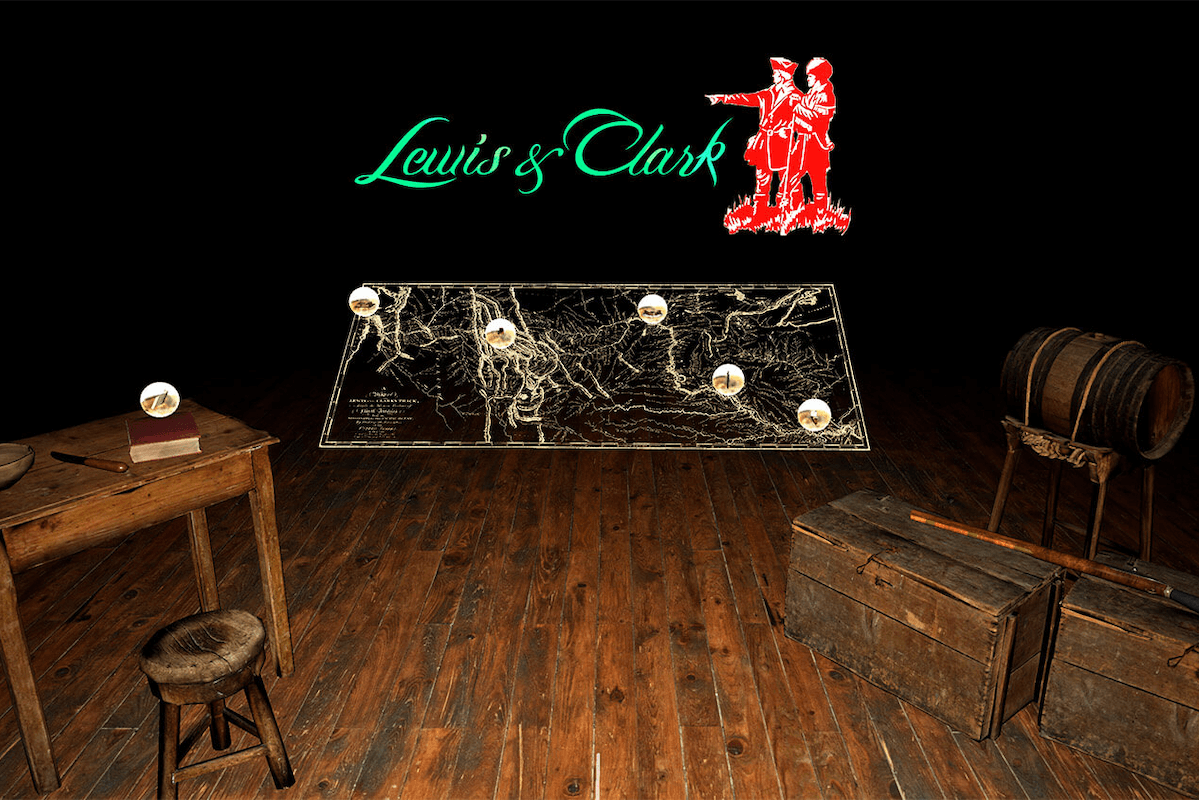
The Shenandoah Center for Immersive Learning (SCiL) at Shenandoah University has released “Lewis and Clark VR,” a virtual reality educational experience that follows the famed cross-country expedition led by Meriwether Lewis and William Clark in the early 19th century.
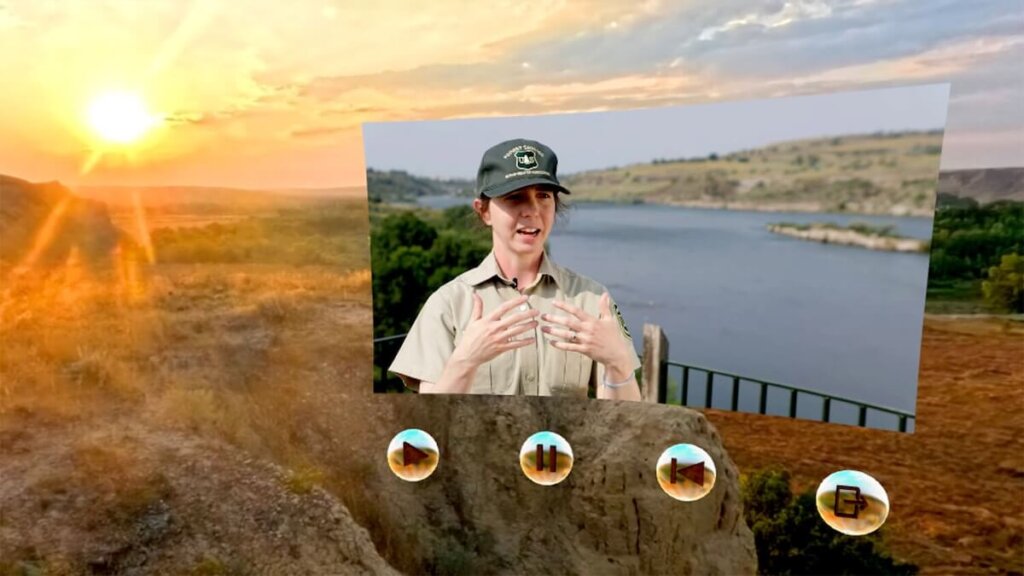
The VR experience, developed by a team of Shenandoah students led by Adjunct Instructor of VR Design and Immersive Media Specialist Lee A. Graff ’19, M.Ed., offers a new level of interactivity and access to the significant sites and moments associated with the expedition, and aims to capture newer audiences and expand users’ understanding of this important piece of American history through the use of immersive media.
It’s available for free download on the Meta store.
Our goal for ‘Lewis and Clark VR’ was to design an educational VR experience that would give students in K-12 and early college a new way to explore and understand this pivotal chapter of American history. We’re eager to release this app in a way that is easy for educators to find and use in classrooms, museums, interpretive centers, and even at home. We also see Lewis and Clark VR as a great way to give our students here at Shenandoah University resume-enhancing, professional design experience on a published VR application. Between the exciting opportunity to travel across the country and hands-on design and development work, this project has really accomplished a lot for SU students and alums.”
Nathan Prestopnik, Ph.D., director of virtual reality design (B.A.) and co-director of SCiL
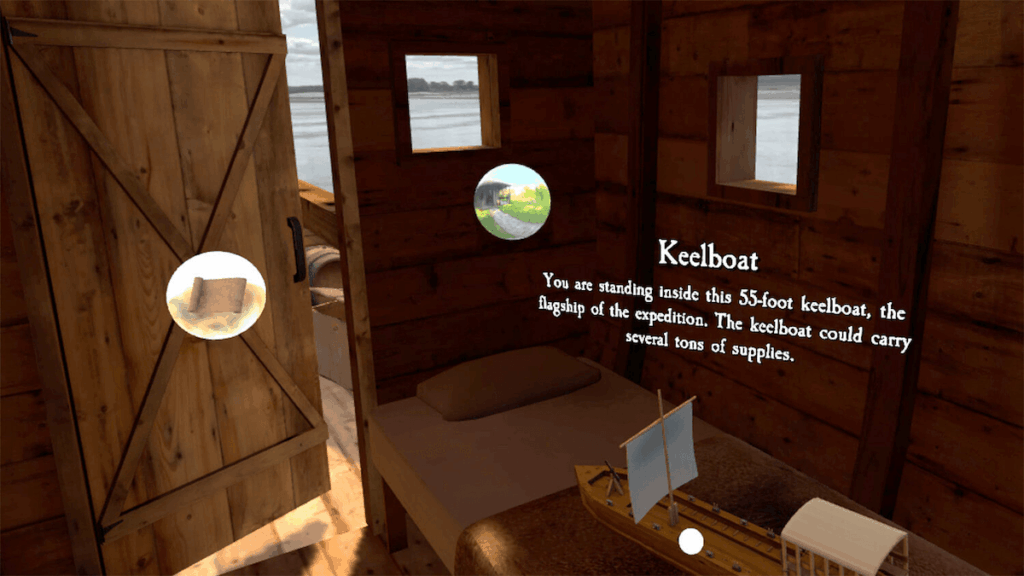
The VR experience allows users to experience key locations from the expedition – which began on May 14, 1804, in Camp Dubois, Illinois, and ended at Fort Clatsop, Oregon, nearly two years later – as well as scenes from the events leading up to the cross-country trip. The first of the VR experience’s five “hubs” include the Louisiana Purchase, the expedition’s early planning and recruitment, and the initial journey from the East Coast to the outskirts of St. Louis.
Throughout the other four hubs, users can interact with artifacts and key items used at different sites along the journey, and hear from over 20 history experts about the stories of Lewis, Clark, Sacagawea, and the rest of the Corps of Discovery, the team composed of U.S. Army and civilian volunteers led by Lewis and Clark. The VR experience also tells the stories of the lesser-known individuals who played prominent roles in the expedition.
SCiL plans to expand on the Lewis and Clark story through additional content updates.
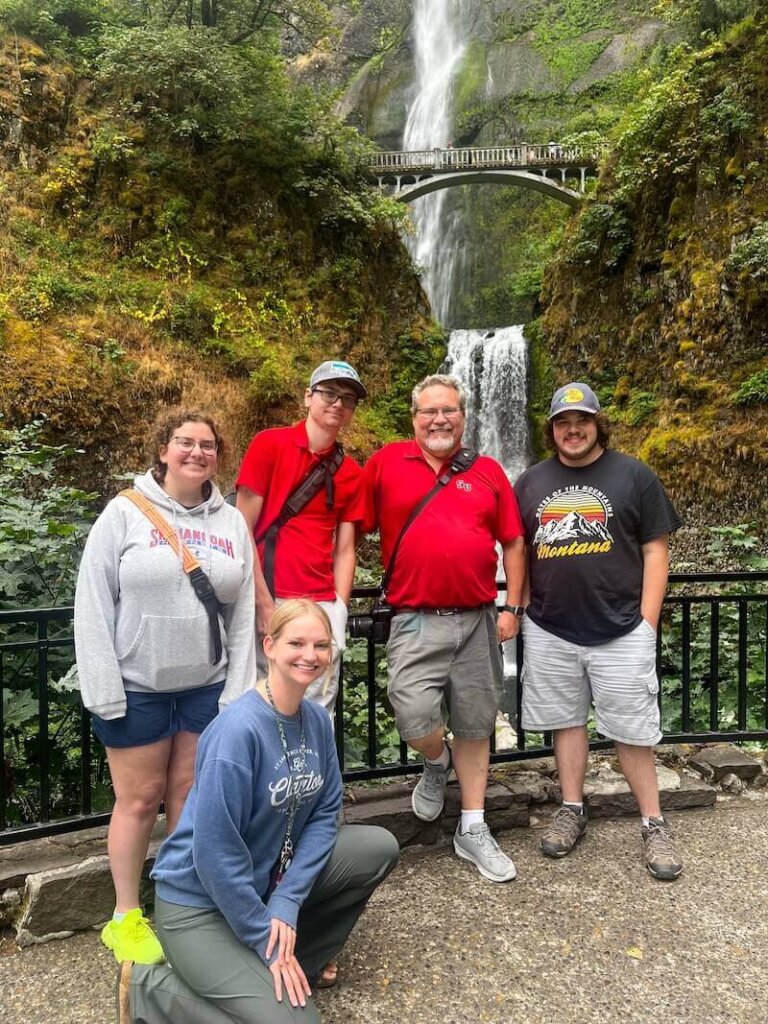
“Lewis and Clark VR” is the result of a nine-month, student-led development process that included a 12-day, cross-country road trip led by Graff in August 2024. During the trip, students retraced the steps of the Corps of Discovery as it explored the land acquired by the United States as part of the Louisiana Purchase in 1803.
Students Tyler Dossat ’25 (Bachelor of Science in virtual reality design), Ann Fink ’25 (B.S. in VR design), Joey Miciotta ’25 (Bachelor of Arts in VR design) and Gabby Pieklo ’25 (Bachelor of Arts in media and communication) captured 360-degree video, created 3D scans of important artifacts, took still images, and conducted interviews with experts during the trip. These assets were used to develop the experience, with students Jacob Eisenhart ’25 (B.A. in VR design), Ethan Swope ’25 (B.A. in VR design), Aaron Van Rens ’27 (B.A. in VR design and B.A. in film production), Kade Myers ’27 (B.S. in VR design), Jaden Galloway ’27 (B.A. in collaborative audio arts), El Lillard ’27 (B.A. in VR design), and Kacey Graff serving as 3D modelers, level designers, video editors, and sound designers.
Additionally, Immersive Technology Specialist Wes Brown and Operations Manager Mariah Arant were integral to the VR development and the coordination, planning and execution of the project, respectively. Graff, who came up with the idea for the project, was the project lead and content director for the project, with Dr. Prestopnik serving as executive producer, Arant as producer and Brown as VR experience director.
This project was funded in part by a $7,500 grant from the Lewis and Clark Trail Alliance.
“My hope is to get this project into the hands of educators, like high school or middle school teachers, who can use it as a supplement to their teaching about the time period, about Lewis and Clark, and events that were happening in and around 1803 and 1806 here in early America,” Graff said.
“Lewis and Clark VR” is available for Quest 3, Quest 3S, Quest Pro, and Quest 2 headsets.