Master of Music Therapy
The Master of Music Therapy (MMT) Program Prepares You for Advanced Clinical Practice.
The two-year, 33-credit Master of Music Therapy (MMT) degree provides advanced theoretical, clinical and musical knowledge and skills for Board Certified Music Therapists (MT-BC) who wish to advance their clinical practice. Students complete coursework in a combination of distance learning and intensive weekend retreats, with ongoing mentorship from faculty, allowing them to continue their work as a music therapist with minimal interruption.
Newly revised, the MMT degree emphasizes depth-oriented thinking, psychological processes and verbal processing. Aligned with and actively contributing to recent advances in the field, the program includes coursework in individual and group music psychotherapy, anti-oppressive and decolonial practices, critical approaches, and community activism.

I’m grateful to Shenandoah’s MMT program for the ways in which it supported my growth and identity as a music therapist. The coursework offered important opportunities to deepen my own justice-oriented approach to music therapy practice through experiential learning and critical dialogue in community with like-minded clinicians!”
– Kerry Devlin ’19, PhD, MMT, MT-BC
Senior Music Therapist
Johns Hopkins Center for Music and Medicine
Start Your Licensed Professional Counselor Training While Completing Your M.M.T. Degree
Students pursuing the MMT degree may complete coursework in the clinical mental health counseling program that fulfills the requirements to become a Licensed Professional Counselor (LPC) in Virginia. Students admitted to the MMT program may continue the LPC coursework after degree completion to fulfill these licensing requirements. Contact Dr. Meadows at anthony.meadows@su.edu for more information on the MMT-LPC program.
Learn More about the Master of Music Therapy Degree at Shenandoah
The music therapy program at Shenandoah University is one of only two programs in the state of Virginia, and our 50-year old program is a hub for music therapy activity in the community. Our faculty combine over four decades of clinical experience, with their unique perspectives and practices, to provide you with an educational experience tailored to your learning needs.
Students applying to the MMT program are eligible to apply for a graduate assistantship. Each assistantship provides partial tuition remission, along with a small stipend for each semester the student holds the assistantship. In addition to the financial benefits of an assistantship, students have the opportunity to:
- Teach music therapy classes, under the supervision of music therapy faculty
- Assist in the development of courses, through dialogue and feedback with course faculty
- Mentor students in the music therapy program
- Develop supervisory skills through the direct supervision of undergraduate and graduate students, in both academic and clinical settings.
For more information about graduate assistantships, please contact Dr. Meadows anthony.meadows@su.edu.
Music therapists work in a broad range of clinical settings — in healthcare, education and private practice. The American Music Therapy Association (AMTA) provides annual salary data for music therapists, updated each year and available online for review (www.musictherapy.org). In 2024, the average salary of a music therapist was $66,731. The average salary of a music therapist in Virginia was $56,405.
Classes are held online and during in-person intensive weekend retreats, allowing students to continue working. Students typically come to campus two weekends each semester, completing remaining coursework online (synchronously and asynchronously). In addition to core music therapy classes, students complete 9 credits of electives, which can be completed in the Clinical Mental Health Counseling program to fulfill academic requirements to become a Licensed Professional Counselor.
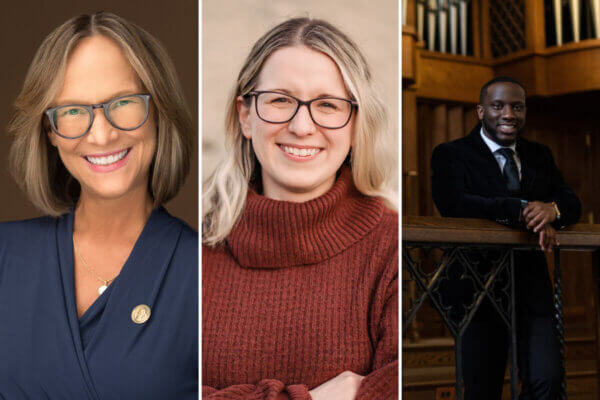
Celebrating our 50th anniversary in 2025, Shenandoah’s music therapy program is the oldest in Virginia, with a rich history of clinical preparation and research by students and faculty. Undergraduate and graduate classes are taught by a team of 11 faculty members, across four degree programs. Our graduate teaching faculty include:
Tony Meadows, Ph.D., MT-BC, LPC, FAMI, is Director of Music Therapy, advises all graduate students, and teaches in both the undergraduate and graduate programs. He is a GIM Fellow, Licensed Professional Counselor, and has more than 20 years of clinical experience. Dr. Meadows has published extensively in the field.
Bronwen Landless, Ph.D., MT-BC, has twenty years of clinical experience in a variety of psychiatric and community settings. With core values of belonging, wellbeing, and access at the center of her teaching, Bronwen facilitates collaborative teaching and learning communities in both the undergraduate and graduate programs. Her research, practice, and teaching are grounded in anti-oppressive, resource-oriented, and community music therapy approaches.
Brian Abrams (He/Him), Ph.D., MT-BC, LCAT, analytical music therapist and fellow of the Association for Music and Imagery, has been a music therapist since 1995, with experience across a wide range of clinical contexts. He has published and presented internationally on a wide range of topics such as music therapy in cancer care, music psychotherapy, humanistic music therapy and the interdisciplinary area of Health Humanities. He has served on the Board of the Mid-Atlantic Region of the American Music Therapy Association (AMTA), including as President from 2007 to 2009 and the AMTA Assembly of Delegates, including Assembly Representative on the AMTA Board of Directors from 2010 to 2013 (including Assembly Speaker from 2012 to 2013), and as an Assembly Representative Alternate from 2020 to 2023.
Applicants must have a bachelor’s degree in music therapy or creative arts therapy with a minimum grade point average of 3.0 (on a 4.0 scale), Music Therapy Board Certification (MT-BC), and at least one year of full-time clinical experience, or equivalent. After submitting your application, the director of the music therapy program will contact you and invite you to interview for the program. The interview is 30 minutes and focuses on your current experiences, specific interest in the program, and goals related to the program.