Explore A Career That Enables You To Make A Difference Every Day In Children’s Physical Health And Well-Being.
The Bachelor of Education degree in Health and Physical Education requires the completion of the Professional Studies Certificate in Health and Physical Education PreK-12 and core courses. Completion of this program meets the professional studies required by the Virginia Department of Licensure Regulations for Health and Physical Education Pre-K-12 teachers.
One of the most meaningful lessons I’ve gained through my program is how to make physical education accessible for all students. Recognizing that every learner brings unique abilities and needs, I now feel confident in my ability to design and lead inclusive classes that support and engage every student.
Connor Bartlett ’26 | Health and Physical Education major | Coaching minor
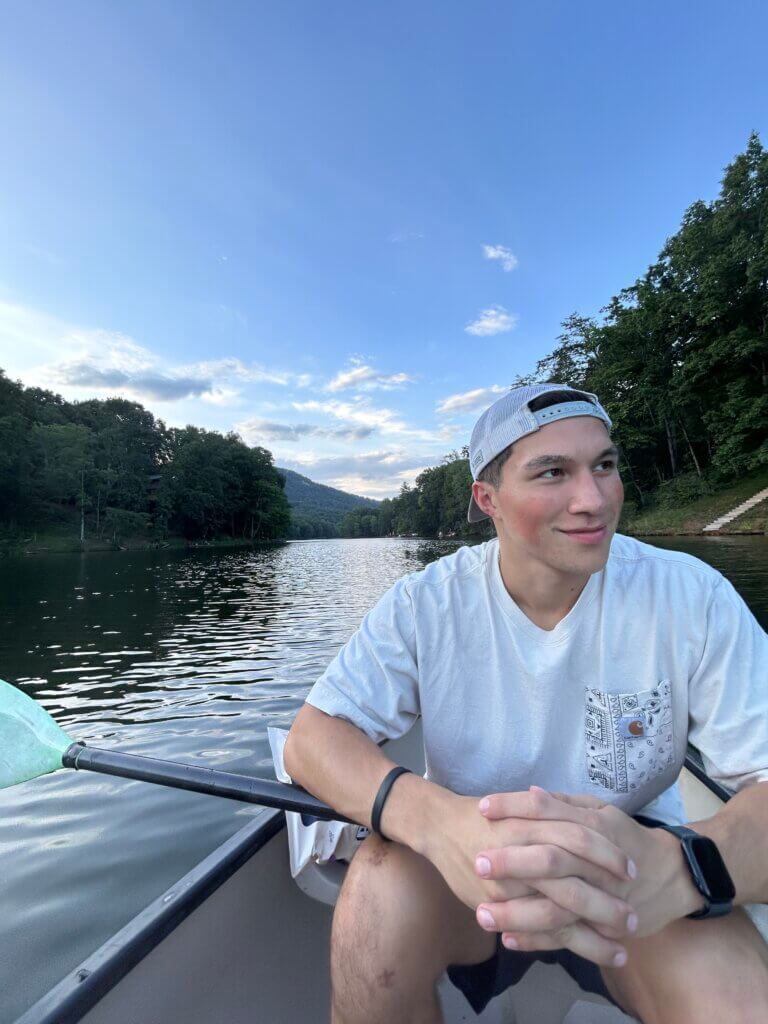
I love having the opportunity to work with students at the surrounding schools. I learned the ability I have to impact students’ lives for the better and leave a long-lasting influence on their lives.
Andrew Quach ’26 | Health and Physical Education major | Kinesiology minor
Students who complete the Bachelor of Education in Health and Physical Education PreK-12 major as shown in the semester course listing below also complete the Coaching Certificate, as it is built into the sequence.
*acceptance into the education program and VCLA required prior to taking these courses
KNS 305
Materials and Methods in Teaching Elementary Health and Physical Education
4
KNS 306
Materials and Methods in Teaching Secondary Health and Physical Education
4
KNS 308
Materials and Methods in TeachingHealth
3
RDG 425
Literacy in the Content Areas
3
Student Teaching Requirements
**2.5 overall GPA, 2.9 major GPA; Pass PRAXIS II in HPE and VCLA required prior to student teaching
KNS 452**
Elementary School Student Teaching in Health/Physical Education
5
KNS 453**
Secondary School Student Teaching in Health/Physical Education
5
KNS 454**
Student Teaching Seminar in Health/Physical Education
2
Program Total – HPE with Professional Studies Certificate and Coaching Certificate Total: 90 credits
Student Teaching is currently a 14-week field experience where you will be immersed in teaching in one or more settings, depending on your licensure field. The Office of Professional Licensure requests placements for you after you complete the requirements and fill out an application. Through our partnerships with area schools, mentor teachers work with you to hone your teaching skills and prepare you for your teaching career. It is during student teaching that you will conduct your Teacher Work Sample or action research project to demonstrate student achievement in your classes, and finalize your ePortfolio to document the evidence that you have met the Virginia Professional Performance Standards for Teacher Evaluation. You will gather with other student teachers in evening seminar classes to problem-solve issues, share teaching experiences, and prepare for job interviews.
Student Teaching Requirements for Health and Physical Education
**2.5 overall GPA, 2.9 major GPA; Pass PRAXIS II in HPE and VCLA required prior to student teaching
KNS 452**
Elementary School Student Teaching in Health/Physical Education
5
KNS 453**
Secondary School Student Teaching in Health/Physical Education
Students are admitted to the Bachelor of Education in Secondary Education degree in Pre-Candidate status, based on the entrance criteria established by the University, College of Arts & Sciences and Division of Education and Leadership. Students follow the course of study published in the Shenandoah University Undergraduate Catalog for their academic year of matriculation at the university.
Each Secondary Education student undergoes candidate screening by the end of their sophomore year or, if they are a transfer student, during or just after their first term at SU. To be eligible for Candidate Screening, Secondary Education majors must:
Successfully complete EDU 310 The Teaching Profession or its equivalent with practicum experience. Evaluations must be submitted by cooperating teachers;
Pass the following practice tests offered by “240 Tutoring”. Remediation is provided at this site for students who need support to pass:
Praxis Core: Reading Practice Test
Praxis Core: Writing Practice Test
Praxis Core: Mathematics Practice Test
Achieve a minimum grade point average of 3.0 in the education major; and
Earn satisfactory ratings from the Teacher Education Faculty Advisory Board.
The Teacher Education Application Process is as follows:
Student completes Teacher Education Program (TEP) application
Student provides contact information for Recommendations in the application
Submit the application to Office of Educator Licensure via link in the Teacher Education Handbook
Applications are reviewed on March 1, May 1, October 1 and December 1 (or on the nearest weekday)
The Faculty Committee Chair will schedule interviews and reflective writing times with applicants via email.
After the interview day, students will be notified via email letter of their status: approved, probationary (with conditions), or rejected (with appeals process noted). The Teacher Education Handbook gives more details on this process.
Student teaching is the culminating experience in the Bachelor of Education curricula. This final semester provides candidates with the opportunity to apply their classroom management skills, pedagogical knowledge, and subject-matter expertise in real-world setting.
To be eligible for student teaching, Secondary Education candidates are required to:
Pass the required assessment: Praxis II in Health & Physical Education
Maintain a 3.0 GPA in their major;
Successfully complete the application for student teaching (found in the Teacher Education Handbook), including submission of required recommendations;
Earn satisfactory ratings from the Teacher Education Faculty Advisory Board;
Complete a criminal background check within thirty days of student teaching.
Shenandoah University has been entrusted by the Virginia Department of Education and our K-12 School Partners with the responsibility for determining the fitness of an individual to student teach. Therefore, Shenandoah University reserves the right to determine that an individual is unfit to student teach.
All Secondary Education Core courses must be completed with a grade of C or better.
Students preparing to be teachers are expected to meet the requirements for teacher licensure currently in effect in the Commonwealth of Virginia. Most states grant teaching licensure on a reciprocal basis when the educating institution is approved by its own state department of education or when graduates of an institution are eligible for teaching licensure in the state in which they were educated. Teacher education programs at Shenandoah University are approved programs of the Virginia State Board of Education, and nationally accredited by the Council for the Accreditation of Educator Preparation (CAEP); thus, graduates will have met all educational requirements for Virginia licensure.
State Reciprocity – SARA
Shenandoah University is a member of NC-SARA, the National Council for State Authorization Reciprocity Agreements. View the licensure requirements for out-of-state students enrolling in Shenandoah programs leading to licensure. Click on the tab at the bottom of the screen to locate your program. Note that these requirements are subject to change. Please contact your program with questions.
State Reciprocity – Student Teaching
In all cases of reciprocity, student teaching is required, and having a valid state teaching license is always better than just taking a collection of courses. Shenandoah University prefers that its teacher candidates do their student teaching within a 60-mile radius of our campus locations so that they can be with SU’s trained teacher mentors in our partner school divisions because they understand our philosophy and programs, and have been involved in developing and evaluating them.
Make studying abroad the highlight of your college experience! Whether you go for a year, a semester, or just a few weeks. You will never forget learning in another culture! The Center for International Programs is here to help you plan your study abroad experience. Start your planning early to ensure the courses you complete abroad count toward your degree and you graduate on time.
The Global Experiential Learning (GEL) Program offers Shenandoah students a short-term, faculty-led, study-abroad experience for academic credit. These short-term, credit-bearing, faculty-led programs are offered winter break, spring break, and during the summer. If a course is not within your major, it might be used as an elective.
Shenandoah University is a member of the International Student Exchange Program (ISEP), a global network of 300 universities. This partnership allows students to study for a full semester or year at other member campuses abroad. By working closely with their academic advisors and the study abroad advisor, students can take classes taught in English abroad while receiving Shenandoah credit.
Shenandoah University also maintains direct partnerships with several universities around the world. These relationships allow students from SU to study abroad as exchange students and students from these universities to study at SU. All partner universities offer courses taught in English.
The Honors Program is a multidisciplinary Honors Program for students who are curious, creative, self-motivated, and eager to engage in their education and community.
Not only do Honors Program students partake in honors courses that emphasize collaboration, service, and communication, but they will also have the opportunity to develop aspects of the program based on their own interests and goals. By participating in the Honors Program you will acquire the tools, knowledge and experiences necessary to make meaningful contributions to your community – whether it be globally, locally, or specific to your life’s work. You will have access to unique courses, exciting experiences and a community of peers and faculty who never stop asking questions and striving for excellence.



 Philip Liversedge, Ph.D.