Time to redirect your career toward the rewarding field of nursing?
The Accelerated Second Degree BSN (ABSN) is an innovative program that allows students with non-nursing degrees to earn a nursing degree in 15 months. This program provides you with the necessary skills and knowledge for entry-level nursing positions in a variety of diverse health care settings. Financial aid may also be available to you, making earning your second bachelor’s degree affordable.
Fast Completion and High Pass Rates
This 15-month accelerated second-degree track is designed for someone who already holds a bachelor’s degree in a non-nursing discipline to complete a Bachelor of Science in Nursing quickly. Your existing bachelor’s degree will fulfill most of your non-nursing courses, allowing you to focus exclusively on your nursing studies and earn a BSN in only 15 months in a nursing school with above-national-average NCLEX pass rates. We prepare you to be successful for the national licensure exam. Our first-time NCLEX pass rate is among the highest in the state of Virginia.
We Support You
Support from faculty and classmates, hands-on experience at clinical sites and with top-notch simulation technology, small class sizes, and limitless opportunities – that’s what you’ll get as you study nursing at Shenandoah University. View our program requirements and reach out to the admissions team for any questions.
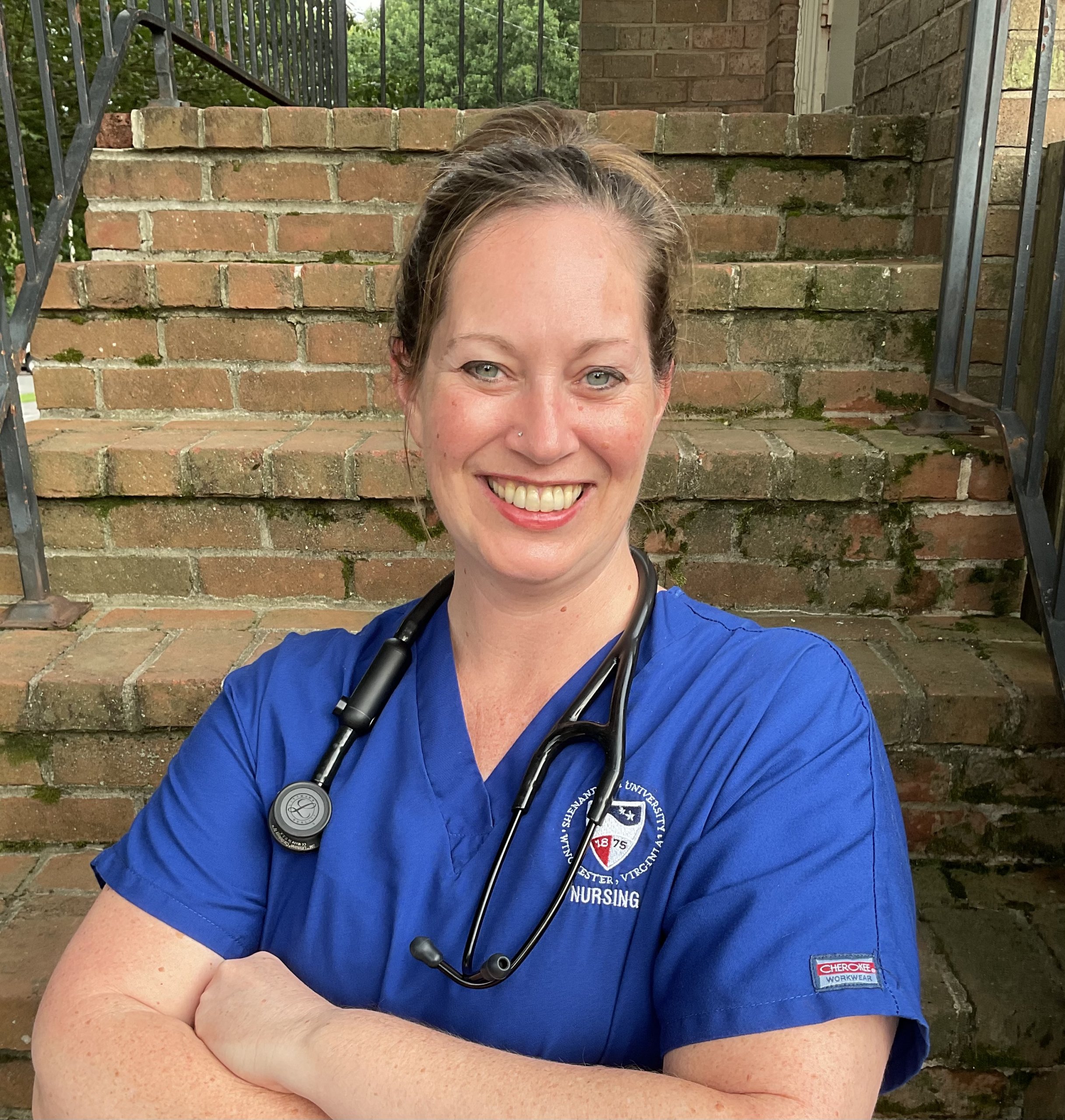
Shenandoah University’s ABSN program provided me with the necessary building blocks, at a pivotal point in my life, in the aftermath of the COVID-19 pandemic. With a career record in business management and early childhood education, adjusting the trajectory of my career to nursing was a simple decision during a challenging time. To anyone considering this program: do it; not only for yourself, but for the people who need your healing hands. Take it from me — it is never too late, and, in reflection, it feels like SU was right on time.”
Our students gain employment immediately at places like John’s Hopkins, Valley Health, St. Jude Children’s Research Hospital, INOVA, the Mayo Clinic and even in smaller privately own practices in the region and tri-state area.
Nursing school is hard, but you can do hard things. Shenandoah University has amazing support and resources that will make this experience worthwhile. The professors genuinely love what they do, and are so eager to share their knowledge and experience! I would encourage anyone considering a transition to nursing from another career to apply to the Accelerated Second Degree program. You won’t regret it!
– Hannah Meredith ’26 | Accelerated Second Degree Bachelor of Science in Nursing
A Student’s Perspective on the ABSN Program
At Shenandoah, our role is to help you prepare for success in this challenging and satisfying health profession. As a student here, you will have opportunities to share and learn from your fellow students, faculty and practicing nurses, from within the classroom to a range of clinical environments in hospitals and the community.
Our Accelerated BSN track is challenging, but the rewards of completing your degree and entering this critical profession are many. With the support of an experienced nursing faculty adviser, you’ll receive academic and professional guidance throughout your 15 months in the program. Our state-of-the-art, specialized nursing labs create an environment that prepares you exceptionally well for what you will experience in your clinical rotations. The Accelerated BSN Track is offered in Winchester, Virginia, at the Cecil Pruitt, Jr. Health and Life Sciences Building, and at the Loudoun location conveniently located on Route 7 just east of Leesburg, Virginia. After you’ve completed your studies, you’ll sit for the National Council Licensure Examination (NCLEX), prepared with the skills and knowledge needed to apply for entry-level professional nurse positions. We’re excited to share our programs with you.
I had just finished the fifth week of the first semester of the accelerated nursing program when I got an unexpected call from my brother that my mom had suddenly passed away. Within the first few days after my mom passed away I was also contacted by someone in the spiritual life department offering to talk to me if I needed to talk. I was also able to speak to one of my professors who was teaching the nursing psych class I was in and she helped me process through the different options of returning right away, coming back one semester later or waiting indefinitely to begin again. She also helped me with some counseling referrals. The accelerated nursing program is VERY intense. I don’t think I could have been successful at restarting this type of program without the added support I have received from SU. Several of the students who were in the cohort I started with have continued to support me in my journey of beginning again. My advisor has been an available support person I can turn to if I need to cry or get encouragement to continue pressing on. All of the faculty I have had have been so supportive, not just of me, but of all the students in our program
Amy Eckrote ’23
Simulation Experiences
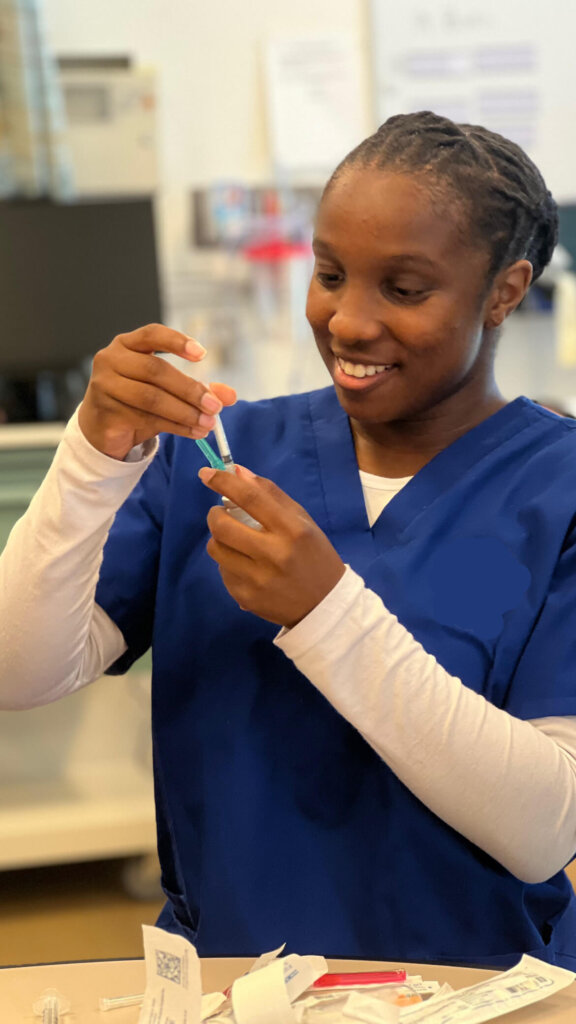
Shenandoah uses high- and low-fidelity simulation equipment in laboratories that enhance student learning. Simulation technology, in the form of human models/manikins, allows faculty members to design specific events or scenarios that simulate actual clinical situations and events. This technology provides an interactive, educational approach to teaching theory, assessment, technology skills, pharmacology and decision-making in a safe environment that allows you to apply and integrate knowledge, skills and critical thinking.
Clinical Experiences
Shenandoah University enjoys collaborative relationships with many regional hospitals and, in addition to our full-time faculty, our clinical preceptors are some of the finest practitioners in the region. Clinical locations can vary and typically include:
Winchester, Virginia, Clinical Locations:
Valley Health System hospitals including Winchester Medical Center, Warren Memorial Hospital, Shenandoah Hospital
WVU East Berkeley Medical Center
Martinsburg Veterans Affairs Medical Center
INOVA Health System
Varied community settings including Blue Ridge Hospice, Public Health Departments, Sinclair Free Medical Clinic
Loudoun Clinical Locations:
INOVA Health System hospitals including Loudoun, Fair Oaks, Fairfax, and Alexandria
Reston Hospital Center
Virginia Hospital Center
Children’s National Medical Center
Fauquier Hospital
Novant Hospitals
Interprofessional Experience
The Eleanor Wade Custer School of Nursing fosters interdisciplinary learning and practice through collaboration with our other health care programs, including pharmacy, physician assistant studies, physical and occupational therapy, athletic training, public health and music therapy.
After you’ve completed your studies, you’ll sit for the National Council Licensure Examination (NCLEX), prepared with the skills and knowledge to apply for entry-level professional nurse positions.
Shenandoah’s first-time NCLEX pass rate is consistently above the national average pass rate. Our NCLEX first-time pass rates are consistently among the highest in the state of Virginia!
Your final semester includes an NCLEX preparation course that is the key to our high pass rates for all of our students at Shenandoah.
Graduates from our BSN programs are eligible to apply for licensure/registration across the country. Once the NCLEX is successfully completed, graduates are designated as registered nurses.
Nursing is the fastest-growing occupation in the U.S. and the demand is expected to rise. Graduates enjoy high starting salaries and flexible schedules in terms of hours and locations. As a nurse, you’ll have numerous opportunities for specialization and career advancement.
The BSN degree is the entry-level degree for many health care organizations. It prepares you to perform clinical practice in today’s high tech health care environment, using clinical reasoning and critical thinking along with a caring demeanor.
The Eleanor Wade Custer School of Nursing prepares you to deliver, manage and lead nursing care in a variety of health care settings and participate in personal and professional development. You will be ready to do this in many settings, such as hospitals (acute care), clinics, medical practices, health departments, hospice and the military. You can work in international care, home care, trauma care or school nursing (you may teach in vocational LPN programs) and pursue graduate studies in advanced practice nursing, nursing education and research.
Salary information for nurses with a Bachelor of Science in Nursing can be found at BSN Payscale.com
The Career & Professional Development provides a comprehensive range of services and resources to assist Shenandoah students in their career search. Services offered include resume and cover letter building, mock interviews, and professional dining etiquette workshops.
Our nursing program has small classes, and faculty with expertise in a variety of specialties. Our curriculum includes core nursing courses, nursing ethics and genomics, nursing research and evidence based practice and Emergency Preparedness and Disaster Relief courses. Nursing students are also prepared in our campus learning facilities to develop knowledge, skills, clinical judgment and confidence.
Synthesize knowledge from the liberal arts, sciences, and nursing science as a basis for professional nursing practice
Apply evolving information technology to monitor healthcare outcomes
Integrate concepts of illness prevention/wellness, quality, safety, ethics and leadership into professional nursing practice within complex healthcare systems
Demonstrate effective communication and collaboration with patients, families and inter-professional teams
Deliver safe, compassionate, and holistic person-centered nursing care to diverse populations
Advocate for institutional, professional, and governmental policies to influence positive healthcare outcomes of diverse populations
Translate research into evidence-based nursing practice to provide quality care for patients, families, and communities
Examine the influence of social determinants of health on the delivery of equitable care to diverse populations/communities
Course Title
Credit Hours
1st Semester
Health Assessment (3/1)
3/1**
Psychiatric Mental Health Nursing (3/1)
3/1**
Foundations in Professional Nursing Concepts and Practice
3/1**
Pathophysiology
3
Pharmacotherapy
3
2nd Semester
Nursing Care of Adults I
3/2**
Theory, Research and EBP
3
Nursing Care of Adults II
3/2**
Ethics and Genomics in Nursing
3
Advancing Nursing Practice and Clinical Judgment
1/1**
3rd Semester
Nursing Care of Children and Adolescents
3/1**
Nursing Care of Childbearing Families
3/1**
Nursing Care of Adults III
3/2**
4th Semester
Community and Population Health
3/1**
Senior Nursing Capstone
0/3**
Advancing to Professional Practice
3
Leadership and Management in Professional Nursing Practice
3
Emergency Preparedness and Disaster Nursing
3
Total Nursing Credits: 65
Total Credits needed for BSN: 121
** Denotes a clinical course. The first number refers to the didactic portion of the course and the second number refers to the clinical portion of the course.
Students are required to have 121 total credits (from General Education, Prerequisite, and Nursing courses) to graduate with a Bachelor of Science in Nursing degree. A minimum of 30 credits must be taken at Shenandoah University.
Learning support services are available to all students in every course at Shenandoah. Free peer tutoring with a student who has previously succeeded in the course is available for any course across the university. The Writing Center is available for every stage of the writing process from proofreading and bibliography assistance to thesis development. The Math Enrichment Center is available for math and science assistance. Professors and Academic Advisors across the university also have office hours and open door policies to ensure Shenandoah students succeed academically.
We have a low faculty-student ratio with small classes and clinical groups so you will receive personal attention from faculty. The result is a close-knit, collaborative community of nursing students, faculty and clinical preceptors.
There is a special bond between Shenandoah University students and their professors. You will enjoy close relationships with faculty members who will mentor you in and out of the classroom. This remains a hallmark of our nursing education.
Professors are always there to help and will take time out of their day to make sure students understand the material. I like that in nursing, there is always an emphasis on empathy and inclusion. I am constantly being taught how to provide the best quality of care for patients.
Dymond Williams ’26
Shenandoah’s experienced and practicing faculty take every opportunity to provide you with the academic foundation you will need to meet the standards and rising expectations for practice in the nursing profession. They provide an environment where you can be inquisitive, grow and excel.
Meet Lesley McCorry, Associate Dean of Undergraduate Programs at Loudoun
Shenandoah University works on rolling admissions and accepts applications throughout the year. Applications are reviewed individually and holistically.
Submit your application, review required admissions materials, find our admissions standards, and learn more about our ABSN / Transfer Admissions Information.
Shenandoah has a great reputation for its health care degrees, so I knew I would get a top-notch education. I live in Loudoun County, and the convenience of the Loudoun location was a great option. Shenandoah also has great options for advanced practice nursing with a tuition discount for alumni, which was a bonus!”
Johanna “Joey” Vazzana ’23
The Eleanor Wade Custer School of Nursing at Shenandoah University offers assured graduate program admission to its BSN or MSN alumni who are interested in earning an MSN, post-master’s specialty certificate, and/or a Doctor of Nursing Practice degree.
Alumni must meet minimum admission requirements to the MSN, post-master’s, and DNP programs, and will be required to submit an application by the application deadline. Alumni are strongly encouraged to apply by the priority deadline of February 15 to secure placement within their desired cohort.
School of Nursing alumni are assured entry into the following graduate programs:
Family Nurse Practitioner (FNP) MSN
Psychiatric Mental Health Nurse Practitioner (PMHNP) MSN
Nurse-Midwifery (NM) MSN
All Post-Master’s Certificates – FNP, PMHNP, NM
Post-Master’s Doctor of Nursing Practice (DNP)
We encourage alumni to learn more about this benefit and our graduate programs. For more information, please contact Associate Dean of Graduate Nursing Programs Robbie McCauley, DNP, at rmccaule87@su.edu.
*Students in our BSN program must graduate and obtain their RN license. They must complete 2080 direct patient care hours prior to starting the specialty courses.
FAFSA Some students will still have loan eligibility through the Free Application for Federal Student Aid (FAFSA). Shenandoah University’s Office of Financial Aid can assess whether aid through FAFSA is still available.
Scholarships & Loans In addition, ABSN students can receive transfer scholarships and be considered for need-based scholarships. Other possible aid includes assistance through the Federal Nursing Loan program and private loans. For the federal program, students can contact Shenandoah financial aid at finaid@su.edu to see if they’re eligible. As for private loans, Shenandoah offers a resource to the most commonly used private lenders at https://choice.fastproducts.org/FastChoice/home/373700.
Employer Assistance Some employers may cover some tuition costs as well as a benefit; a company’s human resources office should be able to provide detailed information about that. Students can also divide tuition payments into four or five installments per semester to make payment more manageable.
Additional Aid and Loan Forgiveness If an ABSN student is still a dependent, their parent may also apply for a parent PLUS Loan on their behalf at https://studentaid.gov.


Shenandoah University’s ABSN program provided me with the necessary building blocks, at a pivotal point in my life, in the aftermath of the COVID-19 pandemic. With a career record in business management and early childhood education, adjusting the trajectory of my career to nursing was a simple decision during a challenging time. To anyone considering this program: do it; not only for yourself, but for the people who need your healing hands. Take it from me — it is never too late, and, in reflection, it feels like SU was right on time.”
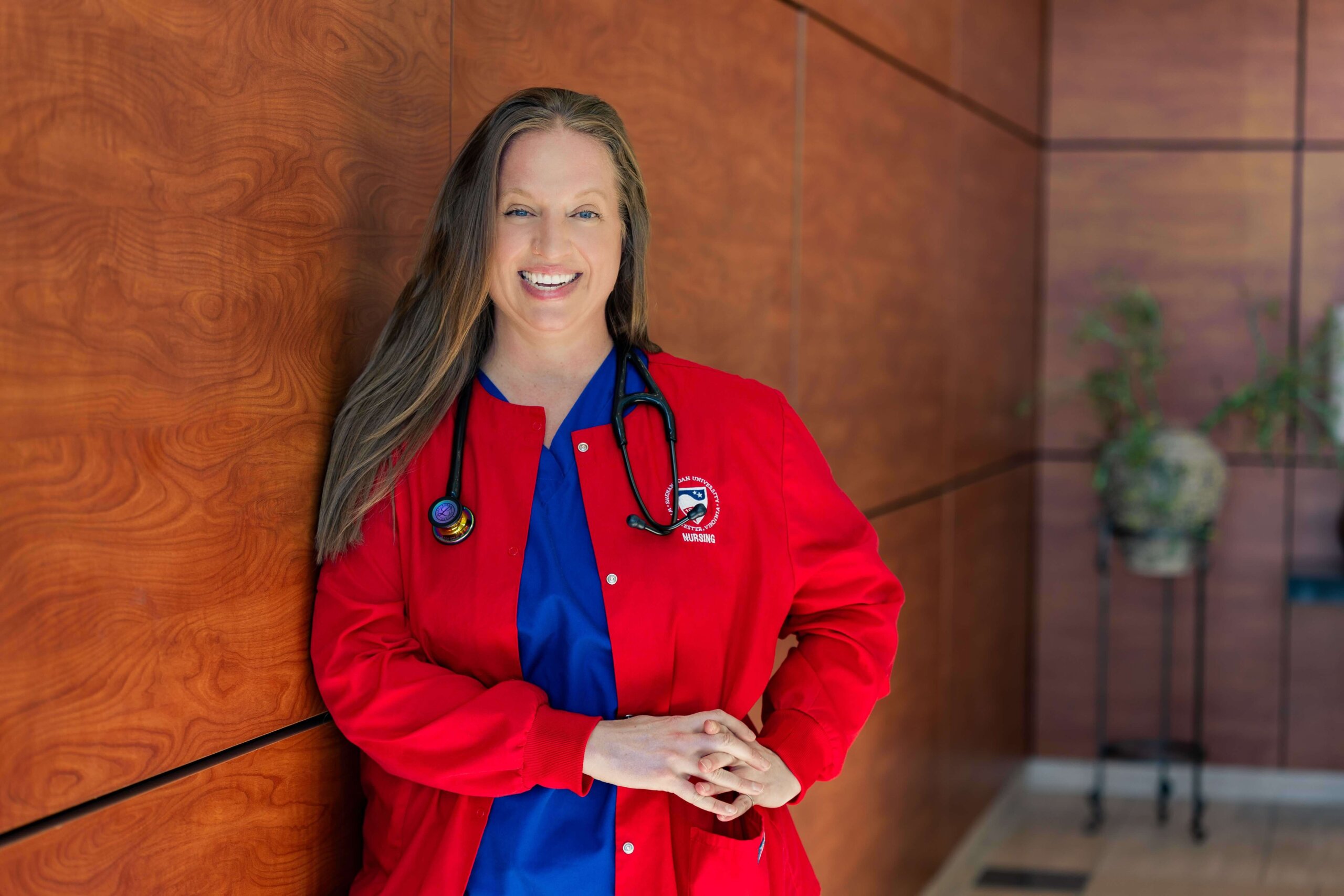
I had just finished the fifth week of the first semester of the accelerated nursing program when I got an unexpected call from my brother that my mom had suddenly passed away. Within the first few days after my mom passed away I was also contacted by someone in the spiritual life department offering to talk to me if I needed to talk. I was also able to speak to one of my professors who was teaching the nursing psych class I was in and she helped me process through the different options of returning right away, coming back one semester later or waiting indefinitely to begin again. She also helped me with some counseling referrals. The accelerated nursing program is VERY intense. I don’t think I could have been successful at restarting this type of program without the added support I have received from SU. Several of the students who were in the cohort I started with have continued to support me in my journey of beginning again. My advisor has been an available support person I can turn to if I need to cry or get encouragement to continue pressing on. All of the faculty I have had have been so supportive, not just of me, but of all the students in our program
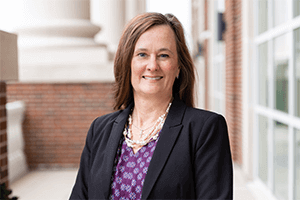 Meet Lesley McCorry, Associate Dean of Undergraduate Programs at Loudoun
Shenandoah has a great reputation for its health care degrees, so I knew I would get a top-notch education. I live in Loudoun County, and the convenience of the Loudoun location was a great option. Shenandoah also has great options for advanced practice nursing with a tuition discount for alumni, which was a bonus!”