Neighboring Heron Makes Appearances
Big Bird Enjoys Spaces Around University
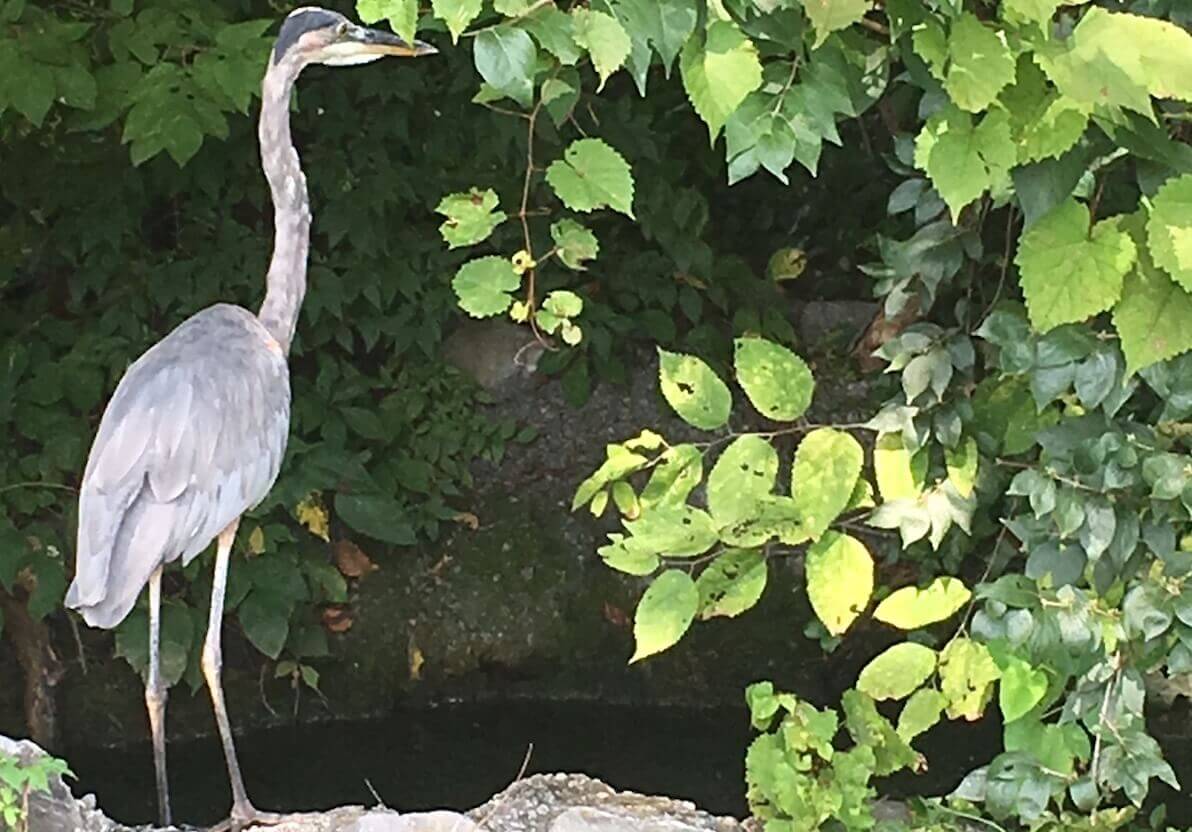
If you’ve decided to enjoy the summer weather by strolling on the sidewalks next to Abrams Creek or around Wilkins Lake in Jim Barnett Park, which adjoins Shenandoah, you might have almost run into a somewhat unusual neighbor: a great blue heron.
The heron, which towers above the more common Canada geese and ducks, has been sighted near the water during the spring and summer months. It, like the geese and ducks, appears to be used to humans, as it only saunters (as much as a heron can saunter) toward the creek or lake when a person approaches. In late August, it was easily spotted in the park as it wandered near Wilkins Lake.
There have been one or two resident great blue herons at Wilkins Lake for many years. Several years ago, the City of Winchester began allowing more bur-reeds and other aquatic plants to grow in Wilkins Lake. That’s created better habitat for the kinds of animals that herons eat, so I think we’re likely to see more herons here in future years.”
Professor of Environmental Studies and Biology Woodward Bousquet, Ph.D.
The Winchester-Frederick County Convention & Visitors Bureau, which is located next to Shenandoah’s Davis Hall, also caught the bird in action several months ago:
Herons, which nest in treetop colonies called rookeries, stalk their food along the shorelines of rivers, lakes, ponds and wetlands, Bousquet said. They primarily eat fish, frogs and crayfish.
While great blue herons are plentiful in North America, with a range that Bousquet said extends from southern Canada into Mexico, it’s likely that the neighbor heron will migrate south in October to Central America and northern South America.
And, if you miss this heron, you can see a multitude of them next spring by traveling a few minutes to the east of Winchester, to the Shenandoah River Campus at Cool Spring Battlefield in Clarke County, which provides a great viewpoint for checking out a heron rookery with over 20 nests.
An ideal time to see the herons in their nests is mid-April when the young have hatched and leaves don’t yet block the view.”
Professor of Environmental Studies and Biology Woodward Bousquet, Ph.D.