Middle Education
Become a high-quality middle school teacher!
The Bachelor of Education in Middle Education (6-8) is for individuals who want to join a community of educators working to improve the lives of their students through communication, collaboration and cooperation.
This program prepares individuals to become teachers through coursework that addresses pedagogical professional studies in education, including philosophical, psychological, sociological, and historical foundations, instructional strategies, behavior management, literacy development, and authentic assessment.
Students select Concentrations in two areas:
- English
- History/Social Sciences
- Mathematics with Algebra I Add-on
- Sciences
Education majors see the potential in all children from all walks of life and want to nurture them to become tomorrow’s educators, business owners, informed citizens, community leaders and government officials. Education majors become servant leaders.
While most other universities offer a Bachelor of Arts or Science, Shenandoah’s program is a Bachelor in Education — putting the focus on the expertise being developed and the career field graduates will pursue. The degree focuses on developing content expertise and expertise in how to teach that content to others.
You’ll complete coursework necessary to earn Virginia licensure, and spend 300-500 hours gaining hands-on classroom experience.
I love being able to go into schools and get experience in the classroom. Ever since my first year at Shenandoah, I’ve spent time in schools getting more comfortable teaching and working with students. We’re not just learning theoretical skills and strategies – we’re able to learn by doing and use those skills and strategies in practice. “
Taylor Bullis ’25 | Middle School Education w/ Endorsement in Special Education

Teacher education programs at Shenandoah University are approved by the Virginia Board of Education and the Council for the Accreditation of Educator Preparation (CAEP).
Public school teachers’ salaries are a matter of public record, and a search of a pK-12 Public School Division website will yield the salary scale.
Once employed, teachers are placed on a scale that shows incremental increases each year, according to degrees and credentials.
Because we are in a national teacher shortage, some schools are offering hiring bonuses to teachers with specific credentials, particularly in the greatest shortage areas. Salaries vary widely among divisions according to the population, wealth, and geographical location of the division.
Highly qualified educators can anticipate steady employment. Most teachers find their K-12 careers highly rewarding and personally fulfilling. Some beginning teachers find that they prefer to use their education skills and experience in other organizations, and choose alternate career pathways.
The Division of Education and Leadership also serves alumni or other adults with academic BA or BS degrees who find that they are drawn to teaching through job training, life, or the experiences of their own children, and want to gain initial licensure at the graduate certificate or master’s level. Shenandoah University offers graduate education options!
The impact that they have had on shaping me, preparing me and nurturing me into to a school leader has not only benefited me as a professional, but also my entire school community. Shenandoah University is not just any university. It is a place that nurtures learning, cultivates future leaders, inspires excellence, and welcomes every human being with open arms. My ultimate goal in education is to be a part of a university faculty. My hope is that I can be to others what they have been to me.”
Renee Dawson ‘10 | Principal at Brambleton Middle School
Career & Professional Development also provides a comprehensive range of services and resources to assist Shenandoah students in their career search. Services offered include resume and cover letter building, mock interviews, and professional dining etiquette workshops.
A strong component of the Middle School Teacher Education Program is a partnership with local schools where university students meet for class lectures and work directly with students and teachers in the school setting. University students begin observing in classrooms early in the program and advance to working as tutors, teaching large and small groups, and conducting classroom research.
Our program is student-centered, with plenty of access to faculty and advisers.
You’ll construct an e-portfolio, create a Teacher Work Sample and complete assignments that align directly with “the real world.” Through Shenandoah’s program, you’ll learn how to:
- plan developmentally appropriate lessons
- assess learning
- differentiate instruction
- manage a classroom
- integrate technology into the curriculum
- identify successful strategies for teaching and learning
The program will also develop your skills in:
- content knowledge
- pedagogy
- caring teaching
- multicultural perspectives
- learning to learn
- technology
Course Requirements
Students select Concentrations in two areas: English, History/Social Sciences, Mathematics with Algebra I Add-on, or Sciences
Required Courses: 120-125 credits
Middle Education Major (36 credits)
- PSY 222-Lifespan Development
- EDU 344 – Methods and Management in Middle/Secondary Schools
- EDU 310 – The Teaching Profession
- SED 433 – Language Acquisition and Reading Methods
- EDU 326 – Language Arts Methods
- RDG 425 – Literacy in Content Areas
- EDU 349 – Curriculum & Instruction in Middle/Secondary Schools
- EDU 441 – Student Teaching in Middle/Secondary Schools
- EDU 343 – Methods and Assessment in Middle/Secondary Schools Education Elective
Academic Concentrations | Choose Two
English Concentration (27 credits)
- ENG 201 Advanced Essay
- ENG 210 Modern Grammar
- ENG 230 World Literature*
- ENG 263 British Literature I* OR ENG 264 British Literature II*
- ENG 283 American Literature I*
- ENG 284 American Literature II*
- ENG 287 African-American Literature*
- ENG 311 Young Adult Literature
Mathematics Concentration plus Algebra I Add-on Endorsement (32 credits)
- MATH 101 College Algebra
- MATH 207 Intro to Statistics
- MTH 335 Mathematics for Elementary/ Middle School I
- MTH 336 Mathematics for Elementary/Middle School II
- MATH 201-Calculus and Analytic Geometry I*
- MATH 202 – Calculus and Analytic Geometry II
- MATH 209 – Discrete Mathematics
- MATH 302 – Multivariable Calculus
- MATH 405 – Geometry
- MATH 365 – History of Mathematics
History & Social Studies Concentration (27 credits)
- HIST 101- World Civilizations I OR HIST 102 -World Civilizations II
- HIST 104 -US History II
- HIST 201- The Practice of History
- EDU 361- Methods of Teaching Social Sciences
- PSCI 103- Foundational Ideas of Political Society*
- PSCI 201- American Government
- PSCI 202- State and Local Government*
- GEO 101-Physical Geography OR GEO 202 Human Geography*
Science Concentration (27 credits)
- BIO 111- Biology and Society
- CHEM 105- Chemistry and Society*
- PHYS 105- Physical Universe*
- GEOL 201- Physical Geology*
- EDU 336 -Reasoning Skills I – Science
- ES 105 – Field Natural History
Learning support services are available to all students in every course at Shenandoah. Free peer tutoring with a student who has previously succeeded in the course is available for any course across the university. The Writing Center is available for every stage of the writing process from thesis development to proofreading and bibliography assistance. The Math Enrichment Center is available for math and science assistance. Professors and Academic Advisors across the university also have office hours and open door policies to ensure Shenandoah students succeed academically.
Student Teaching is currently a 14-week field experience where you will be immersed in teaching in one or more settings, depending on your licensure field. The Office of Professional Licensure requests placements for you after you complete the requirements and fill out an application. Through our partnerships with area schools, mentor teachers work with you to hone your teaching skills and prepare you for your teaching career. It is during student teaching that you will conduct your Teacher Work Sample or action research project to demonstrate student achievement in your classes, and finalize your ePortfolio to document the evidence that you have met the Virginia Professional Performance Standards for Teacher Evaluation. You will gather with other student teachers in evening seminar classes to problem-solve issues, share teaching experiences, and prepare for job interviews.
Students completing the Bachelor of Education in Middle Education are able to:
- demonstrate an understanding of the curriculum, subject content, and the developmental needs of students by providing relevant learning experiences
- plan using the Virginia Standards of Learning, the school’s curriculum, effective strategies, resources, and data to meet the needs of all students
- effectively engage students in learning by using a variety of instructional strategies in order to meet individual learning needs
- systematically gather, analyze, and use all relevant data to measure student academic progress, guide instructional content and delivery methods, and provide timely feedback to both students and parents throughout the term
- use resources, routines, and procedures to provide a respectful, positive, safe, student-centered environment that is conducive to learning
- maintain a commitment to professional ethics, communicate effectively, and take responsibility for and participate in professional growth that results in enhanced student learning
- perform work that results in acceptable, measurable, and appropriate student academic progress
Imagine participating in interesting conversations led by engaging professors who’ve already done what you dream of doing. You’ll be in a small class — the average class size is approximately 12 students — with professors who know your name, care about your success and provide advice as you pursue your academic and career goals.
Students are admitted to the Bachelor of Education in Middle Education degree in Pre-Candidate status, based on the entrance criteria established by the University, College of Arts & Sciences and Division of Education and Leadership. Students follow the course of study published in the Shenandoah University Undergraduate Catalog for their academic year of matriculation at the university.
Candidate Screening
Each Middle Education student undergoes candidate screening by the end of their sophomore year or, if they are a transfer student, during or just after their first term at SU. To be eligible for Candidate Screening, Middle Education majors must:
1. Successfully complete EDU 310 The Teaching Profession or its equivalent with practicum experience. Evaluations must be submitted by cooperating teachers;
2. Pass the following practice tests offered by “240 Tutoring”. Remediation is provided at this site for students who need support to pass:
o Praxis Core: Reading Practice Test
o Praxis Core: Writing Practice Test
o Praxis Core: Mathematics Practice Test
3. Achieve a minimum grade point average of 3.0 in the education major; and4. Earn satisfactory ratings from the Teacher Education Faculty Advisory
The Teacher Education Application Process is as follows:
- Student completes Teacher Education Program (TEP) application
- Student provides contact information for Recommendations in the application
- Submit the application to Office of Educator Licensure via link in the Teacher Education Handbook
- Applications are reviewed on March 1, May 1, October 1 and December 1 (or on the nearest weekday)5. The Faculty Committee Chair will schedule interviews and reflective writing times with applicants via email.
After the interview day, students will be notified via email letter of their status: approved, probationary (with conditions), or rejected (with appeals process noted). The Teacher Education Handbook gives more details on this process.
Pre-Student Teaching Candidate Licensure Assessments
Student teaching is the culminating experience in the Bachelor of Education curricula. This final semester provides candidates with the opportunity to apply their classroom management skills, pedagogical knowledge, and subject-matter expertise in real-world setting.
To be eligible for student teaching, Middle Education candidates are required to:
- Pass the required assessments: Praxis II in one of your two content area concentrations;
- Maintain a 3.0 GPA in their major;
- Successfully complete the application for student teaching (found in the Teacher Education Handbook), including submission of required recommendations;
- Earn satisfactory ratings from the Teacher Education Faculty Advisory Board;
- Complete a criminal background check within thirty days of student teaching.
Shenandoah University has been entrusted by the Virginia Department of Education and our K-12 School Partners with the responsibility for determining the fitness of an individual to student teach. Therefore, Shenandoah University reserves the right to determine that an individual is unfit to student teach.
All Middle Education Core courses must be completed with a grade of C or better.
Students preparing to be teachers are expected to meet the requirements for teacher licensure currently in effect in the Commonwealth of Virginia. Most states grant teaching licensure on a reciprocal basis when the educating institution is approved by its own state department of education or when graduates of an institution are eligible for teaching licensure in the state in which they were educated. Teacher education programs at Shenandoah University are approved programs of the Virginia State Board of Education, and nationally accredited by the Council for the Accreditation of Educator Preparation (CAEP); thus, graduates will have met all educational requirements for Virginia licensure.
State Reciprocity – SARA
Shenandoah University is a member of NC-SARA, the National Council for State Authorization Reciprocity Agreements. View the licensure requirements for out-of-state students enrolling in Shenandoah programs leading to licensure. Click on the tab at the bottom of the screen to locate your program. Note that these requirements are subject to change. Please contact your program with questions.
State Reciprocity – Student Teaching
In all cases of reciprocity, student teaching is required, and having a valid state teaching license is always better than just taking a collection of courses. Shenandoah University prefers that its teacher candidates do their student teaching within a 60-mile radius of our campus locations so that they can be with SU’s trained teacher mentors in our partner school divisions because they understand our philosophy and programs, and have been involved in developing and evaluating them.
Make studying abroad the highlight of your college experience! Whether you go for a year, a semester, or just a few weeks. You will never forget learning in another culture! The Center for International Programs is here to help you plan your study abroad experience. Start your planning early to ensure the courses you complete abroad count toward your degree and you graduate on time.
Global Experiential Learning (GEL) Program
The Global Experiential Learning (GEL) Program offers Shenandoah students a short-term, faculty-led, study-abroad experience for academic credit. These short-term, credit-bearing, faculty-led programs are offered winter break, spring break, and during the summer. If a course is not within your major, it might be used as an elective.
Study Abroad
Shenandoah University is a member of the International Student Exchange Program (ISEP), a global network of 300 universities. This partnership allows students to study for a full semester or year at other member campuses abroad. By working closely with their academic advisors and the study abroad advisor, students can take classes taught in English abroad while receiving Shenandoah credit.
Shenandoah University also maintains direct partnerships with several universities around the world. These relationships allow students from SU to study abroad as exchange students and students from these universities to study at SU. All partner universities offer courses taught in English.
The Honors Program is a multidisciplinary Honors Program for students who are curious, creative, self-motivated, and eager to engage in their education and community.
Not only do Honors Program students partake in honors courses that emphasize collaboration, service, and communication, but they will also have the opportunity to develop aspects of the program based on their own interests and goals. By participating in the Honors Program you will acquire the tools, knowledge and experiences necessary to make meaningful contributions to your community – whether it be globally, locally, or specific to your life’s work. You will have access to unique courses, exciting experiences and a community of peers and faculty who never stop asking questions and striving for excellence.
Spotlights

Shenandoah’s 2026 Strong Scholars Named
Scholarship provides essential support to education majors as they student-teach
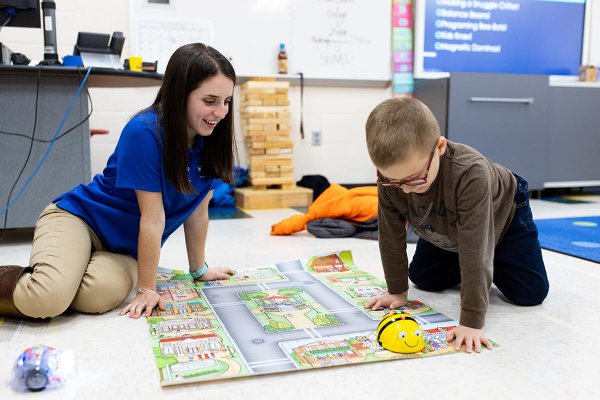
Getting Youth Excited About Science
SU students Create Maker Engineer Lab at Elementary School

Shenandoah now offers 4-year undergraduate education degrees
New legislation makes it easier for students to become teachers
Alumni Successes