Nurse-Midwifery Post Graduate Certificate
Make a difference in women’s health care through a career in nurse-midwifery.
Midwifery is one of the most rewarding advanced practice nursing occupations, providing you with the framework to promote physiologic birth and affirm the power and strength of individuals while addressing their general health. The Post Graduate Certificate (PGC) Midwifery program is designed for RNs who already hold a graduate degree (MS, MSN, DNP, or PhD) in Nursing. The Midwifery Certificate. provides the student with the necessary skills and knowledge to assume the role of a Certified Nurse Midwife (CNM) in a variety of clinical settings. The Shenandoah NM program is one of the few programs in the US that focuses on home, birth center, and hospital settings. The student will learn how to adapt their practice according to their setting. The NM program also focuses on rural health care and bridging the gap between urban settings and maternity care deserts, focusing on health equity.
Didactic and course content focuses on role development and the assessment and management of an individual’s health (antepartal, intrapartal, postpartum, and neonatal periods, as well as primary care) throughout the lifespan.
Cohorts are established annually in the fall. Upon successful completion of the program, students will be eligible to take the national certification examination given by the American Midwifery Certification Board (AMCB).
This program is offered in a fully online format with weekly synchronous class meetings. The NM degree requirement is 26 total credit hours with 720 clinical hours of clinical practicum.
Students attend an immersion each fall and spring term of the clinical year at the Winchester main campus. During this time, students learn to perform skills necessary to practice as a midwife, including water birth, intrapartum emergencies, physiologic birth support, well-women exams, and suturing. Students also learn the nuances of midwifery care, such as listening to clients, providing equitable care, using share-decision making and more.
The Nurse-Midwifery Program at Shenandoah University is fully accredited by the ACNM Accreditation Commission for Midwifery Education (ACME), 2000 Duke Street, Suite 300 Alexandria, VA 22314; Tel: 703-835-4565, support@theacme.org, theacme.org.
I received sensitive compassionate care and an impeccably individualized educational experience from each and every faculty member and office personnel here at Shenandoah University!”
Michelle Olson-White ’17 | Certificate in Nurse-Midwifery
The Nurse Midwifery Program at Shenandoah University
Shenandoah University offers a variety of options to receive training as a midwife. Learn more about the university’s midwifery initiative and graduate studies in nurse-midwifery from three current students. Nurse-midwives are advanced practice nurses who provide family-centered primary health care to women throughout their reproductive lives, including counseling and care during pre-conception, pregnancy, childbirth and postpartum periods.
Eleanor Wade Custer School of Nursing‘s programs are challenging, but the rewards of completing your degree and entering this critical profession are many. We are committed to providing an outstanding education to nurses at all levels— from nurses seeking a master’s degree and advanced practice certifications to existing advanced practice nurses seeking doctoral-level training. Our programs are dynamic and responsive to the needs of our students and the health care industry. We’re excited to share our programs with you.
The curricula for the Master of Science in Nursing (MSN) and Doctor of Nursing Practice (DNP) programs combine important knowledge and skills with a friendly and caring spirit. Our goal is to prepare and challenge you for that next step in your professional career.

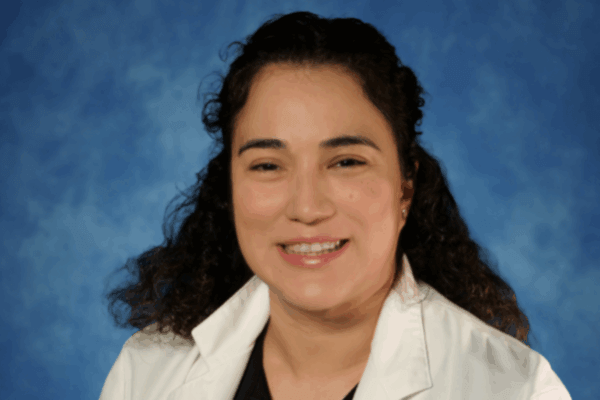
Lana “Amy Giles
Director, Nurse Midwifery
rjx58@su.edu
CNMs work in a variety of settings. Students at SU have the unique opportunity to learn about community (out-of-hospital) and hospital settings for births. The students also learn to care for clients in the office/clinic setting, providing patient education, primary antepartum, well-woman and contraceptive care, and menopause and hormone replacement. CNMs provide newborn care up to 28 days after birth. The professors at SU have community, hospital and rural experience and are experts in preparing the student for a career in any setting.
Graduates of the NMW Program will be able to:
- Synthesize evidence-based practice, clinical guidelines, and clinical judgment to improve the quality of clinical practice in diverse populations with consideration for social determinants of health.
- Apply ethical, cultural, legal, and social factors that influence access, equity, quality, and cost-effectiveness to nurse-midwifery practice.
- Demonstrate, through competency-based evaluation, the delivery, management, health policy process, and leadership of advanced practice nursing and population health in nurse-midwifery care settings.
- Create interprofessional dialogues and utilize healthcare technologies to optimize clinical decision-making and evidence-based practice to support and strengthen patient outcomes in all nurse-midwifery care settings.
- Construct a sustainable professional nurse-midwifery identity and practice that reflects compassionate, holistic, and wellness-focused person-centered care for diverse populations.
Philosophy – The philosophy of the nurse-midwifery program is in accordance with that of the American College of Nurse-Midwives (ACNM) and the Eleanor Wade Custer School of Nursing. The goal of the program is to prepare our students to provide safe, ethical, beginning nurse-midwifery care throughout the lifespan for a diverse patient population with varied needs. Graduates synthesize evidence-based knowledge and experience within established standards to provide equitable person-centered health care. This care includes primary care, gynecologic care, antepartum and peripartum care, as well as care of the newborn and facilitates the active participation of the individual as well as their family. Graduates use a collaborative and collegial interdisciplinary approach to secure optimal outcomes and further professional growth. The faculty is committed to developing graduates who are poised to be leaders in the field of nurse-midwifery as well as the nursing profession. Upon completion of the program, graduates are eligible to take the national certification exam.
Clinical placement is a collaborative process between the student and faculty. Students provide referrals for preferred sites/preceptors; the program directors customize the clinical experience student needs and wants as much as possible while prioritizing achievement of learning objectives and clinical competencies. The School of Nursing is responsible for final clinical site selection and student placement.
The program’s online format allows you to access course modules on the Canvas Learning System, attend classes on campus for a concentrated period of time, and be placed with clinical preceptors for 10 weeks.
Nurse-Midwifery Specialty Courses for Post Graduate Certificate Students *
| NM 610 | Primary Care of Women |
| NM 620 | Antepartum Care |
| NM 612 | Women’s Health |
| NMLB 624 | Midwifery Practicum I (189 clinical hours) |
| NM 640 | Comprehensive Perinatal Care |
| NM 641 | Perinatal Complications |
| NMLB 630 | Midwifery Practicum II (240 clinical hours) |
| NM 660 | Advanced Nurse-Midwifery Role Development |
| NM 652 | Evidence-Based Practice Project |
| NMLB 651 | Integrated Midwifery Internship (300 clinical hours) |
* Normally, the clock hour to clinical credit is 4:1, however, in courses with an IP clinical component, # of experiences should be sufficient to meet students’ learning needs. The length & timing of birth is unpredictable, therefore, students may require additional hours to gain enough experiences to successfully meet the ACNM Core Competencies for Basic Midwifery Practice 2020.
Total Credits: 26
Total Clinical Hours: 720
How long will it take to complete the program?
Once the prerequisite courses are taken, the post-grad certificate takes 3 terms
How are the classes offered?
This program is offered in an online format with weekly synchronous class meetings.
Can I attend the program on a part-time basis?
No.
Where are classes located?
Classes are online but students may utilize campus study rooms or the library on the main campus or at the Loudon location.
Main campus | 1460 University Drive, Winchester, VA 22601
Loudoun location I 44160 Scholar Plaza, Leesburg, VA 20176
Once accepted, is orientation mandatory?
Yes, orientation is mandatory. Orientation consists of two parts: 1) asynchronous modules to be completed after receipt of your welcome letter 2)synchronous online orientation and advising session. Note: All asynchronous modules must be completed prior to the synchronous orientation day.
Will I need a Virginia license?
Yes, you will need a Virginia OR a Multi-state license. You must be licensed in any state in which you will have clinical experiences.
What does it cost?
See the tuition and fees breakdown
SU alumni receive a per-credit discount.
What technology do I need?
A computer with internet and microphone capability.
To participate effectively in Shenandoah University’s distance learning courses, you must have full access to a reliable laptop/desktop connected to the Internet. Specific courses may have additional requirements and students should refer to the syllabus.
Computer Hardware Requirements: Your computer and communications hardware should meet or exceed these requirements:
**Your Internet connection may vary depending on where you live, what type of Internet connection you have, and your Internet provider. If your Internet connection is slower, you may still use SU features, however, you may encounter difficulties when loading pages, audio video playback may be choppy and downloading/uploading assignments may take longer, especially during peak usage times.
If you have any questions regarding Shenandoah University’s computer recommendations, please contact our IT Help Desk at helpdesk@su.edu or 540‐665‐5555.
Is there a certification test that I need to take after graduation?
Yes. graduates of this degree will be eligible to take the national certification examination given by the American Midwifery Certification Board (AMCB).
- Graduate application along with $30 application fee
- Earned MSN degree from CCNE or ACEN accredited institution with a minimum 3.0 GPA
- Unofficial transcripts for initial admission from all institutions of higher education previously attended
- 2 letters of recommendation (one from previous faculty if graduated in last five years)
- Current resume/C.V.
- Essay answering the following question: (AI generated essays not accepted)
- Why are you choosing to pursue the Nurse-Midwifery role?
- Documentation of 2,080 RN or APRN hours (direct patient care) hours
- Unencumbered RN license – multi-state preferred (must obtain licensure in clinical rotation state(s))
- Copy of Advanced Practice Nursing certification (if applicable). Applicants without national certification will be individually evaluated and must submit evidence of their specialty expertise.
- For active NP’s – Successful completion of MSN courses with a “B” or better:
- Advanced Health Assessment
- Advanced Pathophysiology
- Advanced Pharmacology
- For applicants with an MSN in a non-NP area:
- Undergraduate Chemistry course with a grade of “C” or better
- Will be required to take Advanced Health Assessment, Advanced Pharmacology, Advanced Pathophysiology at SU before progressing to specialty courses
- Interview with graduate nursing faculty may be required.
- Language Proficiency Requirement must be met. Submit TOEFL, IELTS, PTE, or Duolingo English test may be required. See our policy for full details: Https://www.su.edu/admissions/international-students
- Upon admission: up-to-date immunizations and health records, a criminal background check, a urine drug screen and CPR (from AHA only) will be required.
For international students who require a visa, due to limited on-campus hours, F-1 visas are not issued for this program.
How do I apply?
Submit the Graduate Application
The Eleanor Wade Custer School of Nursing at Shenandoah University offers assured graduate program admission to its BSN or MSN alumni who are interested in earning an MSN, post-master’s specialty certificate, and/or a Doctor of Nursing Practice degree.
Alumni must meet minimum admission requirements to the MSN, post-master’s, and DNP programs, and will be required to submit an application by the application deadline. Alumni are strongly encouraged to apply by the priority deadline of February 15 to secure placement within their desired cohort.
School of Nursing alumni are assured entry into the following graduate programs:
- Family Nurse Practitioner (FNP) MSN
- Psychiatric Mental Health Nurse Practitioner (PMHNP) MSN
- Nurse-Midwifery (NM) MSN
- All Post-Master’s Certificates – FNP, PMHNP, NM
- Post-Master’s Doctor of Nursing Practice (DNP)
We encourage alumni to learn more about this benefit and our graduate programs. For more information, please contact Associate Dean of Graduate Nursing Programs Robbie McCauley, DNP, at rmccaule87@su.edu.
Spotlights
Shenandoah University Named Among Top Private Universities In Virginia
U.S. News & World Report ranks Shenandoah No. 2 private university in the state

Director Of Shenandoah’s PMHNP Program Featured On Podcast
Paula Allocca, Ph.D., recently appeared on Peplau’s Ghost, a podcast that explores the use of psychotherapy by psychiatric mental health nurse practitioners

Three Honored With 2026 Algernon Sydney Sullivan Awards At Shenandoah University
Recent grads Amy Oleksy and Dylan Hill, staff member Elizabeth Albert earn national collegiate service award
Alumni Successes