The Shenandoah University Physician Assistant (SUPA) program is a graduate entry-level professional course of study enabling individuals who hold baccalaureate degrees to become PAs. The program is designed to prepare graduates for practice and the team approach to the delivery of healthcare. The program integrates graduate-level critical thinking and analysis, problem solving, scientific inquiry, self-directed learning and the effective use of modern technology for professional practice that includes elements of research, leadership, education and continued enhancement of the PA profession.
Students are never required to provide or solicit clinical sites or preceptors.
Students are expected to comply with the University’s policy on maintaining up to date immunizations and health screenings for health professions students on the website, based on the current recommendation of the Centers for Disease Control of the Wilkins Wellness Center: Health Forms Link.
Looking for more information on the PA profession and applying for admission? Check out the Physician Assistant Education Association’s (PAEA) main site and Pre-PA Student page where you’ll find a wealth of information about applying to PA programs, paying for school, CASPA, and much more.
All services and resources are available to students and faculty in the Winchester and Loudoun locations.
Preferred characteristics, individuals, and groups:
Candidates who can demonstrate an alignment with the core values of the program will be more competitive. This alignment is assessed in the SUPA admission process including review of application and interview.
Although the minimum GPA threshold for application is 3.2 for cumulative undergraduate GPA, overall science and prerequisite GPA, candidates with a higher GPAs will be more competitive.
Candidates with strong evaluations (references) submitted by professional and/or academic contacts will be more competitive.
Healthcare experience is strongly recommended to develop a solid understanding of the PA profession and the current healthcare landscape. Healthcare experience, patient care experience, and PA shadowing are not required for admission, however applicants with 50 or more hours of these types of experiences may receive additional consideration.
Candidates with highly effective communication skills such as poise, eye contact, articulation, clear train of thought, perceived comfort level, appropriate dress, and manners will be more competitive during the interview process.
Pathway Candidates:
Shenandoah University (SU) Early Assurance Program: High school students interested in applying to SU’s Early Assurance Program should review the information and requirements provided online at the Physician Assistant Early Assurance Pathway site.
Shenandoah University Articulation Agreement: An Articulation Agreement between SU’s undergraduate College of Arts and Sciences (CAS) and SU’s graduate School of Health Professions (SHP) provides a pathway to the Master of Science in Physician Assistant Studies for applicants who are enrolled as full-time undergraduate students at SU and will be obtaining a baccalaureate degree from SU. This agreement is available to all currently enrolled full-time SU undergraduate students who have not yet received a baccalaureate by the time of application.
Community Impact Pathway: The Community Impact Pathway creates an opportunity for a limited number of applicants who have demonstrated a high level of engagement with SUPA or Shenandoah University.
Prior Education:
Requirements for admission include:
A Baccalaureate degree from an accredited institution completed prior to matriculation to the program. Applicants from all academic disciplines are welcome to apply, provided they meet the prerequisite course requirements.
Prerequisite coursework completion. See tab below for more details.
Minimum 3.2 cumulative undergraduate, overall science, and SUPA prerequisite GPAs at the time of application submission. Any outstanding coursework that is not included in GPA upon application submission will be reviewed before matriculation. If a GPA falls below the minimum 3.2 threshold after application submission and before matriculation, a seat offer will be revoked.
Note: Average GPAs for students admitted to the SUPA Program have been over 3.5 for the past several years. Please refer to the Characteristics of Admitted Students below for more detailed information.
Advanced Placement and Transfer Credit:
The program does not offer Advanced Placement. Advanced Placement credit (AP), International Baccalaureate (IB), and College Level Examination Program (CLEP) credits are NOT accepted to fulfill prerequisite course requirements. The program will NOT transfer credits into the program from another PA program.
Prior Work Experience:
Work experience is not required for candidates applying to the SU PA program. The program does not offer academic credit for experiential learning or work experience.
Student Employment While Enrolled:
Employment is not recommended while attending the SU PA program. Enrolled students are expected to adjust their non-curricular demands in order to complete the degree requirements.
The admission information provides both the potential and matriculated student with details about the educational program leading to a Master of Science in Physician Assistant Studies (MSPAS). It should be viewed as an adjunct to Shenandoah University’s Graduate Catalog and the Shenandoah University Physician Assistant (SUPA) Program Student Handbook, which contain specific information regarding the university and related policies. This information is subject to change, and any updates will be communicated to candidates and students in a timely manner.
The SUPA Program participates in the Central Application Service for Physician Assistants (CASPA). This centralized application service allows applicants to apply to multiple PA programs nationwide through a single application. The following information is intended to help you understand our program application process for the 2026-2027 admissions cycle. All applicants are asked to read and adhere to the CASPA Admissions Code of Cooperation available on the CASPA website.
Technical Standards for admission establish the expectations and abilities considered essential for students admitted to the program in order to achieve the level of competency required for graduation and clinical practice. Candidates should review these standards before initiating an application.
Application
The SUPA Program processes an individual’s verified CASPA application once it is received and considered complete by the program.
An applicant’s file must meet the following requirements to be considered complete:
Cumulative undergraduate GPA, overall science GPA and SUPA prerequisite GPA calculated by CASPA. Official transcripts for all institutions of higher education attended should be submitted to CASPA.
Plan for outstanding prerequisites recorded in CASPA. Any outstanding prerequisites must be documented in the “planned” section of the CASPA electronic transcript to include term, institute name, and course details.
Three academic or professional references that show “Completed” status in CASPA. References may be provided by individuals who can speak to the applicant’s suitability for the physician assistant profession, such as a professor or academic advisor, a physician assistant or other medical professional, a shadowing or volunteer supervisor, a work supervisor, faculty club advisor, or athletic coach. Letters of recommendation from family members will not be accepted.
Supplemental essay submitted via CASPA. The application includes a supplemental essay in which candidates are asked to choose one of the SUPA Program’s core values and, in 200 words or less, describe a specific situation in which they demonstrated this value when doing so was difficult or inconvenient.
It is the applicant’s responsibility to check CASPA and our current website to make sure all requirements and documents are received in accordance with the admissions timeline below.
Program Review of Application
Verified and completed applications that meet the program’s requirements are reviewed after the CASPA verification deadline.
Interviews
After application review, selected candidates are invited to participate in an interview. Interviews consist of both traditional individual and group formats. The interview provides an opportunity to determine whether the SUPA program is the best fit for the candidate’s graduate studies.
Admissions Decisions
The admissions committee will recommend one of the following decisions based upon the program’s internal scoring model.
Full Admission: Offered to candidates with all prerequisites complete along with a conferred bachelor’s degree. Those with outstanding requirements will be recommended for provisional admission status.
Provisional Admission: Candidates with a bachelor’s degree and/or prerequisite courses “in progress” may be admitted as long as these requirements are fulfilled and official documentation received no later than May 31st, or the candidate’s admission offer will be withdrawn.
Alternate Status: Applicants selected as alternate candidates will be notified of their final admission status by late June. Those not admitted from the list must reapply if they wish to be considered in a subsequent cycle. Rank or position on the list will not be disclosed to candidates.
Denial: Applicants not selected for one of the admission status categories above will be notified of denial.
Decisions are communicated to applicants via email in CASPA within 30 days of interview.
The program requires a non-refundable $500 advanced enrollment deposit to secure seat placement. This amount is applied toward the first semester’s tuition payment.
Other Requirements
Prior to beginning coursework, students are required to authorize and submit to a criminal background check, including sex offenses and crimes against minors. A history of a conviction at the felony level may prevent the student from placement for clinical training and thereby ability to satisfy graduation requirements. Students must also submit to drug testing required by clinical practice sites or the program. Non-compliance with the criminal background checks and/or drug testing policies may be cause for dismissal from the program.
CASPA Opens
April 30, 2026
Application completed and submitted to CASPA
July 1, 2026
CASPA verification deadline
August 1, 2026
Interview top candidates
Interview #1 October 19, 2026 Interview #2 October 20, 2026 Interview #3 October 23, 2026
Deposit due
2 weeks after admissions email is received
Classes start
June 2027
Note: An optional interview date may be offered in Spring 2027 for placement on the program’s alternate list.
Mandatory orientation for the Class of 2029 will take place June 2027, before the start of the first summer semester at a date communicated upon seat offer.
Applicants applying to the program under Early Assurance, Articulation Agreement, or the Community Impact Pathway must submit a completed application that is verified by CASPA by July 1, 2026. For more detailed questions about these three pathways, please email pa@su.edu.
Required Prerequisites
The courses below are required to be successfully completed prior to matriculation. No more than TWO prerequisites can be outstanding at the time of application.
Course Name
Number of Courses
Minimum credit (semester)
Minimum credit (quarterly)
Human A&P I and II with Labs
2
8
10-12
General or Introduction to Chemistry
1
3
4
General Biology or Biochemistry
1
3
4
Microbiology with Lab
1
4
5
Psychology*
1
3
4
Statistics or Biostatistics
1
3
4
Total
7
24
31-33
*Accepted Psychology courses to fulfill this requirement include General Psychology, Introduction to Psychology, Developmental Psychology, and Abnormal Psychology.
Recommended Coursework
The courses below are recommended to better prepare for the Shenandoah University Physician Assistant curriculum; they are not evaluated to determine competitiveness of an application.
Course Name
Number of Courses
Credits (semester)
Credits (quarterly)
Medical Terminology
1
3
4
Biochemistry or Organic Chemistry
1
3
4
Developmental or Abnormal Psychology
1
3
4
Important Notes
A grade of “C” or above is required for all prerequisite courses, however, it is strongly recommended that prerequisites be completed with a grade of A or B. Grades of “C-” or below are not accepted for prerequisite courses.
No more than TWO prerequisites can be outstanding at the time of application. This includes current and pending coursework.
It is recommended that all prerequisite coursework be completed within 5 years of matriculation; the program will notaccept any prerequisite coursework taken 10 years before the time of matriculation.
The program requires completion of Human Anatomy & Physiology coursework, including the corresponding laboratory components. Human Anatomy and Human Physiology may be completed as individual courses or by taking a combined Anatomy & Physiology I and II sequence.
Prerequisites must be completed at a regionally accredited college or university in the United States, which includes community colleges. Courses completed at Canadian institutions will be evaluated on an individual basis.
It is recommended that prerequisite coursework be taken in-person, however online coursework is accepted.
Neither Advanced Placement credit (AP), International Baccalaureate (IB), or College-Level Examination Program (CLEP) credits are accepted to fulfill the prerequisite course requirements.
The program will accept “P” or related grades as satisfying any of the program’s academic prerequisites for courses taken during the following COVID-impacted timeframe: Spring Semester 2020 – Spring Semester 2021. Grades reported as Failing (F) or as Incomplete (I) will not be considered as fulfilling prerequisites.
A medical terminology proficiency exam will be administered during the first summer semester. Failure to meet the minimum benchmark will require a formal remediation plan to be completed during the first summer semester as a progression requirement.
Characteristics of Students Admitted in 2024-2025 Cycle – Class of 2027
Categories
Numbers
Number of Applications
1506
Number or Seats
60
Average Statistics:
Age
24
Cumulative Undergraduate GPA
3.77
Overall Science GPA
3.70
SUPA Prerequisite GPA
3.74
Patient Care Experience Hours
1,979
Candidates are strongly encouraged to register to attend an information session. Due to the volume of applications received each year, we are unable to offer individual appointments or tours of the facilities.
Tuition and Fees are set annually. Tuition for the 2025-26 academic year is $1020 per semester credit hour for an estimated total of $103,475 total for the program. Visit our Estimated Program Costs page for more information. Admitted students must submit a non-refundable $500 advanced enrollment deposit to secure seat placement. This amount is applied toward the first semester’s tuition payment. Financial aid for graduate students is available primarily through student loans and private sources. Virginia residents may be eligible for the Virginia Tuition Assistance Grant (VTAG).
If you have questions or need further information about financial aid, please contact the Financial Aid Office.
Through the generosity of alumni, community friends and foundations, the SUPA program is able to provide several scholarships each year. Additional information regarding SU, private, and professional association scholarships will be provided for matriculated students in their first fall semester. Candidates interested in exploring loan repayment opportunities through the National Health Service Corps scholarships should call NHSC at (800) 221-9393 or visit the NHSC Web site.
Technical Standards
Technical standards establish the non-academic criteria required of SUPA students to participate fully in the program beginning at admission, through matriculation, promotion, and graduation. They include attitudes, experiences and physical requirements each student must possess in order to learn and perform the essential requirements of the program and are achieved with or without reasonable accommodations. All SU PA Program students are expected to be able to continually demonstrate the abilities specified below at matriculation and throughout the educational program.
Physician Assistant Program students:
must be able to assimilate and learn a large amount of complex, technical and detailed information; to solve clinical problems; and to synthesize and apply concepts and information from various disciplines;
must be able to maintain composure and emotional stability during periods of high stress;
must be able to communicate effectively and sensitively with patients from any social or cultural backgrounds and develop effective professional rapport with patients and co-workers;
must be able to communicate and document clearly, accurately and efficiently in English;
must be able to adequately perform the following techniques and interpret their findings: inspection, palpation, percussion, auscultation;
must be able to properly use standard medical and surgical instruments;
must be able to perform and interpret findings from common diagnostic and therapeutic procedures (e.g. blood drawing, suturing) and clinical and technical skills;
must be able to respond to emergency situations quickly and appropriately. Such actions require coordination of both gross and fine muscular movements, balance, and equilibrium;
must be able to transport oneself or provide transportation to educational experiences off campus;
must be able to fully participate in program scheduled learning and assessment activities that may occur between the hours of 6 am and 9 pm including occasional weekend obligations:
must be able to participate in clinical rotations that operate during all times of the day/night, including weekends.
Competency I: Patient Care
Sub-competency A: Gather a medical history
Sub-competency B: Perform a physical examination
Sub-competency C: Perform medical and surgical procedures
Sub-competency D: Recognize a patient needing urgent or emergent care
Sub-competency E: Select the appropriate evaluation and management, including referral
Competency II: Medical Knowledge
Sub-competency A: Analyze data and develop a prioritized differential diagnosis
Sub-competency B: Recommend/order and interpret common diagnostic and screening tests
Sub-competency C: Develop a therapeutic management plan (acute and/or chronic care)
Competency III: Communication
Sub-competency A: Document clinical encounters in the patient record
Sub-competency B: Provide oral presentation of a clinical encounter
Sub-competency C: Provide patient and/or family education
Competency IV: Professionalism
Sub-competency A: Demonstrate professionalism and interpersonal skills
Competency V: Practice-Based Learning and Improvement
Sub-competency A: Demonstrate the importance of lifelong professional education
Competency VI: Professional and Legal Aspects of Health Care
Sub-competency A: Utilize administrative, management, and research skills
Competency VII: Interprofessional Collaborative Practice and Leadership
Sub-competency A: Demonstrate leadership skills
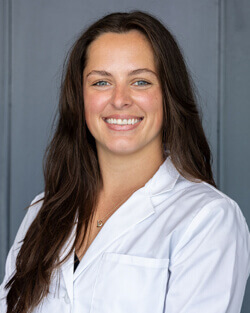
My favorite thing about the SUPA faculty is that they genuinely want you to do well in school and your career, and will take steps to ensure you have the best chance at success. At no point in time do I feel judged or scared to ask faculty questions. All of the faculty and students are there to support each other through the process!”
Dana Sutherlin Keeler ’26, PA-S
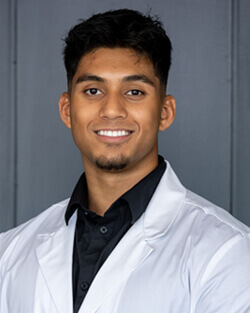
I chose SUPA because it has a strong reputation for academic excellence and clinical preparation. The program is deeply committed to producing confident, competent students who are consistently well-regarded by clinicians. From the start, I immediately felt supported by the faculty and classmates. The faculty are genuinely invested in developing my knowledge set and mentoring us into compassionate providers. I am incredibly thankful to be a part of the SU community, which has provided me with the skills to succeed as a future physician assistant.”
Tahmid Ahmed ’26, PA-S
SUPA is widely regarded as one of the top PA programs in the country, and after experiencing it firsthand, I can truly understand why. From the very beginning of my interview, I felt welcomed and supported, and that sense of community has only strengthened since. The faculty is exceptional — they consistently go above and beyond to help us grow not only as future healthcare providers but also as individuals. Thanks to their guidance and the support of my amazing classmates, I’ve gained more knowledge and insight into medicine than I ever imagined possible. I am incredibly grateful to be part of this program.”
Elizabeth Combs ’25, PA-C
I’ve always aspired to be a healthcare provider who will genuinely connect with people and create positive change, whether it be big or small. I knew that I would be able to do that with the help of Shenandoah University. The faculty encourages self-expression and individual thinking while preparing us to work collaboratively as educated healthcare professionals. SUPA also recognizes the importance of diversifying healthcare which makes me feel empowered as a first-generation American. I feel confident that I will be prepared with the skills needed to care for patients from all walks of life and improve the healthcare experience for all patients.”
Irving Ruiz ’25, PA-C
1) Why should I apply early?
Applicants are encouraged to apply early to allow ample time for the CASPA verification process and the receipt of references before the application deadline.
2) Am I too old to apply?
The program’s admissions policies do not discriminate on the basis of gender, race, color, religion, national or ethnic origin, age, physical or mental disability or sexual orientation. Candidates are urged to review the Technical Standards located on this page and consult us to determine if the University can provide reasonable accommodations to meet the Technical Standards for practice.
3) Will you evaluate transcripts or courses before I apply?
Due to the volume of applications received each year, we are unable to offer this service to candidates who have not yet submitted their applications. If you are unsure if a particular course will satisfy a prerequisite, you may email a course description and syllabus for review to pa@su.edu once you have applied to the SUPA Program through CASPA.
4) How do I apply?
The SUPA Program participates in the Central Application Service for Physician Assistants (CASPA). Applicants who need assistance with the application process should contact CASPA Customer Service directly using the contact information available on the CASPA website.
5) Does the program require a supplemental application?
Yes, the application includes a supplemental essay in which candidates are asked to choose one of the SUPA Program’s core values and, in 200 words or less, describe a specific situation in which they demonstrated this value when doing so was difficult or inconvenient. There is no fee for this required part of the application.
6) When should I send my materials into CASPA in order to meet Shenandoah deadlines?
Applicants are strongly encouraged to submit their completed application by July 1 to allow sufficient time for CASPA verification prior to the August 1 verification deadline. Delays in CASPA processing may jeopardize consideration of your application.
7) What are the typical number of applications and number of seats available?
Our program had over 1700 qualified applications for seats in the 2025-26 admissions cycle. We admit 60 students (42 for the Winchester site and 18 for the Loudoun site) annually.
8) Does the SUPA Program require the Graduate Record Examination (GRE) or other entrance exams?
No. We do not require the GRE, MCAT, PA-CAT, or any other entrance exam.
9) What is the length of the SUPA Program?
The curriculum is 30 months (eight terms) in duration beginning in June each year. The program includes three summer sessions and graduation is in December. The first five terms are primarily didactic (classroom and laboratory) and the last three terms are the clinical phase. There are opportunities for clinical exposure (primarily observational) during the first year. Clinical rotations total 47 weeks.
10) Can I work while attending the PA Program?
The program is offered on a full-time basis only. Because of the program’s academic rigor and time commitment, students are strongly discouraged from maintaining employment during enrollment.
11) Do you offer a dual enrollment program?
Yes. Shenandoah University also offers a Master of Public Health (MPH) program. Up to nine credits of MPH coursework overlap with graduation requirements for the PA & MPH Dual Degree option, allowing students to save both time and money. Additional information is available on the PA/MPH Dual Degree webpage. Students may elect to enroll in the Dual Degree option after starting the PA program.
12) Where are SUPA Program’s clinical sites? May I complete clinical rotations in my hometown or home state?
Clinical rotations are located within a ninety mile radius of the students’ home campus in (Winchester or Loudoun). Students are responsible for their own travel and lodging expenses during the clinical phase of the program. Students in good academic standing may apply to complete faculty-approved clinical rotations at distant sites. Students are not asked to find their own clinical placements.
13) If I do not have a minimum 3.2 cumulative undergraduate, overall science and prerequisite GPAs, is there any point in applying?
Applicants must meet the minimum GPA requirements to be considered for admission to the SUPA Program. Unfortunately, applicants with a cumulative undergraduate, overall science, OR prerequisite GPA below 3.2 do not meet the minimum admissions requirements and will not be considered for admission. We encourage you to continue strengthening your academic record and to pursue your goal of becoming a physician assistant by applying to programs whose admissions requirements align with your academic background.
14) If I retake a course, do Shenandoah University and CASPA consider the most recent grade or the average of both attempts?
CASPA does not recognize individual school’s forgiveness, academic renewal, or grade replacement policies in regards to repeated courses. All grades which you earned for repeated courses will factor into your CASPA GPA. (See the CASPA website for more details on GPA calculation). Shenandoah does not recalculate GPA other than for a) additional coursework taken after application is submitted to CASPA, or b) independent evaluations of foreign transcripts.
15) May I add additional hours of health care experience to my application after it’s been submitted?
Applicants may update their CASPA applications at any time in accordance with CASPA guidelines. As the SUPA Program does not require healthcare experience, healthcare hours submitted will not be recalculated after the application is submitted. Updating these records is at the applicant’s discretion.
16) What is the Loudoun campus like, and will students there have access to the same faculty and resources as the Winchester campus?
The Loudoun site, near Inova Loudoun Hospital in Leesburg, Virginia, is a newly renovated facility with modern classrooms, a fully equipped physical exam lab, and a state-of-the-art cadaver lab. It also offers a student lounge, a lunch room, and a small fitness gym.
Principal faculty are accessible to all students, with each student assigned a faculty advisor at their campus. Meetings can be held in person or virtually, and academic resources including library services and student support services are available to students at both campuses.
17) May I take classes at both the Winchester and at Loudoun or switch campuses during the program?
No. Courses must be attended at your assigned campus from the start and through the duration of the didactic program.
18) Is the curriculum the same at both sites?
Yes. SUPA’s curriculum includes independent study, lecture, discussions, small-group work, case-based exercises, and practical application at both sites. The curriculum is delivered synchronously between the two sites utilizing distance learning technology for lecture-based learning. The lecture can originate from either site. Practical application courses such as physical exam, anatomy lab, and clinical integration case exercises are held in an in-person format with a low student to faculty ratio comparable at both sites. On occasion, students may be required to travel to either one of the sites or to another location for special events or training.
19) If I am admitted to the SUPA Program, may I defer my admission to the following year?
No, deferrals are not generally available for the PA Program and are only considered in cases of extenuating circumstances. Candidates who have not yet matriculated are not eligible for a leave of absence.
20) If I have alternate status and am not admitted, do I need to reapply the following year?
Yes, candidates on the alternate list who are not offered a seat for the current admissions cycle must reapply through CASPA to be considered for future admission decisions.
21) If my application is not successful, can I reapply?
Yes you may reapply in a subsequent admissions cycle.
22) How can I strengthen my application when I reapply?
Successful candidates typically exceed minimum entrance requirements, demonstrate professionalism, show in-depth knowledge of the SUPA Program and the PA profession, and communicate effectively during their interview.
Due to the high volume of applications, individual application reviews are not available. Applicants can refer to the “Characteristics of Admitted Students” profile on our website, which reflects the recently admitted class and provides a benchmark for understanding the qualifications of admitted students.
23) I have a foreign medical degree. Do I still need to complete the prerequisites or an English proficiency exam?
Yes. Candidates with transcripts from another country must have them evaluated through World Education Services (WES) or an equivalent service for a course-by-course translation and evaluation. Courses taken outside the United States will count toward degree requirements and undergraduate and overall science GPAs. However, prerequisites must be completed at a regionally accredited college or university in the United States, so prerequisite GPA cannot be determined from courses completed abroad.
For questions regarding international student applications and requirements please contact Shenandoah University’s Graduate Admissions Office by email at sugradadmissions@su.edu, by phone at 540-665-4581, or by text at 540-546-6029.
24) I have a foreign medical degree. Do I still need to complete the entire program?
Yes. There is no exam that allows an international medical graduate (IMG) to obtain a PA license or national PA certification without completing a PA program. All IMGs admitted to the SUPA Program must complete the full curriculum, as courses previously taken in medical school cannot be substituted. IMGs are not given priority consideration in the admissions process.
Additional information on the PA Profession is available on the following sites.
1. Prerequisites must be completed at an accredited college or university in the United States.
2. If you have studied outside the United States, you will need to have your transcripts evaluated for US equivalency using a service. Applicants must submit an independent course-by-course evaluation from an approved NACES or AICE evaluation company (such as www.wes.org or www.ece.org, but applicants can choose any approved company) for foreign transcripts. Follow CASPA’s instructions to determine how to report coursework completed through study abroad. The program will add this coursework to your CASPA calculated GPA to attain your cumulative undergraduate GPA, overall science, and prerequisite GPAs.
3. All applicants must demonstrate English language proficiency. Please review our language proficiency policy to determine if your educational background fulfills the requirement. Acceptable sources of proof are:
• Completion of high school diploma from regionally-accredited U.S. institutions and approved countries.
• Completion of post-secondary degree with GPA 2.5 or higher from regionally accredited U.S. institutions and approved countries.
• Completion of equivalent of Shenandoah University’s ENG 101 with B or better at a regionally accredited U.S. institution.

SUPA is widely regarded as one of the top PA programs in the country, and after experiencing it firsthand, I can truly understand why. From the very beginning of my interview, I felt welcomed and supported, and that sense of community has only strengthened since. The faculty is exceptional — they consistently go above and beyond to help us grow not only as future healthcare providers but also as individuals. Thanks to their guidance and the support of my amazing classmates, I’ve gained more knowledge and insight into medicine than I ever imagined possible. I am incredibly grateful to be part of this program.”
I’ve always aspired to be a healthcare provider who will genuinely connect with people and create positive change, whether it be big or small. I knew that I would be able to do that with the help of Shenandoah University. The faculty encourages self-expression and individual thinking while preparing us to work collaboratively as educated healthcare professionals. SUPA also recognizes the importance of diversifying healthcare which makes me feel empowered as a first-generation American. I feel confident that I will be prepared with the skills needed to care for patients from all walks of life and improve the healthcare experience for all patients.”