Prepare for a Career Giving Animals The Best Care Possible
The Bachelor of Science in Animal Health and Science gives students opportunities to work with and on the behalf of animals in a predominantly medical/pre-veterinarian setting. While students will learn introduction-level health and care, the focus is on gaining a breadth of knowledge in natural sciences to prepare students for medical and conservation sciences.
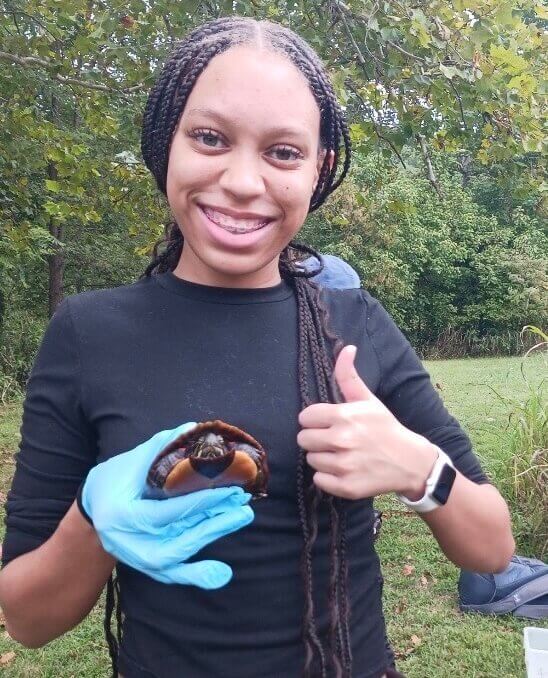
I am applying techniques, actively learning through labs, handling animals, observing biological processes in real time, collecting data, estimating wildlife populations and analyzing results. One of my best experiences was where I estimated salamander and turtle populations, which taught me how population sampling works, how to handle animals carefully and how science is recorded/conducted in the field.
Kalie Howard ’29 | Animal Health & Science major | Biology minor
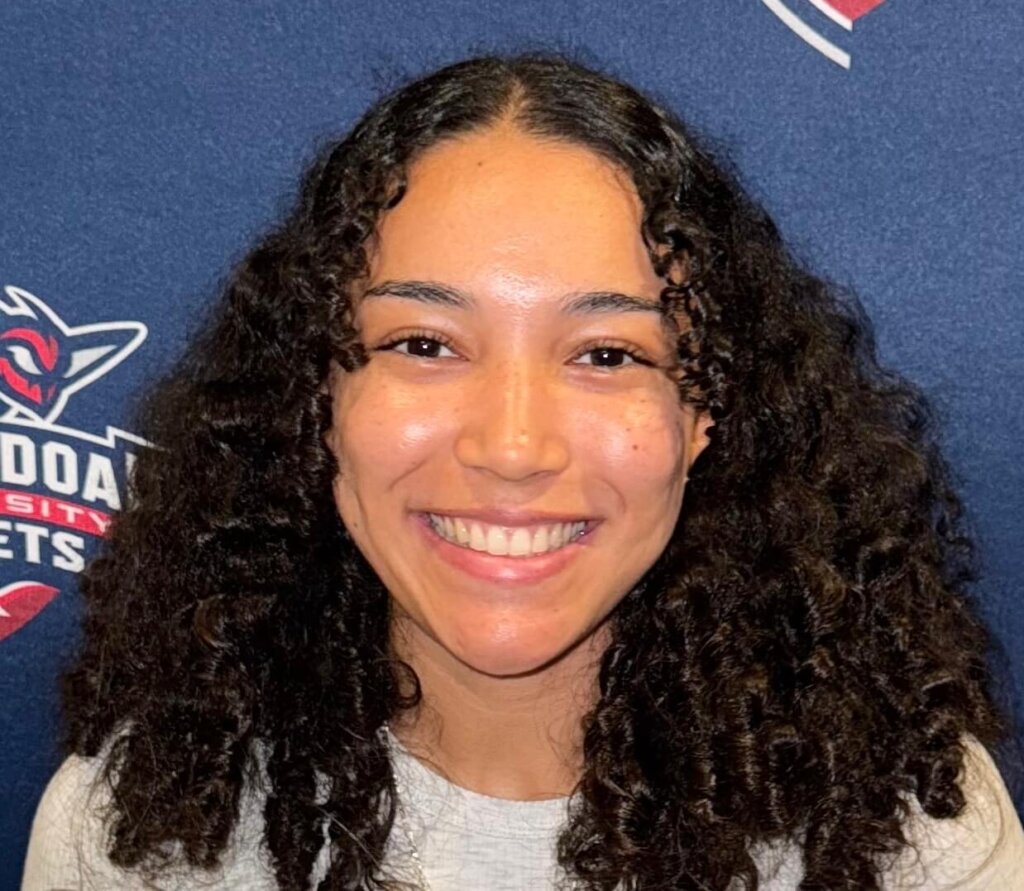
What I like most about my animal health and science major is being able to combine my love for animals with science to make a difference in improving the lives of animals. The classes give me the hands-on experience and knowledge that I can use in veterinary clinics, farms, shelters, or research settings, which helps me feel confident about my future. My favorite experiences have been working with different animals at the Winchester SPCA and Blue Ridge Wildlife Center.
If you enjoy learning, working with animals, and helping others, then this major is definitely for you! It can be challenging but is paw-sitively rewarding in the end.
Chelsea Reid ’27 | Animal Health & Science major | Biology and Environmental Studies minors
Two pathways are offered for the Animal Health and Science program: a Pre-Veterinary Pathway and a Wildlife Conservation Pathway.
The Bachelor of Science in Animal Health and Science (AHS) is a robust science-based interdisciplinary program that prepares students for 1) successful careers within animal care, science and medical fields, 3) graduate school in animal science-based programs, and 3) acceptance into veterinary school. Students pursuing careers in the diverse discipline of animal health and science may choose different individualized pathways to foster their particular interests. These pathways provide students with skills and content knowledge utilized in animal science careers such as companion animal clinics, medical laboratories, zoos, food services, and wildlife medicine and management, but will also prepare students for graduate or veterinary school.
If you truly have a passion for working with animals, Shenandoah University is an amazing place to be. From the dedicated professors who are always there to help you out to the supportive peers in your classes, the environment is built to help you succeed.
Ines Guiton Moreno ’29 | Animal Health & Science major | Criminology and Spanish minors
All students seeking a degree in animal health are required to complete the following core courses in Animal Health (30 credits):
Course Number
Course Name
Credit Hours
AH 101
Introduction to Animal Health and Welfare
3
AVS 211
Animal Anatomy & Physiology
3
AH 291
Animal Health Literacy Seminar
3
AH 301
Ethical Treatment of Animals & Their Environment
3
AVS 311
Animal Nutrition
3
AH 350
Internship in Animal Health
3
AH 390
Careers in Animal Health Seminar
3
AVS 411
One Health Approach
3
AVS 450
Animal Health Clinical Experience
3
AVS 330
Social Behavior of Animals
3
Pathway Course Requirements
In addition to the core courses, students must choose one of the following pathways for their degree:
Students seeking a Bachelor of Science in Animal Health and Science are required to successfully complete courses to promote equality, embrace diversity, and foster a more inclusive society. Students may choose 1 course below for a total of 3 credits:
Course Number
Course Name
Credit Hours
AAG 101
African American/Global Black Studies
3
ENG 287
African American Literature
3
ENG 351
African American Women Writers
3
ENG 403
Africana Studies
3
GLS 101
Introduction to Global Studies
3
GWST 301
Theories of Gender
3
GWST 320
Interdisciplinary Seminar in Gender and Women’s Studies
3
GWST 322
History of Gender in Advertising
3
GWST 329
Gender and Women’s Literature
3
GWST 425
Psychology, Gender and Culture
3
REL 202
Navigating Religious Diversity
3
REL 332
Christianity and the African-American Experience
3
SOC 312
Social Class and Inequality
3
SOC 315
Gender Issues
3
SPAN 300
Making Sense: Exploring the World Through Spanish
3
SPAN 311
Spanish Civilization and Culture
3
SPAN 312
Latin American Civilization and Culture
3
Students seeking a Bachelor of Science degree in Animal Health and Science with a Pre-Veterinary School Pathway are required to complete the following courses (38 credits):
Course Number
Course Name
Credit Hours
Biology (two-semester sequence of general biology with laboratories is required)
BIO 121
General Biology I
4
BIO 122
General Biology II
4
General Chemistry (two-semester sequence with laboratories in general chemistry is required prior to organic chemistry or biochemistry)
CHEM 121
General Chemistry I
4
CHEM 122
General Chemistry II
4
Upper Division Chemistry (two semesters of upper division chemistry courses with laboratories)
CHEM 301
Organic Chemistry I
4
CHEM 302
Organic Chemistry II
4
CHEM 331
Biochemistry I
4
CHEM 302
Biochemistry II
4
Math (two-semesters requirement can be met by courses in algebra, pre-calculus, statistics or calculus
MATH 101
College Algebra
3
MATH 102
Precalculus
3
– or –
MATH 201
Calculus and Analytic Geometry I
4
MATH 202
Calculus and Analytic Geometry II
4
– or –
MATH 207
Introduction to Statistics
3
MATH 208
Applied Statistics Concepts and Methods
3
– or –
MATH 102
Precalculus
3
MATH 212
Applications of Calculus in the Health Professions
2
Physics (two-semester sequence with laboratories in general physics or introductory physics)
PHYS 111
College Physics I
4
PHYS 112
College Physics II
4
– or –
PHYS 121
General Physics I
4
PHYS 122
General Physics II
4
Please note that many veterinary medicine schools (not all) require:
2 semesters of General Biology with labs
1 semester of Organic Chemistry with lab
2 semesters of Physics with labs
1 semester of Biochemistry with lab
2 semesters of Math (algebra, pre-calculus, statistics or calculus)
Students seeking a Bachelor of Science degree in Animal Health and Science with a Wildlife Conservation Pathway are required to complete the following courses (32 credits):
Course Number
Course Name
Credit Hours
BIO 121
General Biology I
4
BIO 122
General Biology II
4
BIO 321
Ecology
4
BIO 325
Animal Behavior
4
CJ 344
Environmental and Wildlife Crime
3
ES 295
Wildlife Ecology and Habitat Management
3
ES 300
Geographic Information Systems and Mapping
4
ES 452
Applied Conservation Ecology
3
WR 350
Professional & Technical Writing
Students interested in this program should also look into these other majors and minors:
Shenandoah University works on rolling admissions and accepts applications throughout the year. Applications are reviewed individually and holistically.
Submit your application, review required admission materials, and find our admissions standards.
The Honors Program is a multidisciplinary Honors Program for students who are curious, creative, self-motivated, and eager to engage in their education and community.
Not only do Honors Program students partake in honors courses that emphasize collaboration, service, and communication, but they will also have the opportunity to develop aspects of the program based on their own interests and goals. By participating in the Honors Program you will acquire the tools, knowledge and experiences necessary to make meaningful contributions to your community – whether it be globally, locally, or specific to your life’s work. You will have access to unique courses, exciting experiences and a community of peers and faculty who never stop asking questions and striving for excellence.
Make studying abroad the highlight of your college experience! Whether you go for a year, a semester, or just a few weeks. You will never forget learning in another culture! The Office of Global Engagement is here to help you plan your study abroad experience. Start your planning early to ensure the courses you complete abroad count toward your degree and you graduate on time.
The Global Experiential Learning (GEL) Program offers Shenandoah students a short-term, faculty-led, study-abroad experience for academic credit. These short-term, credit-bearing, faculty-led programs are offered winter break, spring break, and during the summer. If a course is not within your major, it might be used as an elective.
Shenandoah University is a member of the International Student Exchange Program (ISEP), a global network of 300 universities. This partnership allows students to study for a full semester or year at other member campuses abroad. By working closely with their academic advisors and the study abroad advisor, students can take classes taught in English abroad while receiving Shenandoah credit.
Shenandoah University also maintains direct partnerships with several universities around the world. These relationships allow students from SU to study abroad as exchange students and students from these universities to study at SU. All partner universities offer courses taught in English.