Shenandoah biology students participate in comprehensive, hands-on, laboratory-based activities that will promote the development of technical skills used in biological science investigations.
I love going out into the field and doing live studies or even just exploring – whether that be a creek, mountainside, or our SU campus. (Check out the native garden by Gregory Hall!)
Madison Upperman ’24 | Biology & Environmental Studies double major
The Biology major has been designed to allow students to pursue specialized interests in secondary biology education, microbiology and clinical laboratory sciences, field biology, and the health-related professions including medicine, dentistry, veterinary medicine, physician assistant, physical therapy, occupational therapy and athletic training, and other fields at the graduate level.
I love being a biology major because I feel the professors in the department prepare students for post-college schooling/careers really well. I always feel like I am learning something new while being able to build on knowledge from prior classes.
Mackenzie “Mac” Watkins ’26 | Biology & Public Health double major
Approximately 90 percent of SU Biology students who apply to graduate school are accepted into the program of their choice directly after graduation.
Parasite Research and Fishing at Shenandoah University
American Chestnut Tree Research
The majestic, and once-abundant American Chestnut was the eastern equivalent of the mighty redwood trees of the western United States before a fungus introduced from Asia completely decimated their numbers. Shenandoah University chemistry/biology major Chris Cizek ’16, conducted summer research to learn more about the fungus and return the trees to their former glory. He’s studying stunted trees figure out how to make the environment inside them less hospitable for the fungal parasite
Shenandoah University’s College of Arts & Sciences is your direct connection to a classic, broad-based education to satisfy both your intellectual curiosity and career goals. With a 10:1 student-faculty ratio, small classes and individualized learning opportunities, we put students at the center of all our decisions and events.
We blend the liberal arts with pre-professional courses and hands-on learning to prepare you for careers in the natural sciences, the social sciences and the humanities. You’ll learn through small, engaging classes and relationships with faculty mentors; hone your skills to solve problems; and learn to use creativity and critical thinking to make informed decisions.
Improve your science foundation. The Biology minor provides you with a general, foundational knowledge of biological sciences. You may choose elective courses pertaining to specialized interests such as field biology, microbiology and clinical laboratory sciences, biology teacher licensure or health-related professions.
The total minimum number of credits for the Biology minor is 18.
This may include BIO 121 (4 credits) and/or BIO 122 (4 credits), but not BIO 105 or BIO 201.
*Of the remaining credits, at least one course (2-4 credits) must be at the 300 or 400 level.
The following courses are acceptable as Biology electives: CHEM 331 Biochemistry; ES 101 Introduction to Environmental Studies; ES 421 Environmental Measurement Methods; PSY 360 Biopsychology; or any courses approved by the department chair.
Declaring a Minor
Shenandoah students work with their Academic Advisor to declare a minor. Academic Advisors will continue to work with students to ensure that they fulfill all of the requirements to complete the minor.
Incoming students should not indicate their intended minor on their Shenandoah application. Applications are for intended majors only.
The Career & Professional Development staff helps Shenandoah students search and apply for internships related to their major and career goals. Internships differentiate you as an applicant in your future job searches, provide hands on experience in your field, allow you to sample different career paths for your major, and help you find a specific position that fits your passion before graduation.
Our Biology graduates work in a variety of areas, including biology secondary education, environmental education, environmental consulting and public health. After graduate school, they are employed as pharmacists, physical therapists, physician assistants, occupational therapists and doctors. Others work in hospitals as medical technologists or laboratory technicians.
Career and Salary Examples for Biology Majors:
Laboratory Manager: $61,576
Research Scientist: $36,241 – $99,613
Clinical Research Coordinator: $36,752 – $64,429
Quality Assurance Manager: $54,014 – $121,641
High School Science Teacher: $31,085 – $66,384
Clinical Research Associate (CRA): $38,630 – $87,505
Career & Professional Development provides a comprehensive range of services and resources to assist Shenandoah students in their career search. Services offered include resume and cover letter building, mock interviews, and professional dining etiquette workshops.
There are two options for a Biology degree: a Bachelor of Science or a Bachelor of Arts.
The Bachelor of Science (B.S.) provides comprehensive coverage of the biological sciences, as well as Mathematics and Chemistry courses that complement the Biology curriculum. This degree is the most appropriate path for students considering study in research-based graduate programs or technical careers upon graduation. It also includes courses that will prepare students for application to graduate health professions programs. The increased course load of the B.S. makes it more challenging to double-major in any discipline other than Chemistry. Therefore, students seeking to double-major with a B.S. in biology should discuss it with their advisor early in their academic career.
The Bachelor of Arts degree (B.A.) provides a strong education in the biological sciences, requiring the same number of Biology courses, but fewer courses in Chemistry and none in Mathematics. This course of study is ideal for those who wish to pursue additional coursework in the social sciences or humanities, complete two minors, double major or complete their degree requirements in three years.
Core Courses Required for the Biology Major, either B.A. or B.S.
Course
Title
Credit Hours
BIO 121
General Biology I
4
BIO 122
General Biology II
4
BIO 260
Microbiology
4
BIO 316
Genetics
3
BIO 321
Ecology
4
BIO 340
Evolution
3
BIO 409
Cell Biology
4
Beyond the core courses, four electives are required. The total credits will vary (11 – 16), depending on the courses chosen.
Bachelor of Arts
Bachelor of Science
Two courses at or above 200 level
One course at or above 200 level
Two courses at or above 300 level
Three courses at or above 300 level
For all four courses: two credits maximum from BIO 220, BIO 490, BIO 491 or BIO 492 may count toward fulfillment of this requirement.
BIO 201 Medical Terminology may not be used toward fulfillment of this requirement.
One of the > 300 level courses must include a lab.
The lab course could be met with BIO 491 and BIO 492 Research Project.
BIO 201 Medical Terminology may not be used toward fulfillment of this requirement.
Required Chemistry Courses
Bachelor of Arts
Bachelor of Science
CHEM 121 General Chemistry I (4 credits)
CHEM 121 General Chemistry I (4 credits)
CHEM 122 General Chemistry II (4)
CHEM 122 General Chemistry II (4)
CHEM elective with lab, > 200 level (4)
Two CHEM electives, > 300 level (7 – 8)
Required Math Courses
Bachelor of Arts
Bachelor of Science
MATH 207 Statistics is a collateral recommendation.
MATH 102 Precalculus II (3 credits)
MATH 207 Statistics (3)
Although Calculus is not required for the Biology degree, it is a requirement for different health professions, e.g. pharmacy, dental school or medical school. Physicsis not required for the Biology degree itself. Physics is a requirement for some graduate health profession programs, such as physical therapy, medical school and pharmacy. You must check the requirements of the specific programs to which you plan on applying.
Learning support services are available to all students in every course at Shenandoah. Free peer tutoring with a student who has previously succeeded in the course is available for any course across the university. The Writing Center is available for every stage of the writing process from thesis development to proofreading and bibliography assistance. The Math Enrichment Center is available for math and science assistance. Professors and Academic Advisors across the university also have office hours and open door policies to ensure Shenandoah students succeed academically.
You’re not expected to ‘figure it out’ and pass your classes. The entire university is rooting for your success. Anytime a student has difficulties with anything, they’re presented with a plethora of resources available for them, unique for their situation. No matter where a student is in their level of academic abilities, they can have confidence that their professors, mentors, and advisors in the SU biology program will help them through each step of the way.”
Daniah Ali ’23 | Biology
Learn about Shenandoah’s Biology education programs:
The Honors Program is a multidisciplinary Honors Program for students who are curious, creative, self-motivated, and eager to engage in their education and community.
Not only do Honors Program students partake in honors courses that emphasize collaboration, service, and communication, but they will also have the opportunity to develop aspects of the program based on their own interests and goals. By participating in the Honors Program you will acquire the tools, knowledge and experiences necessary to make meaningful contributions to your community – whether it be globally, locally, or specific to your life’s work. You will have access to unique courses, exciting experiences and a community of peers and faculty who never stop asking questions and striving for excellence.
Shenandoah University works on rolling admissions and accepts applications throughout the year. Applications are reviewed individually and holistically.
Submit your application, review required admission materials, and find our admissions standards.
The Pre-Health Program is designed to help guide students develop as competitive applicants to graduate schools that match their desired profession and their academic and pre-professional profile.
Pre-Health Advising at Shenandoah University consists of in-person advising sessions either in a group or individual setting that seek to provide guidance to students interested in pursuing a career in within the health professions.
Pre-Health Students follow one of these tracks at Shenandoah:
Shenandoah University is deeply connected with the graduate schools here, so in your biology courses there is a focus on how to shape a health professional. So, if you are interested in working in the health professions Shenandoah will be a great fit!”
Justus Whittington ’23 | Biology & Public Health double major
Make studying abroad the highlight of your college experience! Whether you go for a year, a semester, or just a few weeks. You will never forget learning in another culture! The Center for International Programs is here to help you plan your study abroad experience. Start your planning early to ensure the courses you complete abroad count toward your degree and you graduate on time.
The Global Experiential Learning (GEL) Program offers Shenandoah students a short-term, faculty-led, study-abroad experience for academic credit. These short-term, credit-bearing, faculty-led programs are offered winter break, spring break, and during the summer. If a course is not within your major, it might be used as an elective.
Shenandoah University is a member of the International Student Exchange Program (ISEP), a global network of 300 universities. This partnership allows students to study for a full semester or year at other member campuses abroad. By working closely with their academic advisors and the study abroad advisor, students can take classes taught in English abroad while receiving Shenandoah credit.
Shenandoah University also maintains direct partnerships with several universities around the world. These relationships allow students from SU to study abroad as exchange students and students from these universities to study at SU. All partner universities offer courses taught in English.
Imagine participating in interesting conversations led by engaging professors who’ve already done what you dream of doing. You’ll be in a small class with professors who know your name, care about your success and provide advice as you pursue your academic and career goals.
The professors make the biology program special due to their willingness to provide help in so many ways! It is a rigorous but rewarding program to pursue. The necessary resources are available for one’s success, so do not be afraid to reach out!”
Jahveesha Combs ’23 | Biology and Psychology
Meet Elizabeth Cantwell, Department Chair & Associate Professor of Biology


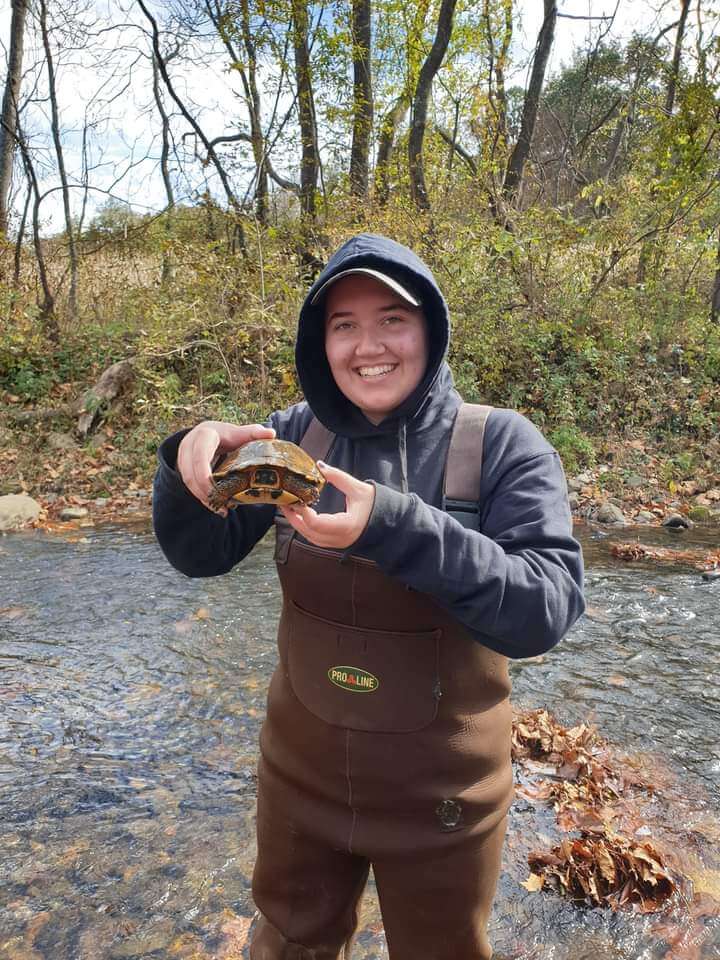
I love being a biology major because I feel the professors in the department prepare students for post-college schooling/careers really well. I always feel like I am learning something new while being able to build on knowledge from prior classes.

You’re not expected to ‘figure it out’ and pass your classes. The entire university is rooting for your success. Anytime a student has difficulties with anything, they’re presented with a plethora of resources available for them, unique for their situation. No matter where a student is in their level of academic abilities, they can have confidence that their professors, mentors, and advisors in the SU biology program will help them through each step of the way.”
Shenandoah University is deeply connected with the graduate schools here, so in your biology courses there is a focus on how to shape a health professional. So, if you are interested in working in the health professions Shenandoah will be a great fit!”
The professors make the biology program special due to their willingness to provide help in so many ways! It is a rigorous but rewarding program to pursue. The necessary resources are available for one’s success, so do not be afraid to reach out!”
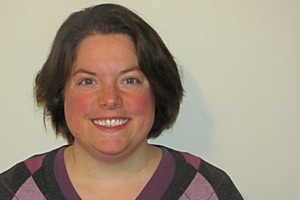 Meet Elizabeth Cantwell, Department Chair & Associate Professor of Biology