Psychology
Psychology: The Other STEM
Psychology is the science of mind and behavior—we study them wherever they’re found—self, others, technology, education, health professions, culture, biology, business, counseling, and more.
I highly, highly recommend Shenandoah University to anyone looking for a high-quality, customizable education led by supportive and accommodating staff that go out of their way to ensure the success of each individual that steps foot in their classroom.
Heather Jones ’22 | Bachelor of Science in Psychology/Bachelor of Music in Music Education

Our program provides a solid grounding in and understanding of psychology. Classes seek to bring material to life by encouraging you to make the material relevant to your own experiences. The variety of courses and flexibility of our major allow you to tailor your studies to personal interests and goals guided by faculty who will advise you on degree requirements, course work and career planning.
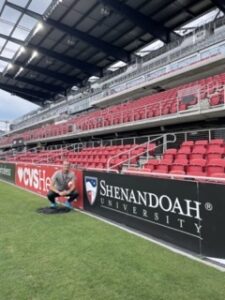
Shenandoah enabled me to double major in two fields I’m very passionate about, while preparing me to further my education in a graduate program of my choice. With practical experiences in my classes, such as working on the local crisis hotline with Dr. Bragdon’s Clinical Helping Skills course and working as a High Performance Coaching Intern with the Washington Spirit, my majors have prepared me for my future career through experiences that expand beyond the textbook.”
Patrick Manveal ’23 | Bachelor of Science in Psychology/Bachelor of Science in Exercise Science (Coaching, Biology, and Physiology minors)
Requirements for the Psychology Minor (18 Total Credit Hours)
PSY 101 General Psychology class (3 credits)
- All electives must be at or above the 200 level
- At least 3 of 5 electives must be at or above the 300 level
- At least 3 of 5 electives must be completed at Shenandoah University
- 1 elective may have a non-PSY prefix. This elective may be EXSC 350, BA 307, PSCI 333, or a course approved by the psychology department chair.
Declaring A Minor
Shenandoah students work with their Academic Adviser to declare a minor. Academic Advisers will continue to work with students to ensure that they fulfill all of the requirements to complete the minor.
Incoming students should not indicate their intended minor on their Shenandoah application. Applications are for intended majors only.
NOTE: Psychology minors have to be approved by the psychology department chair before they have completed 75 credit hours.
To apply, complete this Etrieve form.
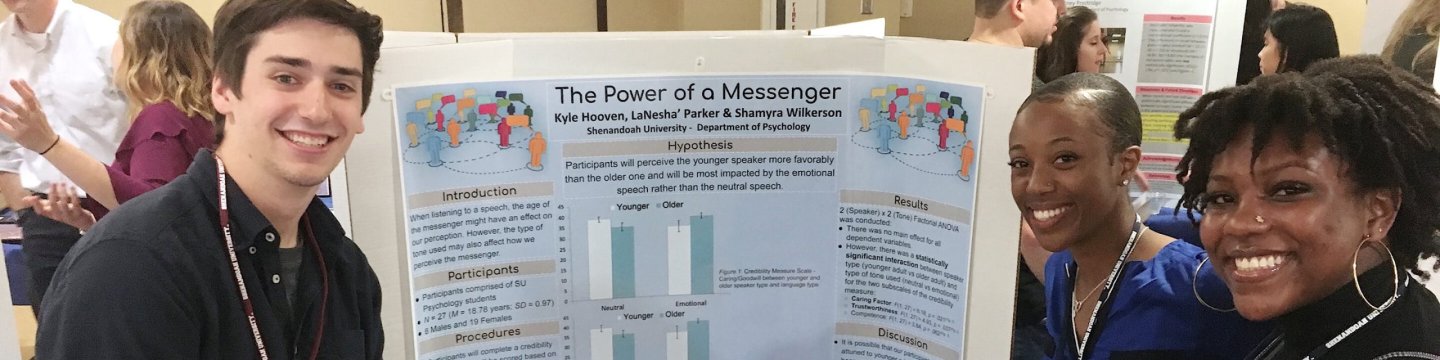
You can earn course credit for your resume by taking part in internships (i.e., practica) in the community or conducting research. They are not required for Psychology, but are strongly recommended. To be eligible, students need to be in good academic standing. Our practica are designed to provide students with the opportunity to apply information gained in the classroom and to obtain further knowledge and skills. Practica also allow students to demonstrate their abilities, hone their interests, prepare for graduate school and/or make a difference in the community.
Practica Locations
Winchester Rehabilitation Center
In this practicum, students shadow neuropsychologists at the Winchester Rehabilitation Center as they evaluate and treat patients with a wide variety of brain injuries and disorders. This site is open to psychology majors planning to work in human services (e.g., psychology, OT, PA, nursing). Completion of PSY 360 is required prior to placement. Faculty contact: Laura K. Zimmermann
Winchester Department of Social Services
Winchester Department of Social Services (WDSS) provides child protective services, foster care, adoption, and adult services. Students completing this practicum will be paired with a senior member of the WDSS team and be involved in the completion of child protective services investigations and assessments; interviewing clients; attending courtroom hearings; participating in ongoing case management including service planning, brokering, and monitoring services; and/or documenting services and progress. The student will receive weekly face-to-face supervision for a minimum of one hour to assist in processing their experiences. The student must be able to handle a fast-paced environment that requires cultural competence, self-awareness, open-mindedness, resilience, commitment to personal and professional growth, social perspective-taking, and ethical responsibility. Faculty contact: Wendy Carlson
Grafton Integrated Health Network
Grafton Integrated Health Network provides a wide range of services to children and adolescents with complex behavioral health issues. The practicum student will have the opportunity to blend experiences that meet their interests, including but not limited to: counseling/therapy (family, individual, and group) services, occupational therapy, applied behavior analysis, rehabilitative behavioral therapy, and case management. Faculty contact: Wendy Carlson
Connected Communities
Connected Communities is a nonprofit organization that provides therapeutic mentoring services, outpatient services and residential deviation services to name a few. Practicum students at Connected Communities will be considered community-based support specialists. Support specialists will appropriately plan and organize outcome-focused activities to engage young people and/or adults during sessions, underpinned by methods of supporting youth to overcome individual social, educational and emotional barriers and create personal development plans for the future. They will also provide one-to-one services to the young people and/or adults as outlined by the referral sources as well as participate in training, data collection, and care continuum for mental and behavioral health services. Faculty contact: Rodney Bragdon
Head of the Class Dog Training
Head of the Class Dog Training LLC (HOTCDT) provides general manners and enrichment group classes for families with adult dogs and puppies. Currently located in the Winchester Aquarium and Pet Center, classes are offered on Sundays, Tuesdays and Wednesdays. Its classes employ positive reinforcement to help the dog learn new behaviors in a safe environment – free of fear, force, or intimidation. Likewise, Head of the Class uses positive reinforcement to support human participants to change their own behavior so their dog can be successful. The owner of HOTCDT is a former middle school teacher with over 22 years of classroom experience working with teens, and then over 15 years of teaching dog training classes and lessons to families seeking help with their pets.
A practicum student’s experience at HOTCDT would include learning to apply the principles of positive reinforcement learned in the classroom to train dogs and puppies in good manners, and assist owners to problem solve in order to help their dogs achieve success as a well-mannered pet. Students will be expected to assist the main instructor in all of the following ways: collecting vaccination records, taking intake photos of dogs, getting out supplies and putting things away, and circulating among the class and offering helpful suggestions on how to perform exercises under the direction of the instructor. At the end of the practicum experience, the student will have the knowledge and skill to train a dog in the basic skills of sit, down, come, stay, wait, focus, and walk on leash using positive reinforcement techniques. The student will also gain confidence in classroom management, and motivating and coaching people, as well as the ability to design a training lesson, scaffold learning, and shape behavior over time. Faculty contact: Rodney Bragdon
Winchester Community Mental Health Center
Winchester Community Mental Health Center provides counseling, psychiatric, in-home, and medication management services. The practicum student will have the opportunity to shadow professionals providing a variety of treatment services. Faculty contact: Rodney Bragdon
Shenandoah Area Agency on Aging Winchester Senior Center
The Winchester Senior Center is operated by the Shenandoah Area Agency on Aging as a non-profit community center for active older adults. The practicum student would lead and evaluate programs oriented around social interaction, along with assisting staff and volunteers with day-to-day duties. Completion of PSY 324 is recommended prior to placement. Faculty contact: Scott King
Adult Care Center of Northern Shenandoah Valley
The Adult Care Center of the Northern Shenandoah Valley is a non-profit day program for adults who are coping with physical and cognitive challenges caused by Alzheimer’s Disease, stroke, or other conditions, and require supervision or assistance. The practicum student would have options to observe and participate in a variety of research-oriented activities relating to the management of the Adult Care Center. Broadly defined, these activities include market research, quality assurance, needs assessments, and data analysis. Completion of PSY 324 is recommended prior to placement. Faculty contact: Scott King
The Recovery Connection
The Recovery Connection (TRC) provides residential treatment for women diagnosed with Substance Use Disorder. The licensed facility is located in the city of Winchester in a single-family residence that serves eight women and that aligns with the American Society of Addiction Medicine’s 3.1 Level of Care. Clients receive both clinical treatment and recovery support services that are trauma-informed, person-centered, and strength-based.
A practicum student’s experience at TRC would include a wide array of experience in the industry, to include but not limited to: shadowing clinical / peer / mutual aid groups, individual therapy & department meetings; training in proper documentation and regulatory guidelines; assisting direct care staff in the implementation of day-to-day tasks; developing opportunities for targeted project(s); collecting and analyzing data for quality assurance and performance improvement; and interacting with clients and hands-on experiential learning with the Substance Use Disorder population. Faculty contact: Rodney Bragdon
Concern Hotline
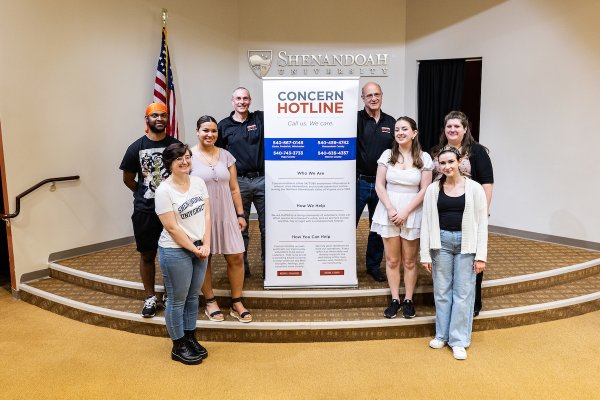
Concern Hotline is a nonprofit agency that facilitates a 24-hour crisis intervention hotline. The crisis hotline is staffed by community volunteers who receive extensive training. The practicum student will have options to participate in a variety of activities related to the management of the Concern Hotline. These include assessment data management and reporting, volunteer training, networking with other agencies, and fundraising. The practicum student will also have the option of undergoing the training to become a listener for the hotline. Faculty contact: Rodney Bragdon
Clarvida
Students placed at Clarvida have exposure to a wide variety of human services programs. These programs include home-based services of behavior treatment for individuals with intellectual disabilities and who are on the autism spectrum and Intensive In-Home for treatment of individuals with mental health diagnoses including but not limited to mood disorders, anxiety, depression, suicidal ideations, and ADHD. The practicum will include observation of both programs, however, a majority of the time will be spent with behavior treatment services (intellectual disabilities, autism spectrum disorder). Practicum participants will gain exposure and insight into assessments and evaluations, specific treatment modalities, and overall care coordination through real-time observations of clinicians and participation in clinical supervision. This site is open to psychology majors interested in Applied Behavioral Analysis and related fields. Completion of PSY 330 prior to placement is required. Faculty contact: Rodney Bragdon
Directed Research
Directed research offers students an opportunity to work on a project currently being conducted by a faculty member in the psychology department. Interested students should talk with their advisers.
Independent Research
The independent research practicum offers the student an opportunity to develop and conduct their own research in the field of psychology under the direct supervision of a psychology faculty member. Interested students should talk with their advisers.
Psychology majors learn marketable, job-related skills, such as critical thinking, valuable interpersonal skills, problem solving skills, knowledge of human behavior and an understanding of research procedures and how best to answer psychology-related questions. Oftentimes, students graduating with a degree in psychology pursue careers in business, government, education and health-related organizations.
Psychology has many areas of specialization, such as:
- social psychology
- personality psychology
- developmental psychology
- cognitive psychology
- school psychology
- clinical psychology
- counseling psychology
- educational psychology
- industrial-organizational psychology
- forensic psychology
- cross-cultural psychology
- health psychology
- biopsychology
Some specific careers that are well-suited for students studying psychology include:
- social worker
- behavioral specialist
- substance abuse mentor
- teacher
- special education specialist
- guidance or academic counselor
- criminal investigator
- animal trainer
- corrections officer
- occupational therapist
- retail/sales marketing personnel
- public relations worker
According to the U.S. Bureau of Labor Statistics (2020/2021), employment of individuals with degrees in psychology is expected to grow as fast or faster than the average through 2029.
Requirements For The Psychology Major (42 credit hours total)
Required Core Courses (18 credit hours)
| Course | Title | Credit Hours |
| PSY 101 | General Psychology | 3 |
| MATH 207 or PSY 207 | Introduction to Statistics or Quantitative Analyses in Psychology | 3 |
| PSY 208 | Research Methods I | 3 |
| PSY 308 | Research Methods II | 3 |
| PSY 222 | Lifespan Development | 3 |
| PSY 310 | Abnormal Psychology | 3 |
Biological Bases of Human Behavior
Take at least 1 of the following courses (3 credit hours)
| Course | Title | Credit Hours |
| PSY 313 | Sensation and Perception | 3 |
| PSY 316 | Cognitive Psychology | 3 |
| PSY 360 | Biopsychology | 3 |
Foundational Influences on Human Behavior
Take at least 1 of the following courses (3 credit hours)
| Course | Title | Credit Hours |
| PSY 321 | Infancy and Childhood | 3 |
| PSY 330 | Behavior Modification | 3 |
| PSY 355 | Social Psychology | 3 |
| PSY 317 | Psychology and Culture | 3 |
Human Development
Take at least 1 of the following courses (3 credit hours)
| Course | Title | Credit Hours |
| PSY 321 | Infancy and Childhood | 3 |
| PSY 322 | Adolescent Development | 3 |
| PSY 324 | Adult Years and the Aging Process | 3 |
Counseling and Clinical Applications
Take at least 1 of the following courses (3 credit hours)
| Course | Title | Credit Hours |
| PSY 327 | Psychology of Death | 3 |
| PST 328 | Autism Spectrum Disorder | 3 |
| PSY 411 | Foundations of Counseling and Counseling Theories | 3 |
| PSY 412 | Clinical Helping Skills | 3 |
| PSY 414 | Posttraumatic Stress Disorder | 3 |
Open Electives
Take four courses of electives (12 credit hours)
Electives can include unused choices from above categories, any psychology course at or above the 300 level, and any one of the courses below:
| Course | Title | Credit Hours |
| BA 307 | Introduction to Management to Management and Organizational Behavior | 3 |
| EXSC 350 | Sport and Exercise Psychology | 3 |
| PSCI 333 | Political Psychology | 3 |
Learning support services are available to all students in every course at Shenandoah. Free peer tutoring with a student who has previously succeeded in the course is available for any course across the university. The Writing Center is available for every stage of the writing process from thesis development to proofreading and bibliography assistance. The Math Enrichment Center is available for math and science assistance. Professors and Academic Advisors across the university also have office hours and open door policies to ensure Shenandoah students succeed academically.
The psychology department has two organizations devoted to students interested in psychology-related issues. The Psychology Club offers you a chance to explore areas of psychology outside the classroom. Meetings generally include guest speakers, group discussions, volunteer work in the community, and a chance for interaction with Shenandoah alumni. Psi Chi is the international honor society that recognizes psychology majors and minors with outstanding academic records.
Healthy Hornet Center
The mission of the Healthy Hornet Center is to provide students with a space and network of peer support to explore strategies to improve their mental well-being and strengthen resiliency. The Healthy Hornet Center believes that all students can benefit from making a continuous and conscious effort to attend to a lifestyle that supports positive mental well-being, prepares students to overcome challenges, and encourages meaningful engagement with others. For more information, email healthyhornets@su.edu.
Psi Chi International Honor Society
Psi Chi, the International Honor Society for Psychology, was founded in 1929 to promote excellence in scholarship and the advancement of psychology as a science. Today, over 1,000 senior colleges and universities, including Shenandoah University, have active chapters of Psi Chi, composed of graduate and undergraduate students pursuing psychology as their major. Membership in Psi Chi is based on student academic performance, and therefore is by invitation only. For more information, please contact the Psi Chi faculty advisor, Dr. Wendy Carlson at wcarlson@su.edu.
Psychology Club
The Shenandoah University Psychology Club was established in 2001 to create a forum for students to discuss psychological issues, learn about the various fields of study and careers within psychology and help the community. Activities include guest speakers, group discussions on selected topics, community service projects and fundraisers. For more information, please contact the Psychology Club faculty advisor, Dr. Kimberly Newberry at knewberr@su.edu.
The Honors Program is a multidisciplinary Honors Program for students who are curious, creative, self-motivated, and eager to engage in their education and community.
Not only do Honors Program students partake in honors courses that emphasize collaboration, service, and communication, but they will also have the opportunity to develop aspects of the program based on their own interests and goals. By participating in the Honors Program you will acquire the tools, knowledge and experiences necessary to make meaningful contributions to your community – whether it be globally, locally, or specific to your life’s work. You will have access to unique courses, exciting experiences and a community of peers and faculty who never stop asking questions and striving for excellence.
My favorite part of being a member of the SU Honors Program is having a community of hard-working and determined students who all want the best education possible. I have always been a good student, but by having Honors classes and meeting other Honors students it pushes me to keep growing and striving for greatness in my academics and in my life overall!”
Ruth Castellano ’25 | Bachelor of Science in Psychology, Minor in Music
Shenandoah University works on rolling admissions and accepts applications throughout the year. Applications are reviewed individually and holistically.
Submit your application, review required admission materials, and find our admissions standards.
Imagine participating in interesting conversations led by engaging professors who’ve already done what you dream of doing. You’ll be in a small class — the average class size is approximately 14-16 students — with professors who know your name, care about your success and provide advice as you pursue your academic and career goals.
My favorite thing about my major is the professors. All of the psychology professors are fantastic and really are passionate about what they do. They all genuinely want you as a student to succeed and will do what is needed to make sure that you do.”
Emily Rice ’24 | Psychology

Make studying abroad the highlight of your college experience! Whether you go for a year, a semester, or just a few weeks. You will never forget learning in another culture! The Office of Global Engagement is here to help you plan your study abroad experience. Start your planning early to ensure the courses you complete abroad count toward your degree and you graduate on time.
Global Experiential Learning (GEL) Program
The Global Experiential Learning (GEL) Program offers Shenandoah students a short-term, faculty-led, study-abroad experience for academic credit. These short-term, credit-bearing, faculty-led programs are offered winter break, spring break, and during the summer. If a course is not within your major, it might be used as an elective.
Study Abroad
Shenandoah University is a member of the International Student Exchange Program (ISEP), a global network of 300 universities. This partnership allows students to study for a full semester or year at other member campuses abroad. By working closely with their academic advisors and the study abroad advisor, students can take classes taught in English abroad while receiving Shenandoah credit.
Shenandoah University also maintains direct partnerships with several universities around the world. These relationships allow students from SU to study abroad as exchange students and students from these universities to study at SU. All partner universities offer courses taught in English.
Spotlights
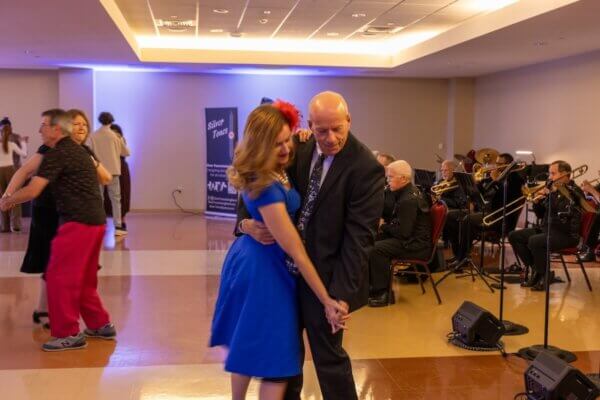
Winchester Swing Dance Offers Joy, Friendship, Fitness and Fun
Human connection thrives during regular social dancing events at Shenandoah
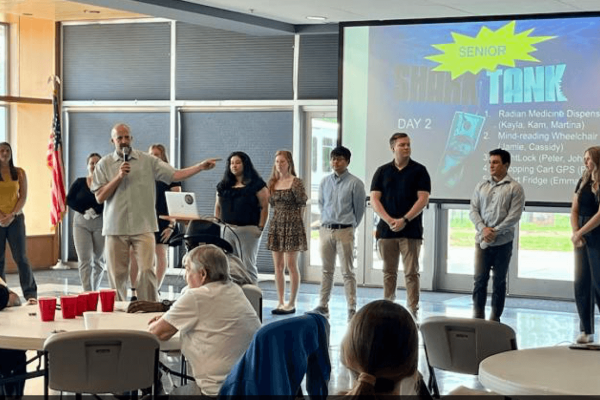
Psychology Students Plunge Into Senior Shark Tank
Students present ideas and fundraising proceeds at Seniors First in Winchester