
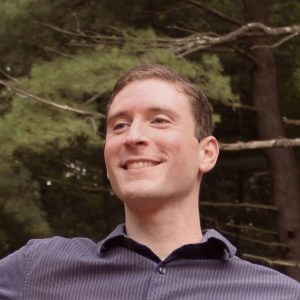
 For David Merola ’18 choosing a school was difficult, as each university he interviewed with seemed to have a lot to offer. However, Merola appreciated the authenticity and candor from the faculty and current students at Shenandoah University during his interview, which ultimately led to his decision to attend.
During his time at Shenandoah, Merola continued to see authenticity from the faculty and staff when he found it challenging to decide which career path was right for him, providing him with formative experiences that gave him a sense of direction. They helped him win a grant from the university to fund his own research project investigating genetic differences in subjects with mental illness. He was also encouraged to apply to a summer internship (and later clinical rotations) at the Johns Hopkins Hospital. “Collectively, the support I received from the faculty enabled me to publish several manuscripts in peer-reviewed journals, present over a half-dozen abstracts at national conferences and gain valuable experience in a variety of clinical practice settings,” said Merola. “Despite not being a major research university, Shenandoah was still able to tailor my education to meet my goal of pursuing an academic career.”
Merola is now a Ph.D. student at Harvard University in Cambridge, Massachusetts. As a graduate student, he is deeply immersed in the theory and practice of public health. His area of focus is in pharmacoepidemiology, which aims to assess the risks and benefits of drugs in the population. “My tasks vary day-to-day, but generally involve coursework in epidemiology and biostatistics, attending seminars and symposia and conducting research,” said Merola. “Currently, my major interest lies in evaluating the safety and effectiveness of anticoagulants for the treatment of cancer-associated venous thromboembolism.”
The most rewarding aspect of being a graduate student for Merola is being part of a supportive intellectual community, in which collaboration, creativity and curiosity are encouraged. The relationships he’s formed with his colleagues in school have become some of the closest and most satisfying he has ever had.
Through his education at Shenandoah, Merola was able to attain an invaluable foundation of clinical knowledge through the didactic and experiential components of the curriculum. In his final year of the program, he had the privilege of completing advanced rotations within the Johns Hopkins Health System. Having his rotations at a large teaching hospital helped Merola identify areas of practice where there isn’t much evidence to guide clinical decision-making, which inspired the focus of his research today.
“SU offers a wealth of edifying opportunities that facilitate professional development in the context of a student-centered culture,” said Merola. “As a student at Shenandoah, you can expect small class sizes and consistent support in achieving your goals from experienced faculty.”
Merola’s advice to students is: “To remain open to new experiences and to stepping out of your comfort zone. It was only through doing so that I gained exposure to the non-traditional ways that pharmacy training could be applied, which in turn altered the trajectory of my intended career path.”